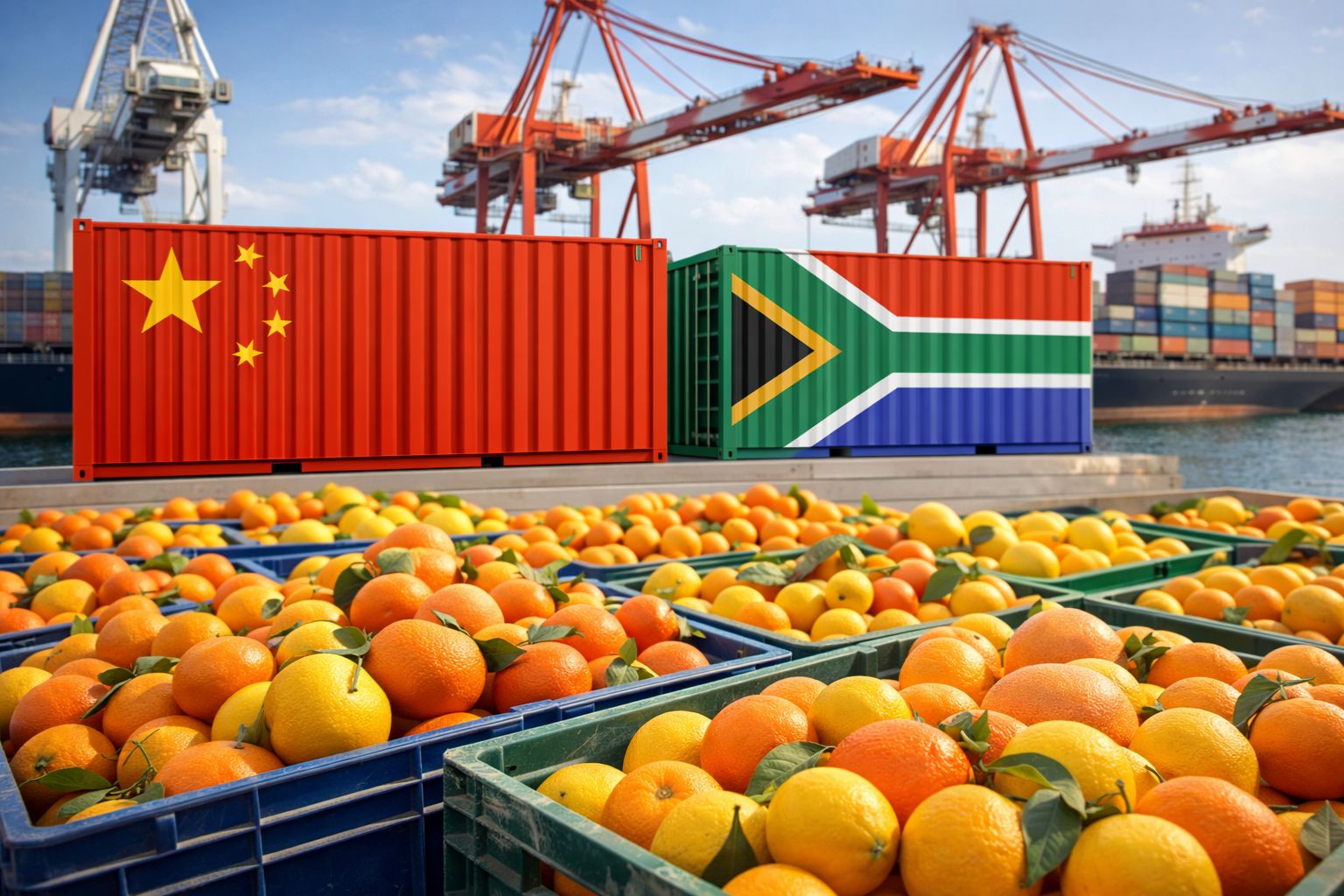

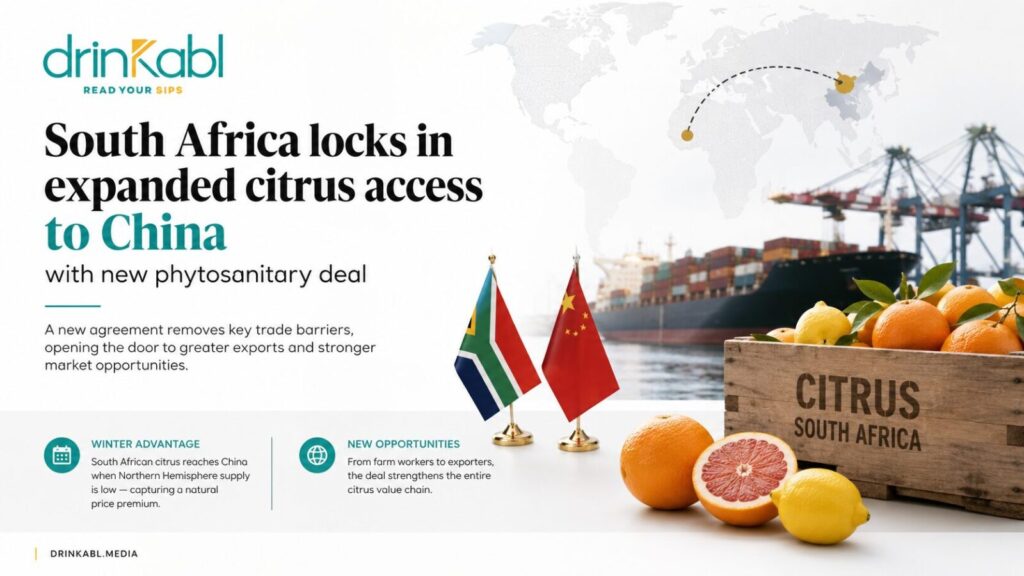
South Africa has formalised a supplementary phytosanitary agreement with China that expands market access for its citrus industry, removing trade barriers that have complicated export compliance for years.
The deal, signed on 10 April 2026, was welcomed by Western Cape Minister of Agriculture, Economic Development and Tourism Dr Ivan Meyer, who said it opens new ground for producers across the agricultural value chain. Western Cape accounts for roughly 20% of South Africa’s total citrus output, making it among the most directly exposed provinces to the agreement’s commercial implications.
The timing advantage is structural. South African citrus ripens during Northern Hemisphere winter, allowing exporters to supply China when European and North American producers are largely out of market. That window has historically offered a natural price premium. The new agreement, by easing export compliance requirements, makes capturing that premium operationally simpler for Western Cape producers.
“By removing trade barriers and expanding access to the Chinese market, we are creating new opportunities across the agricultural value chain, from farm workers to exporters, while strengthening the competitiveness of our citrus industry,” Meyer said. The provincial government has committed to trade mission participation and compliance advisory support as part of its export expansion effort.
Port and logistics inefficiencies remain the more stubborn constraint. Meyer acknowledged that ongoing performance gaps at South African ports affect export timelines, and said the provincial government would continue working with industry stakeholders to close that gap.
The broader strategic ambition is a shift from seasonal supplier to year-round market presence in China. Consistently meeting that standard requires cold chain reliability and port performance that South African exporters have not always been able to guarantee — the phytosanitary deal removes a policy barrier, but the logistics gap it cannot fix may prove the harder constraint.
READ MORE: