

The brands that now dominate global shelf space were once local drinks rooted in culture and place. The question for Africa is not whether it has the products. It is whether it will build the brands.
Beverage executives discussing Africa’s future often focus on imported brands, multinational investment, and distribution. Less attention goes to a question that may matter more: what if Africa’s next global beverage success is already sitting in local markets, villages, and festivals across the continent?
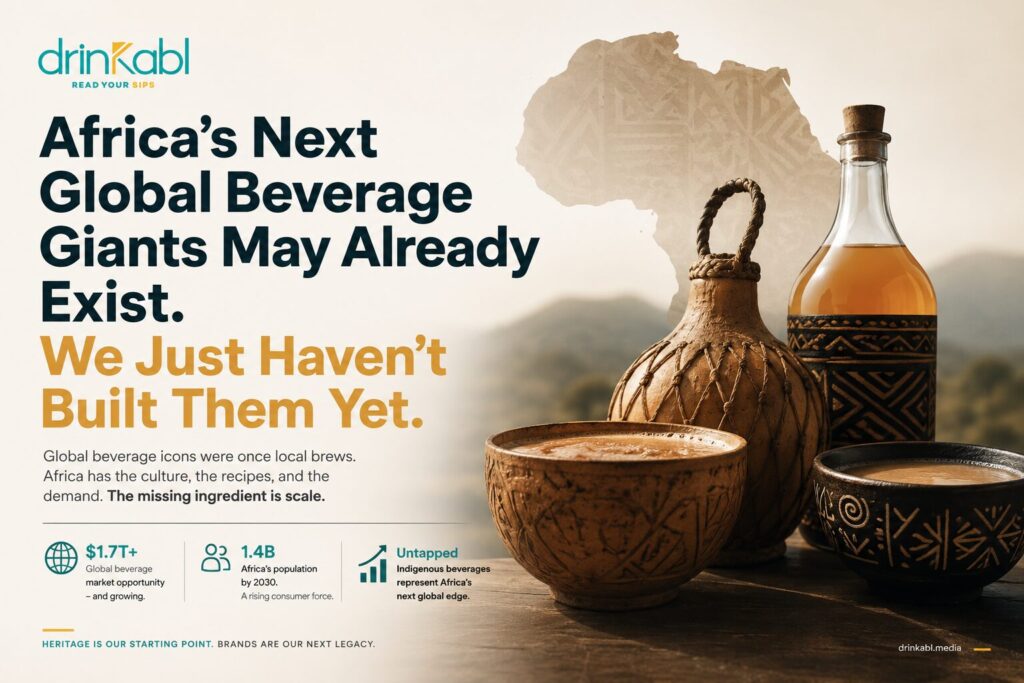
The idea has gained traction following comments by Walter Serem, Regional Manager for East Africa at Brand Finance, who challenged industry leaders to rethink Africa’s indigenous beverages.
“The current reigning industry titans in share of throat globally, the likes of Heineken, Corona and Guinness Stout, were once local brews,” Serem noted, asking whether African traditional beverages could follow a similar path. It is a question the industry can no longer ignore.
If Africa is serious about its next beverage champions, the answer may lie not in importing the future, but in rediscovering and scaling what already exists.
Every Global Beverage Was Once Local
Global brands were not born global. Heineken began in 1864 as a single Amsterdam brewery. Guinness started as an Irish stout brewed in Dublin. Corona launched in 1925 from a small Mexico City brewery. Jameson began as a 1780 Dublin distillery.
Africa’s beverage landscape holds similar raw material: Kenya’s Muratina and Busaa, South Africa’s Umqombothi, Tanzania’s Mbege, Nigeria’s Palm Wine, Kunu, Zobo, Burukutu, and Pito, Ghana’s Sobolo and Asaana. Few have transitioned into commercially scalable brands. That gap is one of African beverages’ most overlooked growth opportunities.
The Problem Is Not the Product
Traditional beverages aren’t struggling because they lack appeal. Global demand for tequila, mezcal, sake, kombucha, and craft beer proves consumers embrace heritage products when packaged well. Africa’s shortage isn’t distinctive beverages, it’s investment in turning them into scalable brands. The challenge is commercialisation, not the liquid.
Why Branding Matters More Than Ever
Serem’s central argument is that brands are economic assets, not marketing accessories. Strong brands command premium pricing, build loyalty, attract investors, and travel across borders. Many indigenous African drinks carry cultural equity but lack commercial equity, undermined by products that haven’t been standardised, packaged, or positioned for scale.
The Rise of Beverage Nationalism
Consumers worldwide increasingly embrace products reflecting local identity. Younger African consumers show growing interest in local relevance and cultural meaning, while tourism and premium dining create new platforms for indigenous beverages. The question isn’t whether consumers will buy authentic African drinks. It’s whether African companies build the brands before someone else does.
From Heritage to Enterprise
Scaling traditional beverages demands investment, quality control, packaging, and regulatory compliance, but above all, strategic brand building. The companies that succeed will sell stories, not just beverages, mirroring tequila’s rise in Mexico and sake’s in Japan.
A Conversation Already Underway
As Africa’s beverage industry confronts inflation and shifting demand, the commercialisation of indigenous beverages is a thread Drinkabl.media will keep pulling on.
That conversation continues at The New Pour Summit ’26, themed “Liquid Resilience: Future-Proofing Beverage Brands in Africa’s VUCA Market,” a natural place to separate durable brand-building from short-term noise. Coverage will follow on Drinkabl.media in the weeks after.
If Africa is serious about its next beverage champions, the answer may lie not in importing the future, but in rediscovering and scaling what already exists.
Read More