
Part of Drinkbl.Media’s recurring “Decoding Africa’s Beverage Landscape” thought leadership series.
Africa’s beverage industry is undergoing a fundamental shift. The traditional path from product awareness to purchase is becoming increasingly fragmented as digital platforms, social communities and cultural ecosystems reshape how consumers discover, evaluate and consume beverages.
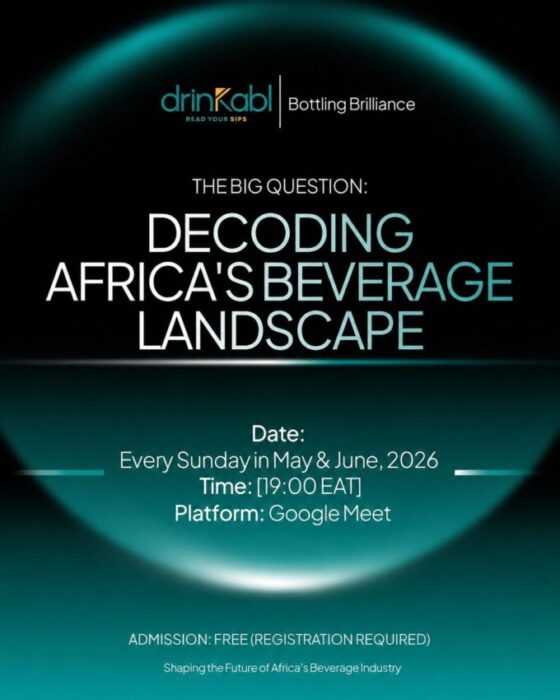
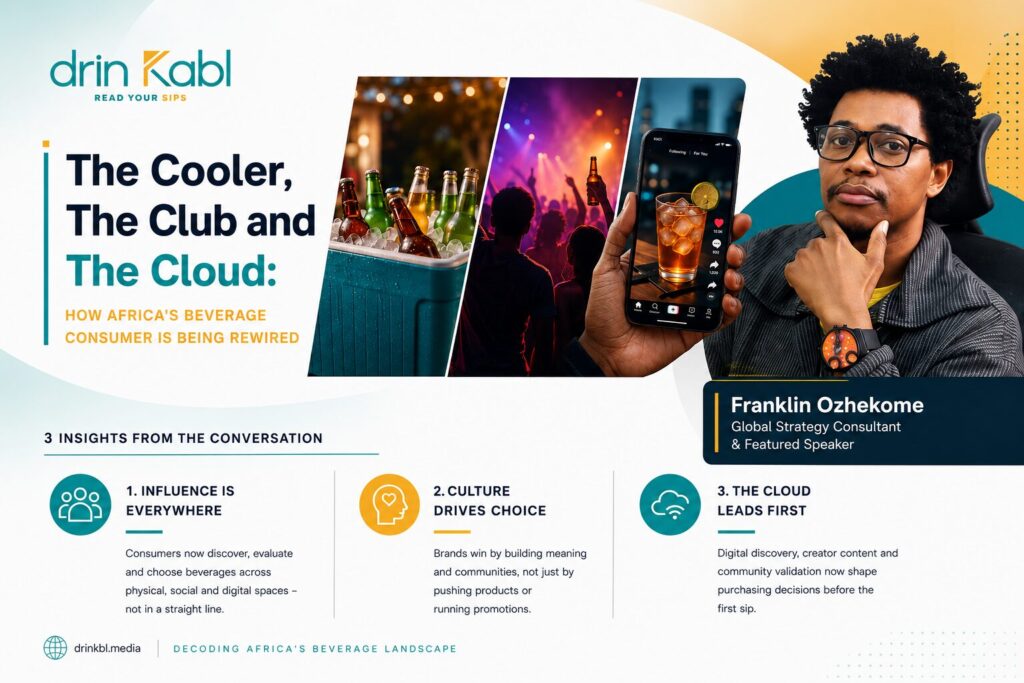
These themes took centre stage in the latest edition of Decoding Africa’s Beverage Landscape, a recurring industry conversation hosted by Drinkbl Africa’s Bottling Brilliance platform. Speaking on the topic “The Cooler, The Club and The Cloud: Where Africa’s Beverage Culture Is Really Being Built,” global strategy consultant Franklin Ozhekome argued that beverage brands must rethink how they understand influence, consumer behaviour and long-term growth.
The discussion also served as a preview of some of the conversations expected at the upcoming New Pour Summit, Drinkbl Africa’s pan-African beverage industry gathering scheduled for July. Ozhekome is among the featured speakers expected to examine the forces shaping the continent’s beverage sector, from shifting consumer habits to the growing influence of culture and digital ecosystems.
Ozhekome’s framework revolves around three interconnected spaces. The cooler represents traditional physical occasions where beverage choices are made and shared, from weddings and family gatherings to bars and social events. The club represents social identity and aspiration, where consumers use brands to signal belonging, status and lifestyle. The cloud, meanwhile, encompasses the digital ecosystems increasingly shaping consumption decisions through creators, influencers, online communities and social platforms.
According to Ozhekome, today’s beverage consumer no longer follows a linear journey. Instead of discovering a drink in a store or bar and later sharing the experience, consumers increasingly encounter products online first. They research venues, watch reviews, assess social relevance and seek validation before making a purchase decision.
“The journey has metamorphosed,” he noted, pointing to the growing influence of TikTok, YouTube Shorts and creator-led content. A viral post or community recommendation can now generate more visibility for a brand than months of traditional marketing activity.
This shift is also challenging conventional approaches to consumer segmentation. Consumers behave differently depending on context, moving between personal preferences, social expectations and digital identities. The beverage they keep at home may not be the same one they order in public or showcase online.
At the heart of this evolution is culture. Ozhekome argued that brands increasingly compete not simply on product quality or distribution strength, but on their ability to create desire and embed themselves within cultural conversations. Successful brands build ecosystems around music, fashion, entertainment, communities and shared experiences, creating relevance that extends beyond the product itself.
For beverage companies facing economic uncertainty and rapidly changing consumer behaviour, the discussion highlighted the importance of long-term thinking. Ozhekome warned against treating short-term activations and promotional campaigns as substitutes for strategy.
“Tactics are not strategy,” he said, stressing that resilient brands are built through sustained investment in cultural relevance, brand meaning and consumer relationships.
The conversation also touched on emerging trends such as moderation and the rise of sober-curious consumers. Rather than resisting these shifts, Ozhekome suggested that alcohol brands should focus on maintaining presence through experiences, communities and lifestyle associations that keep them culturally relevant even when consumption occasions evolve.
Ultimately, the session underscored a growing reality for Africa’s beverage industry: influence is no longer concentrated in retail shelves or traditional media. It flows continuously between physical experiences, social spaces and digital platforms. For brands seeking long-term growth, understanding how consumers move between the cooler, the club and the cloud may become one of the most important competitive advantages of the decade.
As Africa’s beverage industry enters a new era where influence is shaped as much by culture and communities as by products and price, the questions raised by Franklin Ozhekome are becoming strategic imperatives. How do brands remain relevant when discovery happens online before it happens on the shelf? How do they build loyalty in an age where consumers move seamlessly between physical experiences, social identity and digital influence? And how can beverage businesses create resilience in markets where consumer behaviour is constantly evolving?
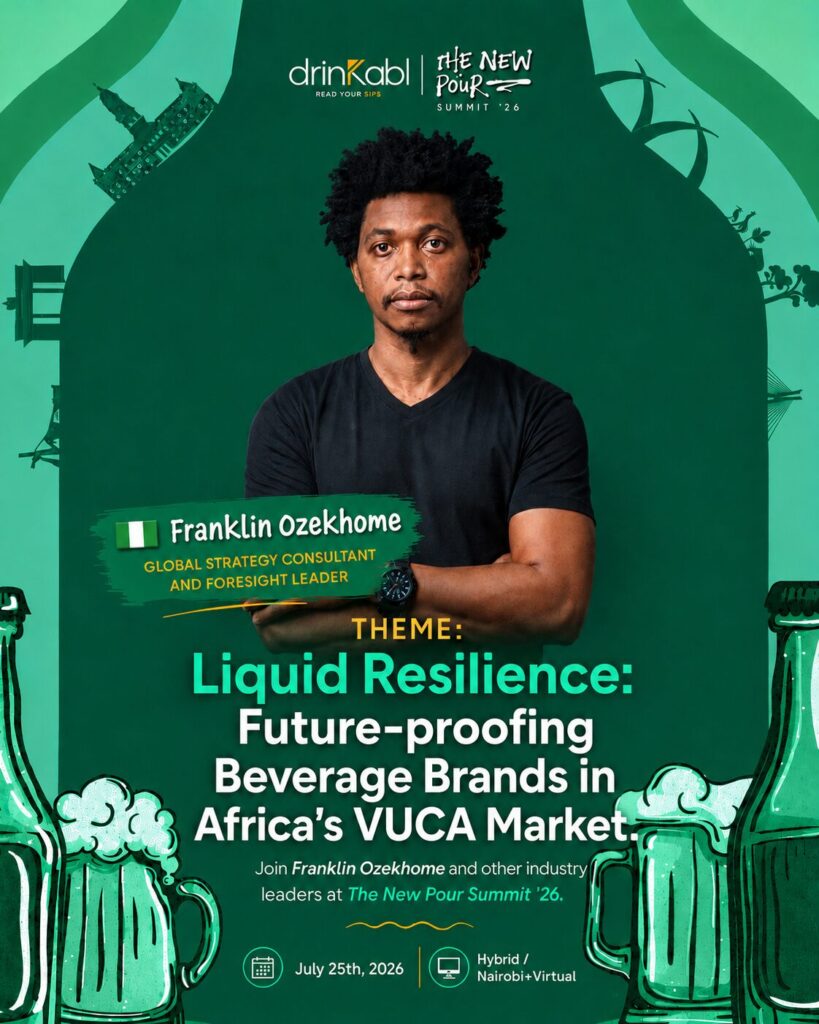
These are exactly the conversations that will take centre stage at The New Pour Summit on 25 July 2026, where Ozhekome will join leading executives, strategists, founders and innovators from across the continent to unpack the future of Africa’s beverage industry. Under the theme “Liquid Resilience: Future-proofing Beverage Brands in Africa’s VUCA Market,” the summit will move beyond theory to explore the practical strategies brands need to win the next generation of consumers and build sustainable growth in an increasingly complex marketplace.
For beverage professionals, marketers, entrepreneurs, investors and industry leaders, the conversation does not end here. It continues at The New Pour Summit. To explore the agenda, view the speaker lineup and secure your place, visit The New Pour Summit.
Read More