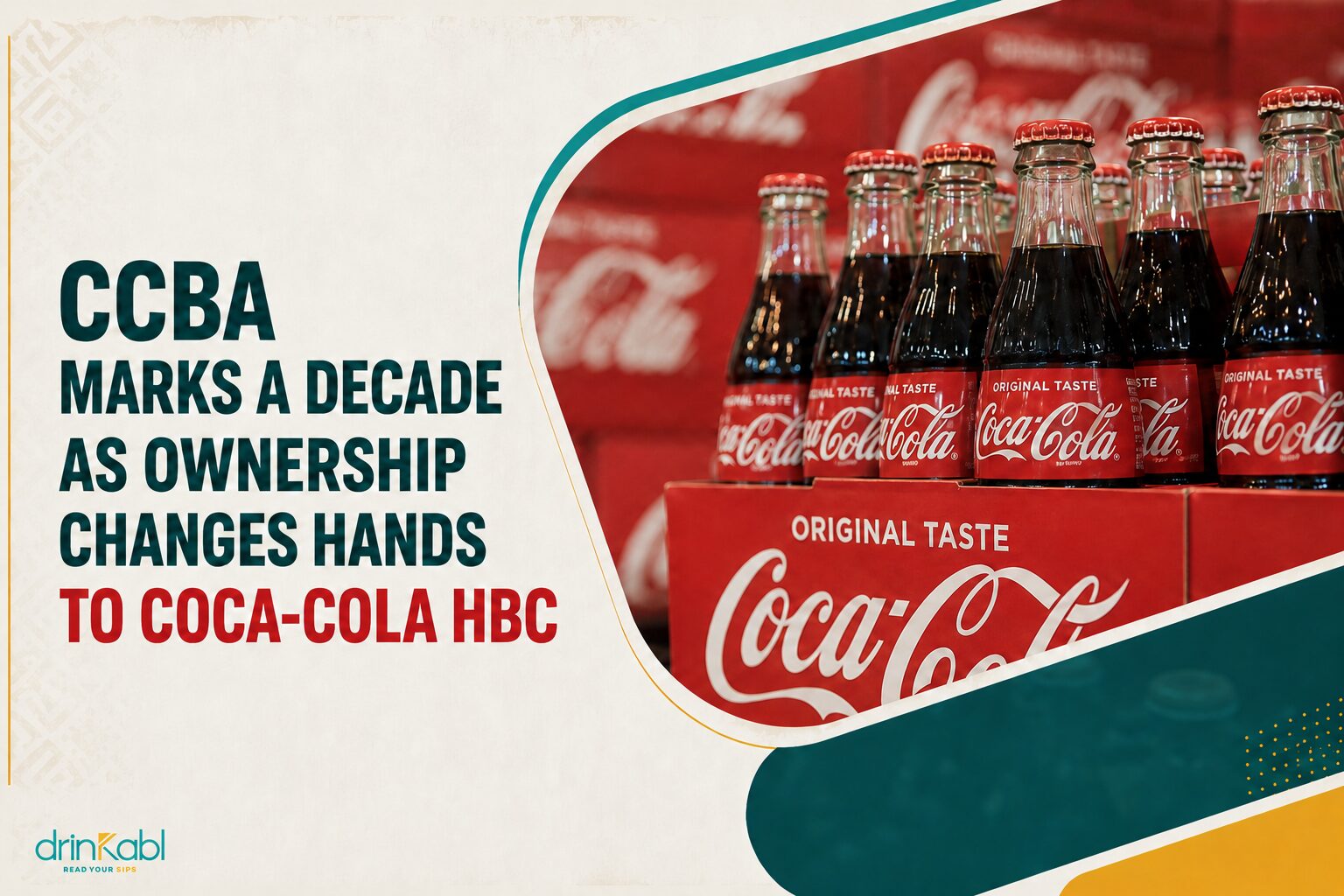

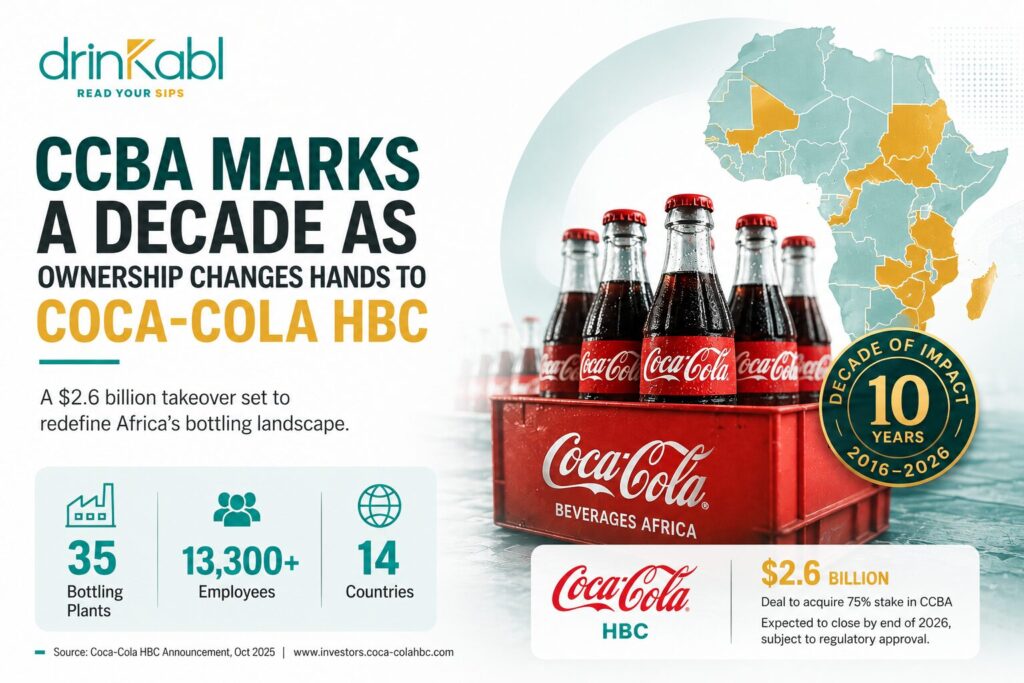
Coca-Cola Beverages Africa used its tenth anniversary last week to restate its scale: 35 bottling plants, more than 13,300 employees, and a footprint across 14 countries. The company began operating as a single legal entity in July 2016, after regulators approved the merger of Coca-Cola’s South African, SABMiller and Coca-Cola Sabco bottling operations.
The timing matters more than the round number. CCBA is roughly a year into being sold. Coca-Cola HBC agreed in October 2025 to buy a 75 percent stake from The Coca-Cola Company and Gutsche Family Investments for $2.6 billion, valuing the business at $3.4 billion. The deal is expected to close by the end of 2026, pending regulatory approval across CCBA’s markets.
Once it closes, CCBA stops being a jointly held African bottler and becomes a controlled subsidiary of a European-listed company already active in Nigeria and Egypt. Coca-Cola HBC trades in London and Athens and plans a secondary listing on the Johannesburg Stock Exchange once the transaction completes, aimed at giving South African investors direct access to the combined business.
For CCBA staff, the anniversary message lands awkwardly next to that fact. Regional units such as Coca-Cola Beverages Malawi continue to run local sponsorships and hiring campaigns as though ownership is stable, while the parent company works through a takeover that will fold CCBA into HBC’s reporting structure.
CCBA CEO Sunil Gupta, who took over in April 2024, is now managing the business through a transition he did not design. HBC CEO Zoran Bogdanovic has described the deal as a growth opportunity, pointing to CCBA’s roughly 40 percent share of Coca-Cola volumes sold in Africa.
Regulators in CCBA’s fourteen markets still have to sign off. Competition authorities in South Africa, Kenya and other jurisdictions where CCBA holds dominant bottling positions are expected to scrutinise the combination through the second half of 2026. Until that clears, the unresolved ownership question will shape every operational decision CCBA makes for the rest of the year.
READ MORE