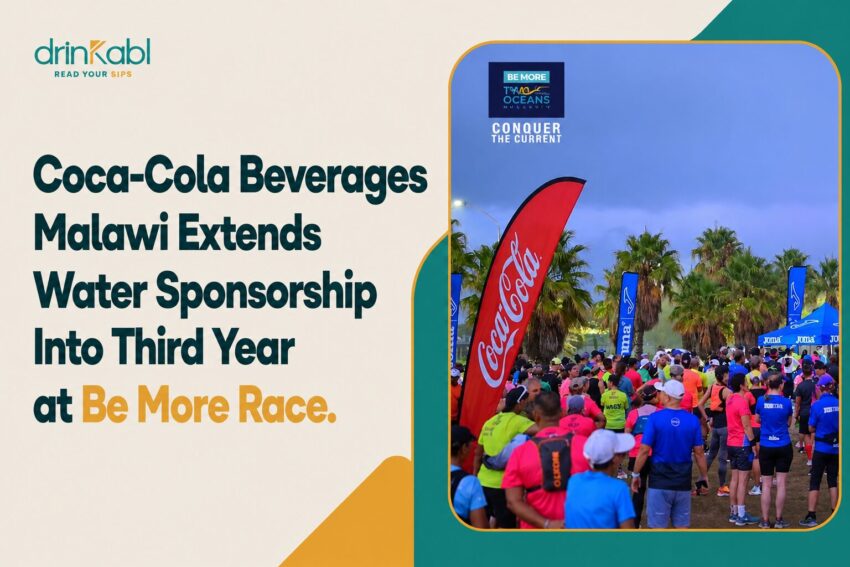

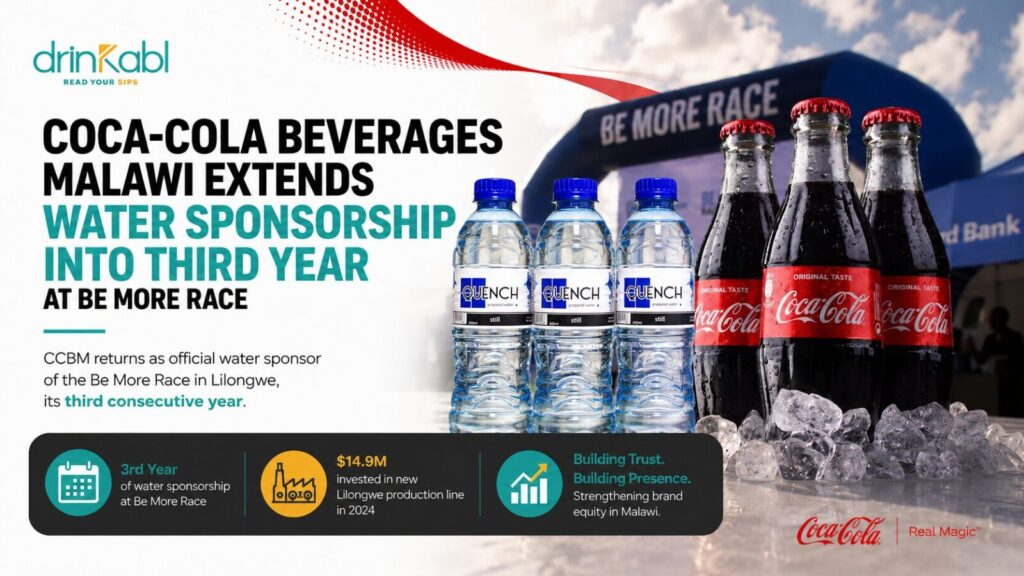
Coca-Cola Beverages Malawi (CCBM) returned as official water sponsor of the Be More Race in Lilongwe, its third consecutive year backing the Standard Bank Malawi-organised wellness event.
The sponsorship keeps CCBM’s water brands in front of a health-conscious, urban Lilongwe audience at zero product cost beyond activation spend, a modest but recurring line item against a company that has been putting real capital into the market. CCBM’s parent, Coca-Cola Beverages Africa (CCBA), committed $14.9 million to a new Lilongwe production line last year, one capable of bottling both Coca-Cola trademark beverages and the local Sobo brand on a single line.
That investment context matters more than the race itself. CCBA entered Malawi in 2022 by acquiring Castel’s soft drinks business, a deal welcomed at the time by the Consumers Association of Malawi on expectations of steadier supply and better quality control. Three years on, race-day sponsorships function as low-cost brand maintenance in a market where CCBA is still building consumer trust and retail penetration.
Malawi is a small, landlocked market by CCBA’s regional standards, its role in the group’s portfolio is logistics-driven as much as commercial: the new Lilongwe line was built partly to feed export volume into Zambia. Sponsorship activity like the Be More Race does little to move that calculus. It buys visibility, not volume.
Coca-Cola’s playbook here echoes moves elsewhere on the continent, including Sprite and Safaricom’s recent Nairobi activation and the consumer-facing rewards push Coca-Cola Nigeria has run as its home market stabilises. The common thread is brand spend timed to periods of operational investment, not standalone marketing decisions.
Whether CCBM converts three years of race-day visibility into measurable market share in Malawi’s water and CSD category remains untested. The company has not disclosed category-specific volume figures for the market since the 2022 acquisition.
READ MORE