
as It Builds the Infrastructure for a Continental Takeover
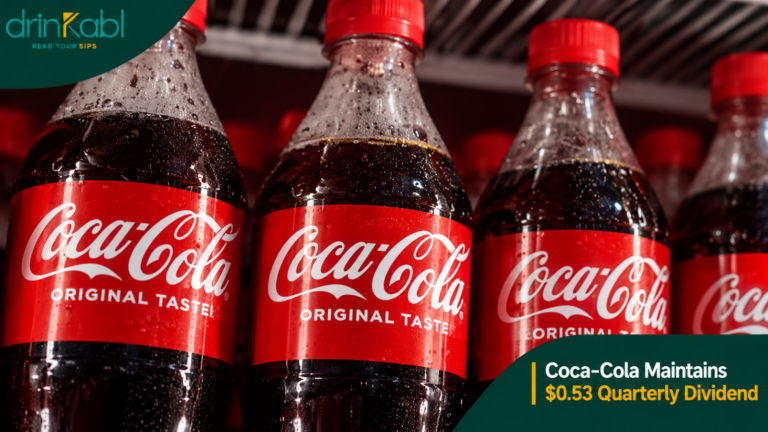
Coca-Cola HBC launched its next five-year Egyptian investment cycle on 7 June, opening a $35 million PET bottle production line at its Amreya plant in Alexandria and announcing $1.28 billion in total planned capital spending across its Egyptian operations through 2030. The new line runs at more than 65,000 bottles per hour and adds annual output capacity of 33 million cartons.
The new commitment follows $1.1 billion already deployed in Egypt between 2022 and 2025, the period after Coca-Cola HBC paid $304 million to acquire the Coca-Cola Bottling Company of Egypt. Four years of integration have made Egypt one of the company’s more productive emerging markets: in the first quarter of 2026, Coca-Cola HBC’s emerging markets segment reported 15% organic revenue growth, with Nigeria and Egypt cited as the primary volume drivers.
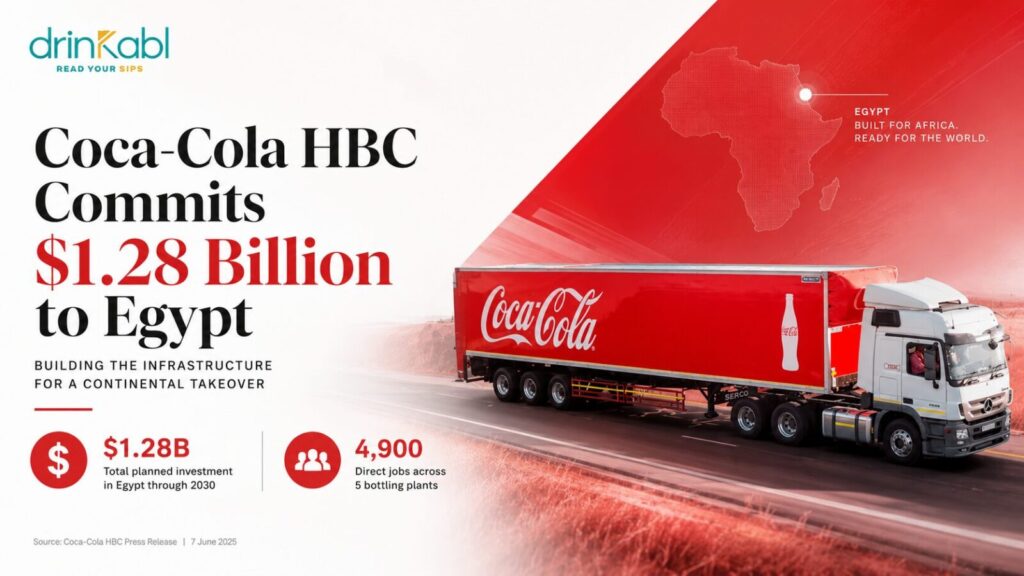
Adnan Topic, General Manager of Coca-Cola HBC Egypt, described the investment as a focus on localising manufacturing through Egyptian expertise and operational efficiency. The company’s five bottling plants in Alexandria, Tanta, Sadat City, Qalyub, and Assiut directly employ around 4,900 people and generated close to $1 billion in economic value for Egypt in 2024. Roughly 64,000 additional jobs run through the supply chain and distribution network.
Egypt is carrying more strategic weight within Coca-Cola HBC’s African positioning than the headline number suggests. The company is pursuing a 75% controlling stake in Coca-Cola Beverages Africa, a deal valued at $3.4 billion for 100% of CCBA and targeted to close by end of 2026. If it does, Coca-Cola HBC will represent two-thirds of Africa’s total Coca-Cola system volume and cover more than half the continent’s population, adding 14 markets to an existing footprint anchored by Nigeria and Egypt. Drinkabl.media’s coverage of Nigeria’s competitive beverage landscape has traced how the same investment logic plays out on the ground, with NBC’s $1 billion Nigeria commitment already reshaping retail activation and consumer reward programmes.
The Egypt investment runs in parallel with a $1.06 billion programme for South Africa and the Nigeria commitment, mapping a multi-front capital deployment across Africa’s three largest consumer markets. Egypt’s role within that structure is specifically export supply: the Amreya plant and the Alexandria cluster feed the Middle East, parts of Europe, and East Africa, making the manufacturing economics here different from purely domestic plays like Nigeria. When input costs move in Egypt, the ripple crosses borders.
With the CCBA transaction pending regulatory and antitrust clearance, the next material question is whether Coca-Cola HBC can sustain this capital intensity across a 29-plus-market footprint without compressing the margins it has spent three years rebuilding. Drinkabl.media’s earlier analysis of the glass packaging dynamics inside Nigeria’s beverage system offers a frame for what packaging infrastructure investment looks like when it connects to a high-volume, expanding bottler.
READ MORE