
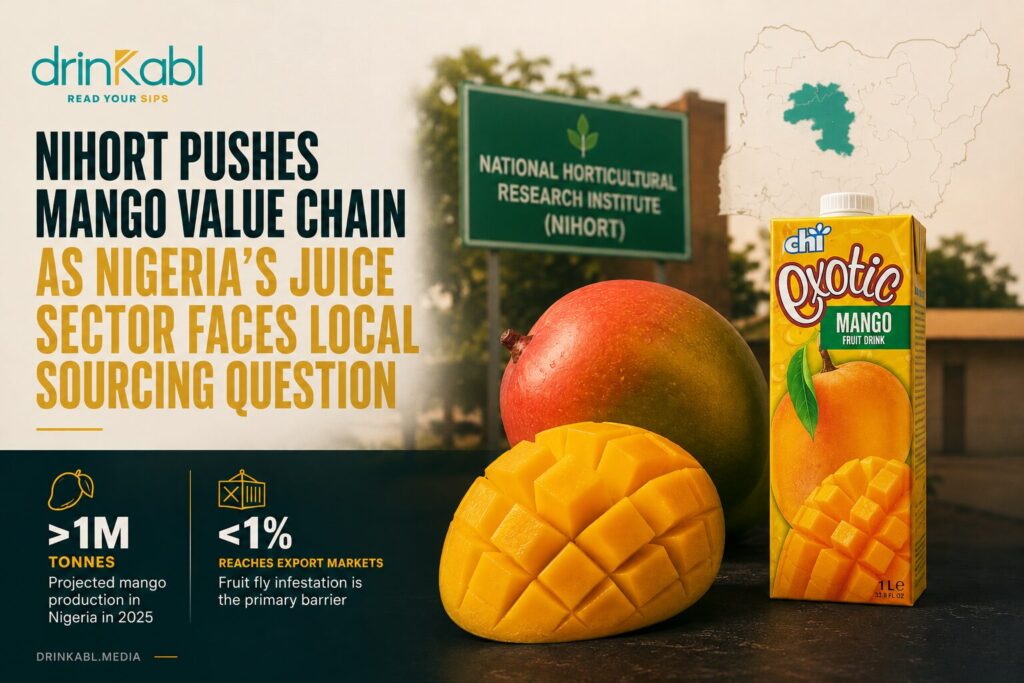
as Nigeria’s juice sector faces local sourcing question
Nigeria’s National Horticultural Research Institute is scaling up mango processing and agribusiness programmes, positioning the crop as a viable upstream source for the country’s fruit juice industry at a moment when Nigeria’s dominant juice brand is under new local ownership.
NIHORT Executive Director Prof. Muhammed Lawal Atanda said the institute has developed juice, puree, flakes, and jam products to reduce postharvest losses concentrated in high-volume growing states. “When you go to states like Benue, where there are many mango orchards, you see a lot of wastage during harvest periods,” Atanda said. The institute is also training young Nigerians in mango agribusiness at its Ibadan facility, targeting both smallholder processor development and agro-enterprise formation.
The scale of the upstream problem is not small. Nigeria cultivates mangoes across between 120,000 and 130,000 hectares, with production estimated at roughly 968,780 tonnes in 2021 and projected to exceed one million tonnes this year. Yet less than 1% of that volume reaches export markets, according to Produce Export Development Alliance chief executive Aiyeola Adetiloye, with fruit fly infestation the primary barrier. Regional data from West Africa suggests 30% to 40% or more of mango production is lost annually before it reaches any processor.
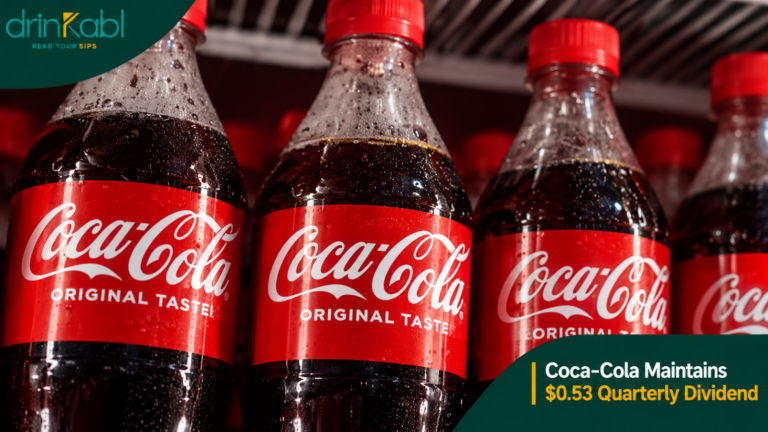
That gap sits directly upstream of Nigeria’s juice sector. Chivita, the country’s fruit juice market leader, completed its transfer from Coca-Cola to UAC of Nigeria in late 2025, returning the brand to domestic ownership after six years under multinational control. UAC has signalled a manufacturing-first strategy across its portfolio. Whether that extends to local mango sourcing for Chivita’s nectar and juice lines, rather than reliance on imported concentrate, remains an open operational question the new ownership structure makes newly relevant.
NIHORT maintains a germplasm collection of 25 to 35 mango varieties and supplies rootstock across Nigeria’s agroecological zones. Atanda described mango as suited to every zone in the country, including the Northeast and Southeast, owing to its low water requirements. The institute’s postharvest work aims to convert fruit that would otherwise rot in Benue and other growing states into commercially viable processed inputs.
Nigeria’s share of a global mango market valued at roughly $78.6 billion in 2026 depends on resolving both the phytosanitary barriers blocking export and the processing infrastructure gap limiting domestic value capture. For NIHORT, the two objectives converge. For Chivita’s new owners, the sourcing arithmetic may soon require a position.
READ MORE