

Africa’s Beverage Brands Face a Test of Identity, Trust and Growth
From counterfeit alcohol investigations in Nigeria to stronger coffee auction earnings in Kenya and renewed investment in consumer-facing brands, the week showed how product integrity, local relevance and commercial execution are shaping Africa’s beverage industry.
Africa’s beverage industry had a week defined by the challenge of turning established brands, local resources and market opportunities into sustainable growth. In Nigeria, regulators uncovered a suspected counterfeit alcoholic-drinks production facility in Aba, while Guinness Nigeria reported stronger nine-month earnings. Nigerian Breweries refreshed Maltina’s packaging as the malt drink marked 50 years in the market. In Tanzania, a senior commercial appointment at Serengeti Breweries highlighted the importance of distribution and sales execution. Meanwhile, Lagos Cocktail Week brought beverage brands and hospitality professionals together, and Kenya’s coffee auction market recorded stronger sales.
Taken together, the developments point to a broader question for African beverage businesses: how can companies build consumer trust, deepen their connection with local markets and turn existing advantages into more durable commercial performance?
Nigeria confronts the supply chain behind counterfeit drinks
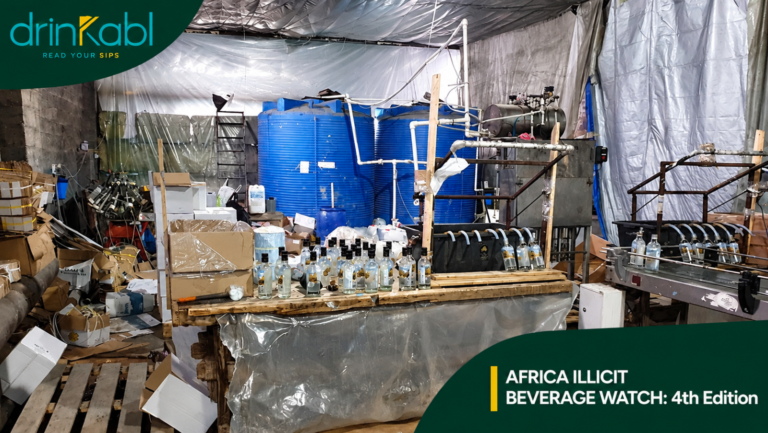
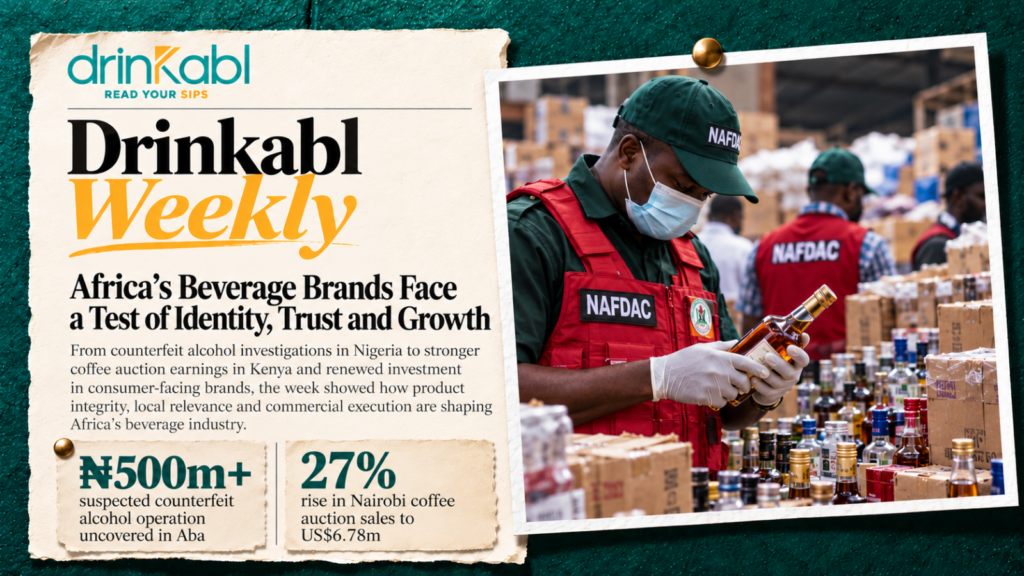
Nigeria’s National Agency for Food and Drug Administration and Control (NAFDAC) uncovered a suspected counterfeit alcoholic-drinks production facility in Aba, Abia State, on 19 October. The agency valued the operation at more than ₦500 million, recovering empty bottles, sealing machines, packaging materials, ethanol and tanks containing unidentified liquid mixtures.
The discovery followed an earlier operation in Aba in which NAFDAC seized counterfeit packaging materials valued at more than ₦200 million. The two raids targeted different locations and types of suspected activity. The agency has not established a connection between them, and the valuation of the latest facility does not represent confirmed sales of counterfeit beverages.
The commercial implications extend beyond the seized equipment. Counterfeit packaging and suspected production facilities expose legitimate manufacturers to reputational damage, complicate product authentication and undermine consumer confidence. They also create an uneven competitive environment for companies that invest in registration, quality control and compliant distribution.
The next stage will depend on what investigators establish about the facility’s operator, the composition of the recovered liquids and whether any finished products reached the market. For legitimate beverage businesses, the case reinforces the importance of traceability and effective monitoring of distribution channels.
Read more: NAFDAC uncovers a suspected ₦500 million alcohol plant in Aba
Guinness Nigeria turns earnings growth into a test of financial resilience
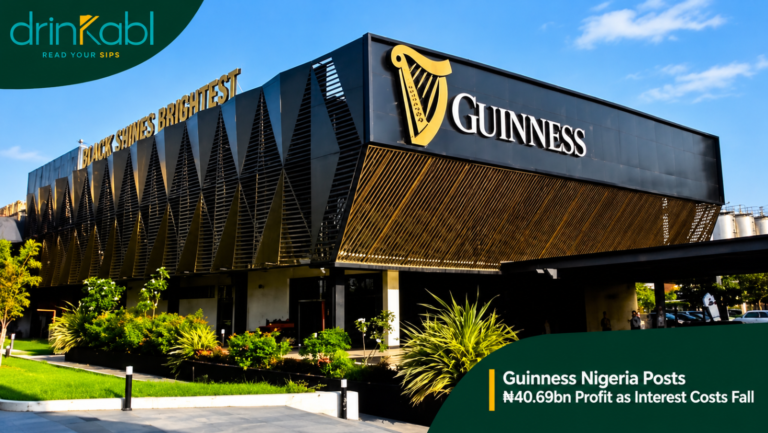
Guinness Nigeria Plc reported a 53.1% increase in profit after tax to ₦40.69 billion for the nine months ended 30 September 2026, according to results filed with the Nigerian Exchange on 21 October. Revenue rose 20.4% to ₦403.33 billion, while profit before tax increased 55.3% to ₦61.65 billion.
A major contributor was the reduction in financing costs. Finance expenses fell 61.9% to ₦5.83 billion, with interest on loans and borrowings declining to ₦5.61 billion from ₦14.66 billion a year earlier. The figures illustrate how a lower financing burden can allow revenue growth and operating improvements to translate more effectively into profit.
The third quarter was particularly strong, with revenue increasing 41% to ₦138.29 billion. Domestic sales accounted for approximately 98% of nine-month revenue, highlighting the importance of the Nigerian market to the company’s performance.
However, the results also raise questions about cash management. Cash on hand stood at ₦1.40 billion at the end of September, while overdrafts had increased to ₦2.80 billion. The board also declared an additional interim dividend of ₦7 per share.
For Guinness Nigeria, the next test is whether improved profitability can be sustained alongside sufficient liquidity for working capital, distribution and future investment. Strong earnings are encouraging, but the quality and durability of those earnings matter just as much.
Read more: Guinness Nigeria posts ₦40.69 billion profit as interest costs fall
Maltina refreshes its identity after 50 years
Nigerian Breweries refreshed Maltina’s packaging across glass bottles, cans and PET bottles as the non-alcoholic malt drink marked its 50th anniversary in Nigeria. Announced on 19 October, the redesign retains the brand’s familiar orange identity while introducing stronger gold detailing and a more prominent heritage presentation.
The relaunch also includes the “What’s Your Word?” consumer campaign, which invites Nigerians to describe their impressions of the new packaging. The company has not disclosed the campaign’s budget or projected sales impact.
For an established brand, packaging is more than a visual update. It is a commercial tool that can improve shelf visibility, renew consumer attention and help a product remain relevant without abandoning the familiarity that existing customers recognise.
The decision to retain Maltina’s taste while refreshing its appearance suggests an attempt to modernise the brand without disrupting its established proposition. That balance is particularly important in a competitive non-alcoholic drinks market, where manufacturers must defend consumer loyalty while attracting new buyers.
The outcome will depend on whether the redesign translates into stronger engagement, repeat purchases and improved sales rather than a short-lived increase in attention.
Read more: Maltina refreshes packaging as competition for consumers grows
Serengeti Breweries puts commercial execution in focus
Raymond Anthony took up the position of Head of Commercial Operations at Serengeti Breweries Limited in Dar es Salaam, Tanzania, effective October 2026. The appointment, announced on 17 October, moves him from his previous role as Innovation Sales Manager into a broader commercial leadership position.
Anthony’s experience spans finance, customer development, sales management and innovation. He previously worked at Serengeti Breweries as Decision Support Manager and held several positions at Unilever Tanzania before joining Simusolar as National Sales Manager.
The appointment comes against a backdrop of increasing pressure on beverage manufacturers to improve distribution, strengthen customer relationships and turn brand investment into sales. Commercial operations sit at the intersection of these priorities, linking pricing, route-to-market decisions, retail availability and revenue performance.
The company has not publicly disclosed Anthony’s specific targets or the detailed priorities attached to the role. His appointment nevertheless highlights a wider industry reality: product innovation and marketing cannot deliver their full value if businesses struggle to get products to the right outlets at the right price.
For African beverage companies seeking growth beyond their traditional customer bases, effective commercial execution can be as important as launching another product.
Read more: Raymond Anthony takes commercial operations role at Serengeti Breweries
Lagos Cocktail Week pushes beverage culture beyond entertainment
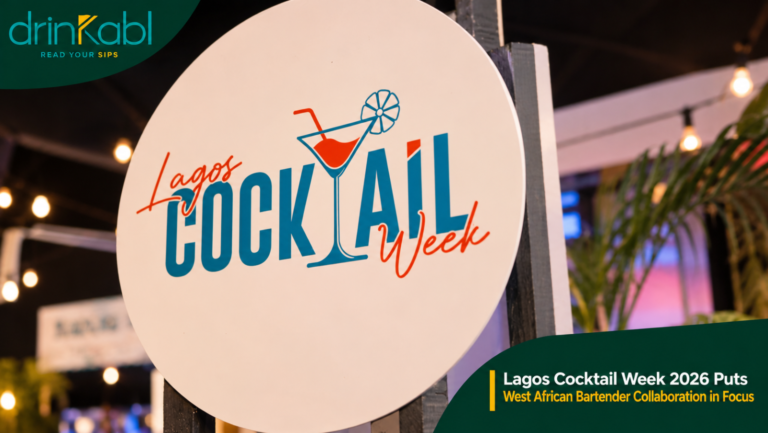
Lagos Cocktail Week concluded its 12th edition on 23 October after a programme that brought together beverage brands, bartenders, hospitality professionals and consumers under the theme “Africa Pours into Lagos”.
The event combined consumer-facing experiences with professional engagement. Activities included cocktail sampling, product showcases, a bartender competition, gastro-mixology sessions and discussions about the development of the bar industry.
Brands used dedicated spaces to introduce products and engage visitors, while the wider programme sought to strengthen connections between hospitality businesses and beverage operators. Founder Lara Rawa also emphasised the festival’s ambition to contribute to industry education and establish beverage culture as part of the wider creative economy.
For participating brands, events of this kind offer more than visibility. They provide opportunities to observe consumer reactions, test serving occasions, build relationships with bartenders and strengthen connections with the hospitality channel.
The longer-term commercial value, however, depends on what follows the event. Strong engagement must translate into meaningful customer relationships, wider distribution or repeat demand if the investment is to deliver lasting returns.
Lagos Cocktail Week’s regional ambition also points to an opportunity for African beverage businesses to build shared professional networks and develop consumer experiences that draw on local tastes and cultural identities.
Read more: Lagos Cocktail Week puts West African bartender collaboration in focus
Kenya’s coffee trade highlights the value of quality and market access
Kenya’s coffee market offered another indication of the commercial opportunities available when African beverage supply chains connect quality with buyers. Nairobi coffee auction sales rose 27% to US$6.78 million, according to reporting by Food Business Middle East & Africa on 23 October.
New KPCU and Alliance Berries accounted for 45% of traded coffee, while Sang Young Estate achieved the auction’s highest reported price at KSh50,076 per bag.
The figures point to the importance of quality differentiation, reliable market access and the ability to attract buyers willing to pay for particular coffee lots. They also highlight how auction systems can provide a commercial route through which producers and exporters connect product quality with market demand.
For Africa’s wider beverage industry, the lesson extends beyond coffee. Local agricultural resources create an opportunity, but value capture depends on what happens after production: grading, processing, branding, access to buyers and the ability to maintain consistent quality.
African beverage companies looking to develop local ingredients into finished products face a similar challenge. Building a strong origin story can help distinguish a product, but commercial success requires the operational capacity to deliver on that promise.
Source: Food Business Middle East & Africa’s beverage and coffee industry coverage
What comes next
The coming weeks will test whether Nigeria’s counterfeit-drinks investigations produce evidence that helps disrupt illicit supply chains, and whether Guinness Nigeria can sustain its improved earnings while managing cash and financing needs. Maltina’s packaging refresh will show whether heritage-led brand investment can translate into renewed consumer demand, while Serengeti Breweries’ commercial leadership transition puts distribution execution firmly in focus.
In the wider regional market, coffee auction performance and events such as Lagos Cocktail Week underline the importance of connecting local identity with commercial opportunity. African beverage businesses have ingredients, brands, talent and cultural assets that can support growth, but these advantages must be matched by market intelligence, reliable distribution and disciplined investment.
The common thread this week was the difference between possessing an opportunity and capturing its value. A recognised brand must continue earning consumer trust. A profitable company must manage its cash. A product refresh must generate repeat demand. A coffee producer must connect quality with buyers willing to pay for it.
For Africa’s beverage industry, sustainable growth will depend less on the number of products launched or campaigns staged than on how effectively businesses convert these activities into stronger brands, more resilient operations and lasting commercial returns.