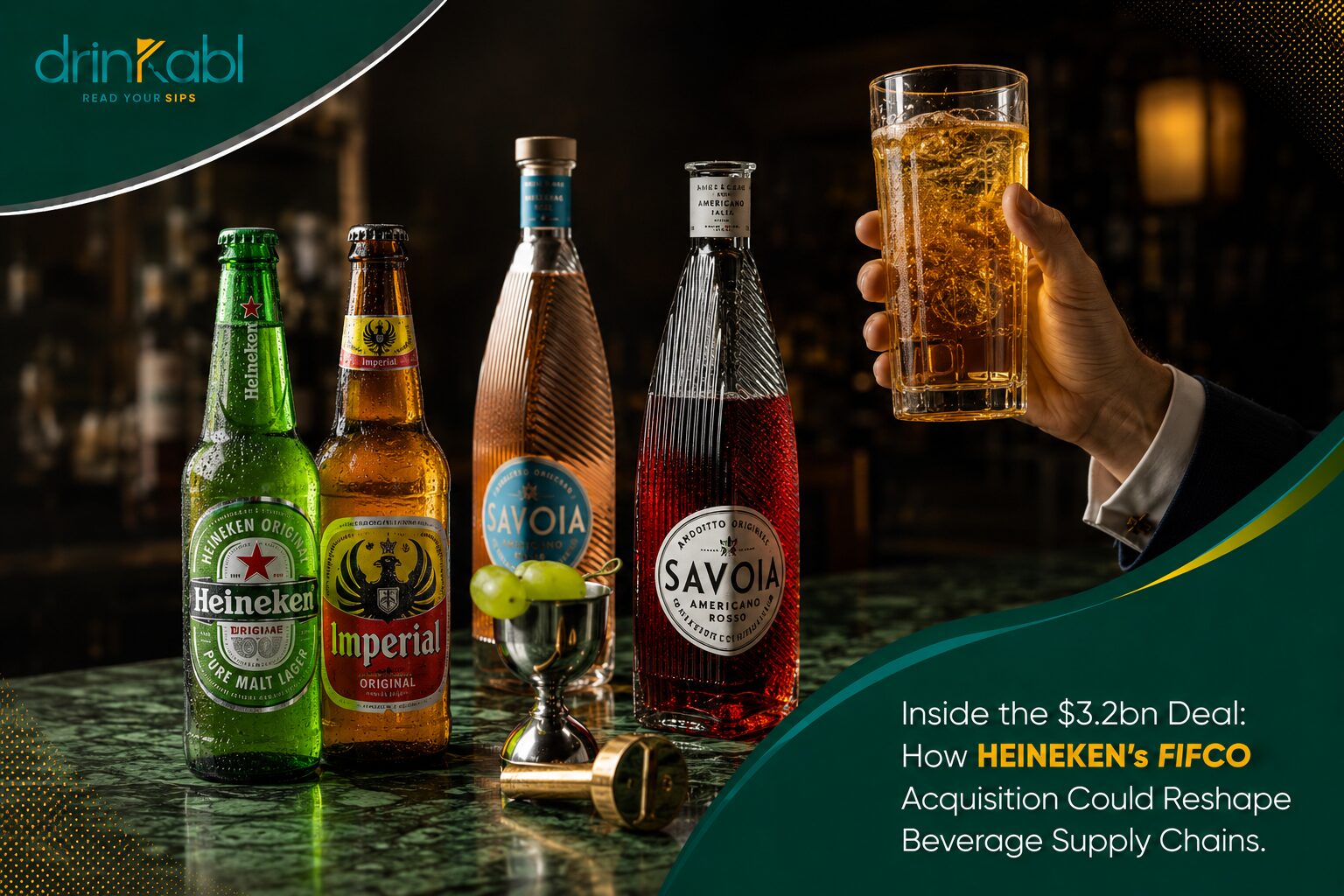

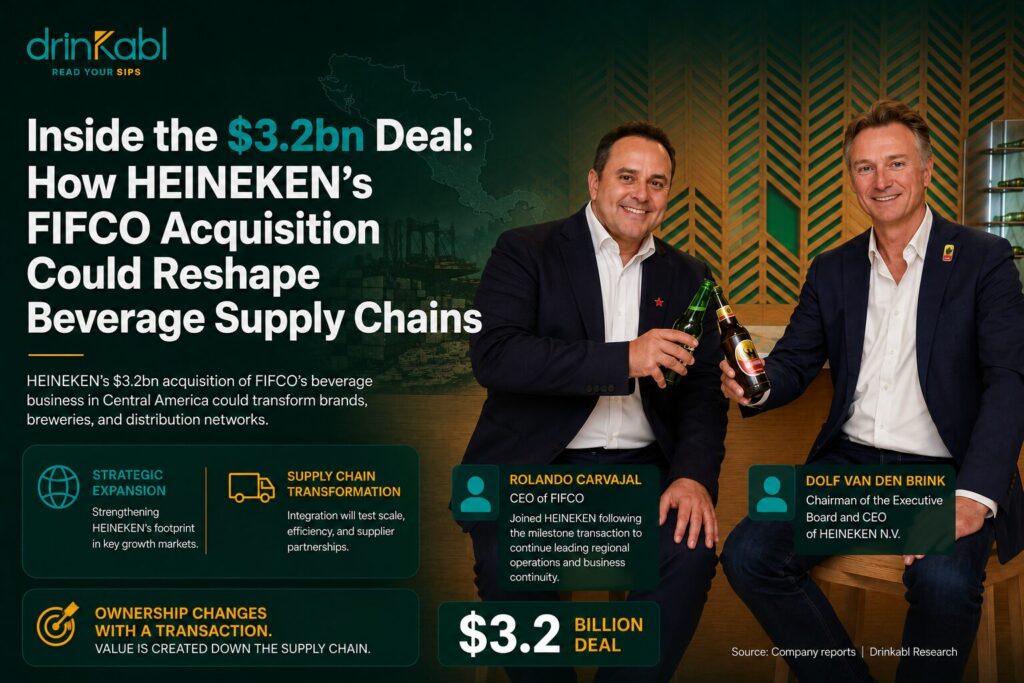
HEINEKEN’s planned $3.2bn acquisition of FIFCO’s beverage business in Central America may be measured in billions of dollars, but the more complicated test will begin after the transaction itself.
For large beverage groups, acquisitions do not end with ownership changes. They can trigger a much wider reassessment of brands, breweries, production capacity, packaging formats, suppliers and distribution networks. That makes the supply chain one of the less visible, but potentially decisive, parts of the integration process.
The first question is portfolio complexity. When a global brewer absorbs a major regional beverage operation, it must determine which brands and formats justify continued investment, where production can be consolidated and whether existing packaging specifications remain commercially efficient. Those decisions can quickly reach suppliers.
Glass bottles, cans, closures, labels and secondary packaging are tied to production schedules, brand identity and transport economics. Standardising some formats can reduce complexity and improve purchasing leverage, but excessive standardisation risks weakening the distinctiveness of local brands.
Manufacturing capacity presents another challenge. Changes in production allocation can alter demand for packaging materials across plants and markets, requiring suppliers to respond to new volumes, specifications and delivery schedules.
Sustainability targets could add another layer of pressure. Lightweighting, recycled content, reusable packaging systems and more efficient transportation are increasingly linked to both cost control and environmental commitments. A larger operating footprint may create opportunities to accelerate these programmes, but only where the supporting infrastructure and supplier capabilities exist.
The acquisition could therefore have consequences well beyond the companies directly involved. As the global beverage industry consolidates, packaging suppliers are increasingly being asked to provide more than containers. Scale, technical capability, geographic reach, supply continuity and the ability to co-develop new formats can determine which suppliers become long-term strategic partners.
The headline may be the acquisition price. The longer-term question is whether the enlarged business can integrate its brands, manufacturing network and supply base without adding unnecessary complexity.
In beverage M&A, ownership can change with a transaction. Operational value is created much further down the supply chain.
Read More: