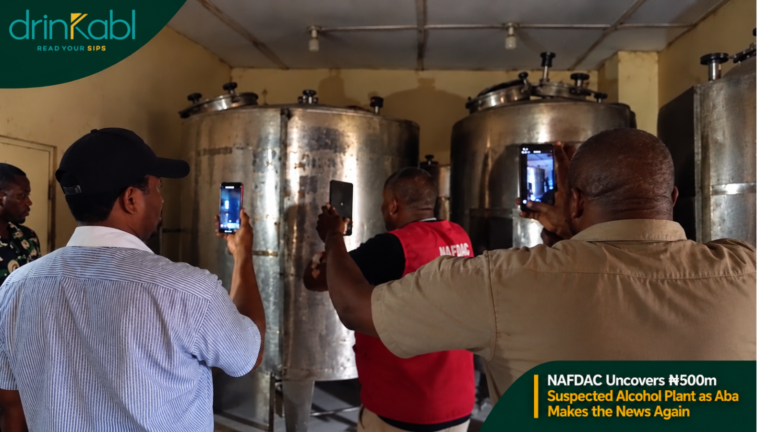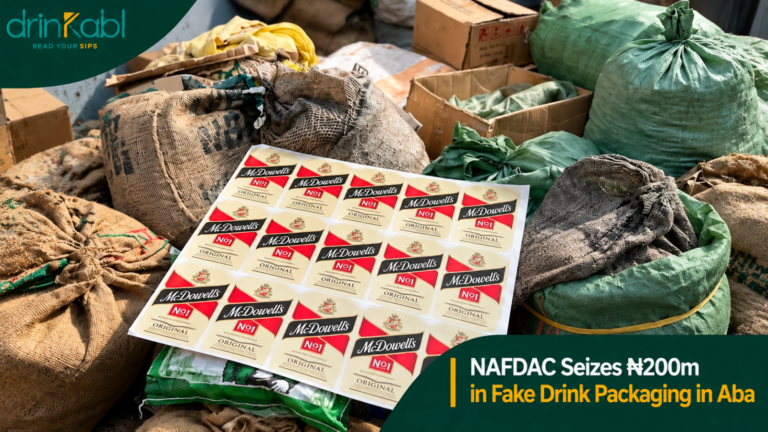


Ireland’s health authority published findings this week that should unsettle policymakers far beyond Dublin. The Health Information and Quality Authority concluded that Irish guidelines on low-risk alcohol consumption may need to be reconsidered, and that there is no risk-free level of alcohol consumption. The finding that attracted most attention was the collapse of the gender distinction: HIQA found no strong basis for sex-specific thresholds, with the difference in risk between men and women assessed as minimal. For most of sub-Saharan Africa, the more pointed finding is something else entirely. The guidelines being questioned in Ireland do not exist here at all.
Only a few sub-Saharan African countries have an alcohol policy, a standard drink definition, and low-risk drinking guidelines, according to published research in the Journal of Studies on Alcohol and Drugs. Nigeria, the continent’s second-largest beer producer, has no defined standard drink measure and no official low-risk consumption threshold. Health warnings are not mandatory on labels of alcoholic beverages in Nigeria, despite NAFDAC regulations covering other labelling requirements. The public is drinking without reference points that even Ireland is now finding inadequate.
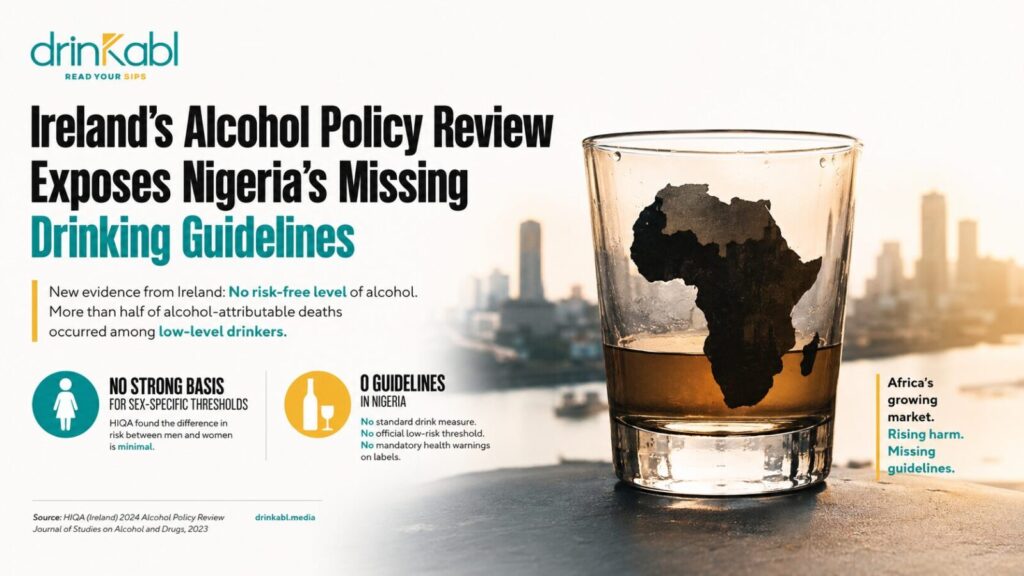
The HIQA data sharpens this problem in one specific way. More than half of alcohol-attributable deaths occurred among the 90 per cent of drinkers with the lowest levels of consumption. Harm, in other words, is not concentrated among heavy drinkers. It is distributed across the general drinking population. In African markets where the most common pattern of drinking is heavy episodic use, regulators have focused enforcement energy on illicit products and sachet formats. The HIQA findings suggest the risk pool extends well beyond those targets
Nigeria’s NAFDAC is currently enforcing a ban on spirits packaged in sachets and bottles below 200ml, a measure aimed at reducing underage access and high-concentration cheap alcohol. The Federal Ministry of Health has been urged to release its national alcohol policy that includes prohibition of alcohol in sachets and small volumes below 200ml. That policy has not yet been published. NAFDAC’s sachet enforcement is drawing its own political pressure, with civil society groups contesting the DG’s authority to proceed. Meanwhile, the broader question of what constitutes harmful consumption at any level remains officially unaddressed.
Sub-Saharan Africa has become a priority growth market for multinational alcohol producers, with rising household incomes, trade liberalisation, and expanding retail and distribution networks increasing alcohol availability and affordability across the region. Both consumption volumes and alcohol-attributable harm are trending upward. Regulators are chasing packaging and illicit supply. The science coming out of Ireland and Canada suggests the risk architecture is larger than that framing allows.
Alcohol Action Ireland’s chair, Professor Frank Murray, noted that risk is a continuum, beginning at very low levels of consumption and increasing with higher drinking levels. Canada’s updated guidelines now suggest that fewer than three standard drinks per week carries meaningful risk. African health ministries have no equivalent framework in place to even begin that conversation. Nigeria’s counterfeit alcohol enforcement has advanced further than its public health guidance on legal drinking. That gap will not hold as consumption volumes climb.
READ MORE