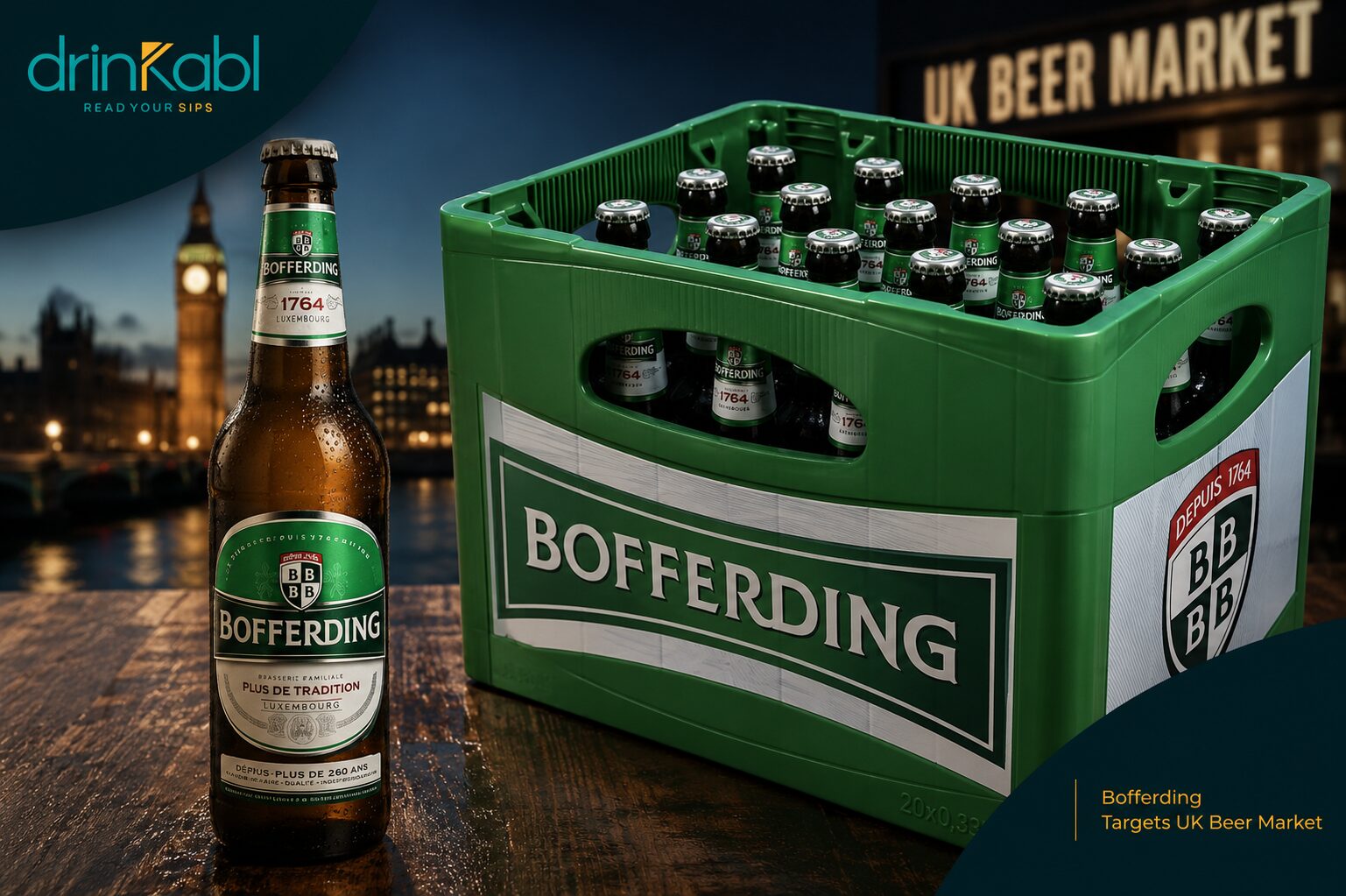

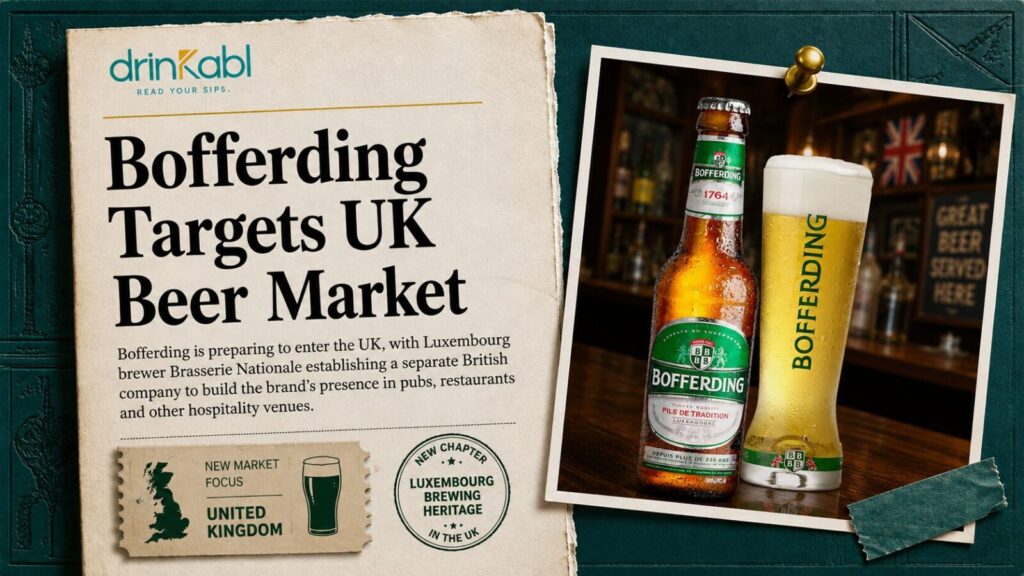
Bofferding is preparing to enter the UK, with Luxembourg brewer Brasserie Nationale establishing a separate British company to build the brand’s presence in pubs, restaurants and other hospitality venues.
CEO Mathias Lentz registered Bofferding Limited on 21 May 2026, with the company based north of London and Lentz listed as its director and owner. The brewer is already discussing distribution, hospitality and retail arrangements, although the scale of the investment has not been disclosed.
The challenge is immediate: Bofferding has little recognition in Britain. Robert Karsten, national accounts manager at Worlds Beer, told Luxembourg media that the brand would effectively be starting from scratch. That puts the burden on distribution and hospitality execution rather than the strength of Bofferding’s home-market position.
The UK beer market is crowded. Britain has a large independent brewing base alongside multinational groups, while the pub channel is under pressure from rising operating costs and changing consumer habits. Recent reporting from The Times put the number of independent breweries at about 1,550, down from more than 2,000 at the sector’s peak.
Tax adds another layer. Since the UK’s alcohol-duty reforms, beer duty is linked to alcohol strength, with current rates ranging from £9.96 per litre of pure alcohol for beer below 3.5% ABV to £26.61 for beer between 3.5% and 8.4% ABV. Qualifying draught beer receives a lower rate.
That makes Bofferding’s initial hospitality strategy commercially sensible. Pubs and restaurants give an imported beer a route to trial without requiring immediate national supermarket distribution. The brand will still have to justify its price against established European lagers such as Peroni and Moretti, as well as British producers competing for the same taps and shelves.
Bofferding is betting on provenance rather than imitation. The brewer describes the beer as part of Luxembourg’s brewing heritage and already exports to markets including Belgium, France, China and the United States. Bofferding’s company profile
The move also fits a broader pattern in which smaller beverage brands are using cultural identity to enter crowded premium categories. Drinkabl.media’s coverage of premium craft beer growth found that provenance and product identity are increasingly being used alongside flavour and experience to justify premium positioning.
For Bofferding, however, the UK test will be less about whether consumers like the beer than whether the company can make an unfamiliar Luxembourg brand commercially visible at sustainable margins.
That means securing the right distributors, winning enough hospitality placements and building repeat purchase before the cost of wider retail expansion begins to accumulate.
READ MORE