
India’s non-alcoholic beverage industry is executing a structured plastic waste overhaul, while African markets are still in the early stages of building. Nigeria and Kenya both face tightening producer responsibility deadlines, with enforcement infrastructure lagging behind the policy.
The Indian Beverage Association outlined the scale of the effort on 17 June, describing active programs that have reduced standard PET preform weights by 10% to 20% across high-volume packs and cut plastic cap closure weights by 20% to 25%. The sector is targeting 30% recycled PET integration across core portfolios, with major players co-investing with global polymer processors to produce food-grade r-PET at a commercial scale. Nationwide digital waste-tracking networks, running through platforms including Race Eco Chain and Banyan Nation, now generate audit-ready plastic credits from collection point to processing mill.
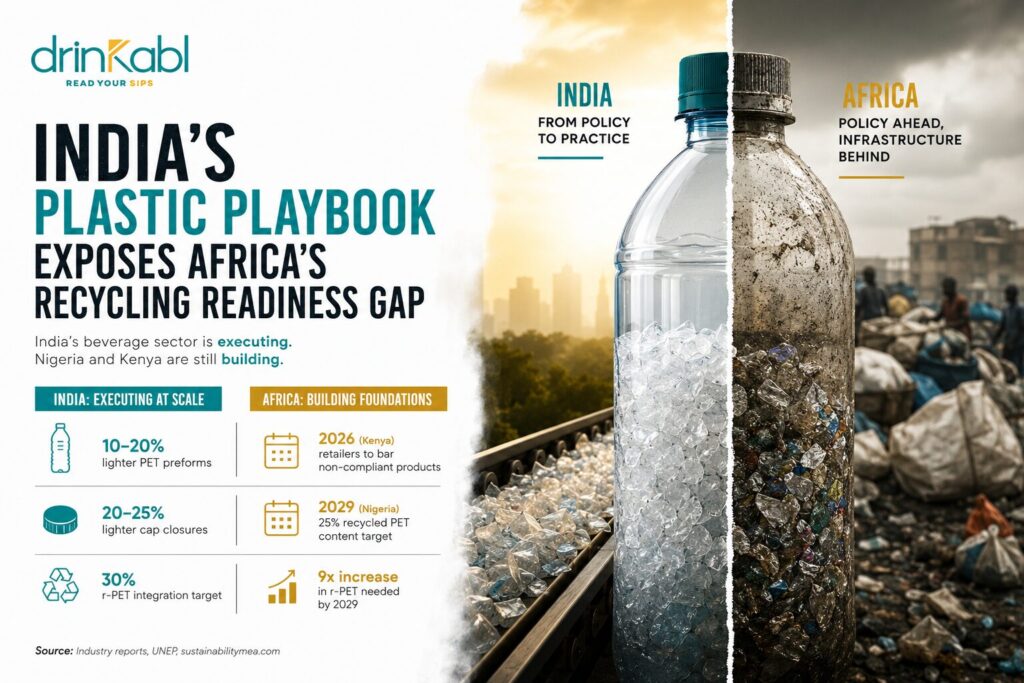
The contrast with Africa’s two most active EPR markets is instructive. Kenya activated mandatory producer responsibility rules on 5 May 2025, and by February 2026, retailers were being barred from stocking non-compliant products. Industry execution is still catching up. Coca-Cola Beverages Africa has shifted Sprite bottles to clear PET to improve recyclability, and Bidco Africa has removed the security seal from its Planet Aqua water bottles. These are packaging adjustments. They are not the systematic material reduction programs India’s sector is now running at scale.
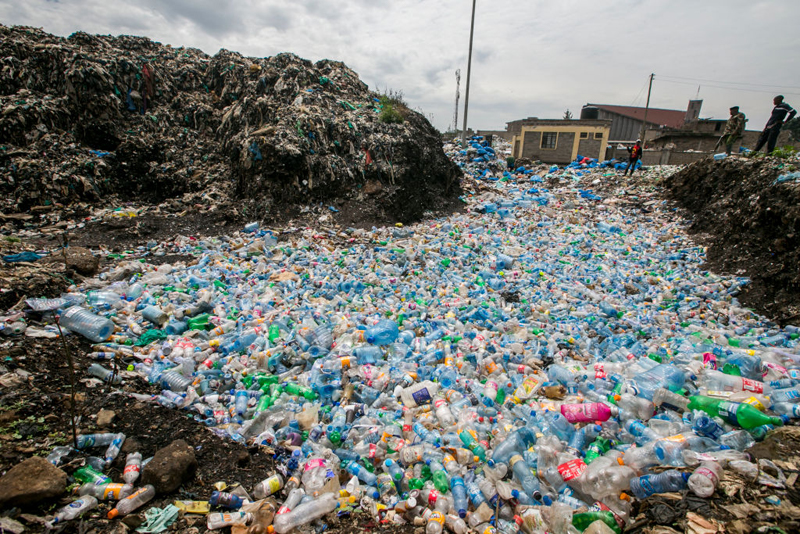
Nigeria’s timeline is longer, but the pressure is accumulating. The country’s EPR framework, developed in collaboration with UNEP, targets 25% recycled content in PET bottles by 2029, a ninefold increase from current levels. Nigeria’s Food and Beverage Recycling Alliance, which counts Nestlé, Coca-Cola, and Nigerian Breweries among its 40-plus members, has improved PET collection rates and expanded informal-sector integration. A nationwide audit published in February 2026 identified multinational beverage companies as the largest contributors to Nigeria’s plastic pollution and called for binding targets rather than voluntary commitments.
Drinkabl.media’s May coverage of Nigeria’s brewers resisting new customs compliance costs shows how sensitised the sector already is to additional regulatory burden. Packaging mandates will hit the same nerve. Building domestic r-PET supply chains, formalising waste collection networks, and meeting escalating recycled-content targets all require capital investment, and in markets where FX pressure has already compressed margins, the sequencing of that spend is not straightforward.
Kenya’s 2030 recyclability targets and Nigeria’s 2029 r-PET mandates are fixed on the calendar. What India’s execution clarifies is the operational depth needed between a policy deadline and actual compliance.
READ MORE