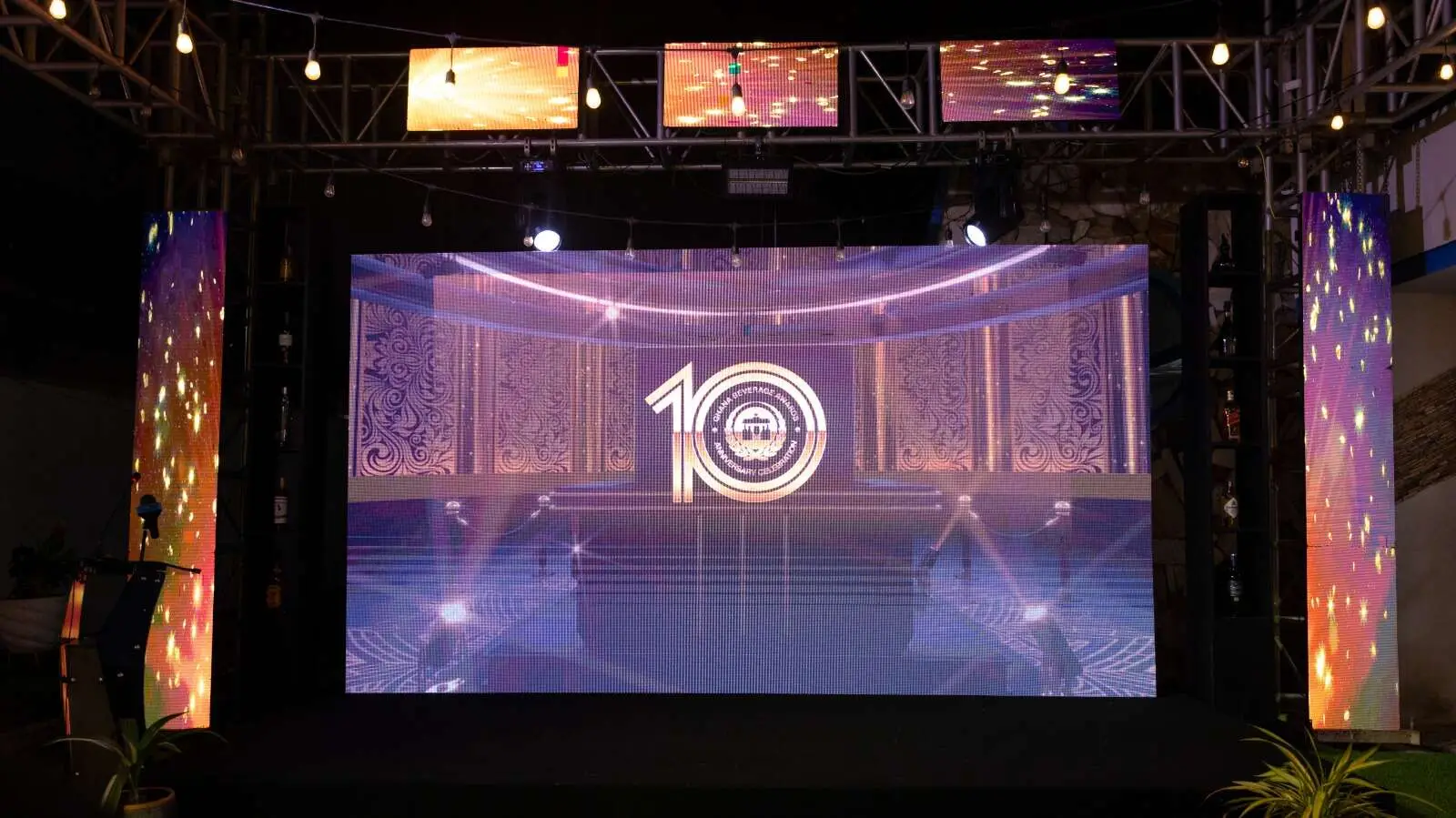

Signals emerging from Accra’s policy and industry circles had been converging for months. Through a dedicated industry forum in March, a Bartenders Masterclass in February, and sustained dialogue between manufacturers and trade officials, momentum had been building within Ghana’s beverage ecosystem toward a reckoning with structural impediments: import dependency, fragmented agribusiness linkages, and a domestic branding deficit. On Saturday, 19 April 2026, that groundwork culminated in a series of concrete policy commitments delivered from the main stage of the 10th Ghana Beverage Awards (GBA) in Accra.
Trade, Agribusiness and Industry Minister Elizabeth Ofosu-Adjare, speaking on behalf of President John Dramani Mahama under the anniversary theme “A Toast to Ten,” outlined a layered government agenda anchored on supply chain localisation, value addition, and consumer market development. “This industry plays a vital role in Ghana’s economic development, creating jobs and supporting livelihoods,” she said.
Central to the package is the Feed the Industry Programme, a structured initiative designed to tighten the link between smallholder farmers and industrial beverage producers by mobilising land, youth labour, and irrigation capacity. The programme directly targets a long-standing structural vulnerability across African beverage markets: an overreliance on imported raw material inputs that exposes manufacturers to currency volatility and supply disruptions.
The minister also flagged an imminent agribusiness policy framework intended to accelerate value addition across the food and beverage processing chain, positioning Ghana to compete more aggressively in both domestic and export markets. The timing is deliberate: Ghana hosts the African Continental Free Trade Area Secretariat in Accra, giving it a structural advantage as the continent edges toward deeper intra-African trade integration.
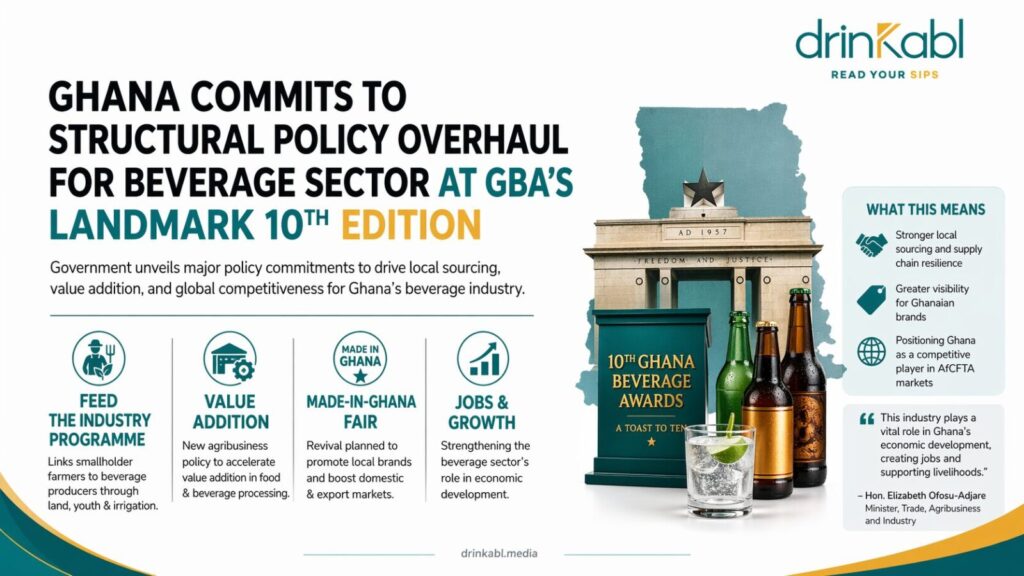
Among the more commercially significant announcements was the planned revival of the Made-In-Ghana Fair. “The fair will serve as an important tool for promoting local products and enhancing the image of Ghanaian brands, both locally and internationally,” Ofosu-Adjare said. For an industry where illicit consumption remains a persistent competitive headache and consumer confidence in domestic brands has only recently begun to consolidate, a national platform of this nature carries real commercial weight. The minister’s call for producers to raise quality standards and expand their global footprint also arrives against the backdrop of a reconfigured continental competitive landscape, as multinational brewers reassess their African footprints and create space for locally anchored producers.
Industry leaders at the ceremony matched the government’s tone. Ernest Boateng, CEO of Global Media Alliance, which organises the GBA, pressed manufacturers to embrace emerging technology as a competitive imperative. “Artificial intelligence has the potential to revolutionize how we operate, from predicting customer needs to improving product quality and operational efficiency,” he said.
The industry signal was further amplified by separate developments this month: Coca-Cola’s WAMA regional leadership met Ofosu-Adjare days earlier to signal a major investment drive in Ghana, to be formally announced at a May conference in Accra. That convergence of state commitment and multinational appetite reinforces the sector’s growing pull as a priority market within West Africa’s $13.25bn alcoholic beverages economy.
What the GBA’s tenth edition ultimately crystallised is not just a policy pledge but a strategic inflection point. For Ghana’s beverage sector, the combination of an agribusiness linkage programme, a consumer brand platform, and an incoming policy framework creates the conditions for a more integrated, export-ready industry, one that the Mahama administration is betting can deliver both jobs and growth.
Read More:
South Africa’s 364-Year Apple Legacy Is Quietly Anchoring the Southern Hemisphere’s Fruit Beverage Supply Chain
Who Is Silencing South Africa’s Sugar Warning? Inside the ARB’s Conflict of Interest Crisis