

Four beverage categories competed at Ojude Oba on 29 May in Ijebu-Ode, and not all of them were competing for the same thing.
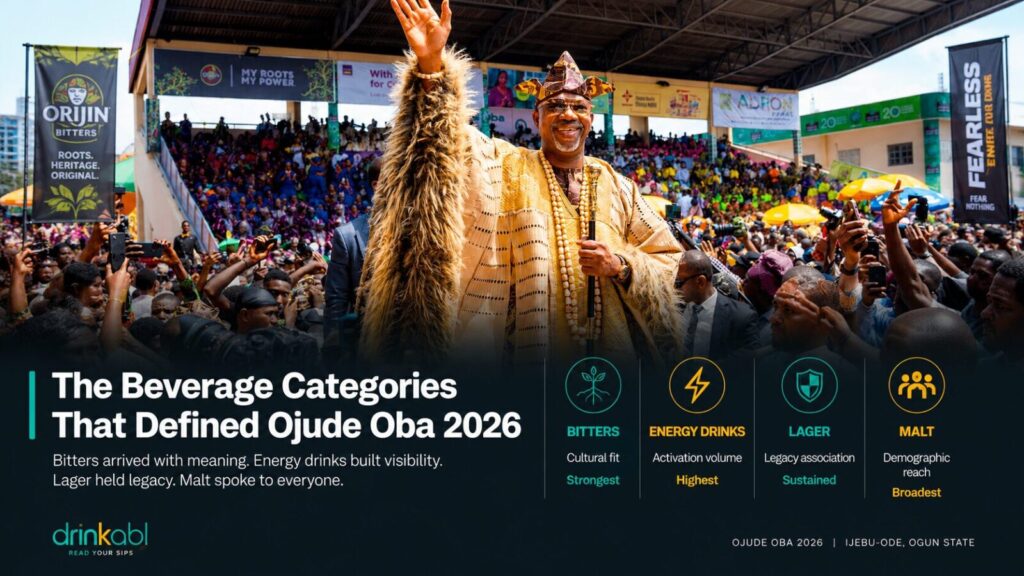
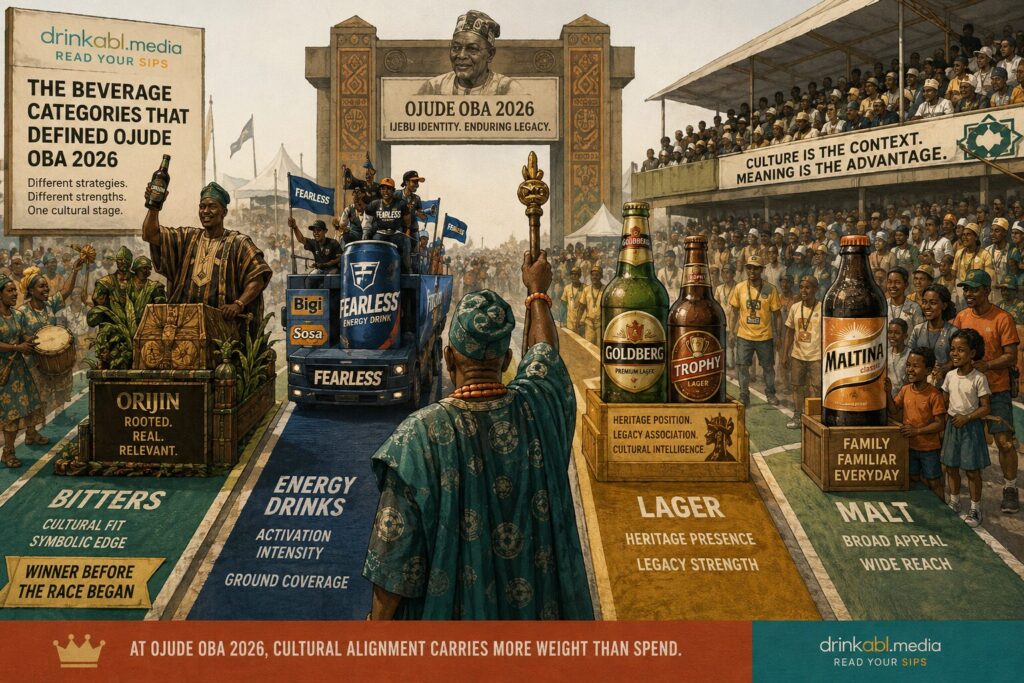
Guinness Nigeria returned Orijin as the festival’s official alcohol sponsor, anchoring its activation around ancestry and roots in a year when the event was themed around the legacy of the late Awujale, Oba Sikiru Kayode Adetona. The fit required no explanation. Ojude Oba is a celebration of Ijebu identity, and bitters as a category already occupies cultural territory tied to tradition and heritage. Orijin did not need to adapt to the festival. It arrived at home.
The contrast with energy drinks was sharp. Rite Foods returned as the wider festival’s official beverage sponsor, deploying Fearless alongside Bigi and Sosa across branded activations and refreshment stations. At a press conference ahead of the event, Fearless brand manager Olaniyi Aderuku described the association in terms the brand had clearly rehearsed: “Fearless has always stood for courage, self-expression, ambition, and the confidence to push boundaries. The festival itself embodies fearlessness through its rich culture, fashion, horsemanship, creativity, and the pride of a people who continue to preserve their heritage while embracing the future.” The energy category won the activation volume contest. It did not win the symbolism contest.
Bitters won Ojude Oba 2026 before the activations began. The category did not need to construct a heritage narrative for a festival built entirely on Ijebu identity and, in this edition, the weight of mourning a defining Awujale. Orijin arrived holding meaning the event already recognised. Energy drinks generated the most ground coverage. Lager held its legacy position. Malt addressed the broadest demographic range. None of them held the structural advantage that bitters carries into a culturally specific environment: the category already lives inside the meaning the festival organises itself around. Activation spend can build visibility. It cannot manufacture belonging.
Nigerian Breweries deployed both Goldberg and Maltina, reaffirming more than two decades of festival partnership. A company representative at the pre-event press conference described Goldberg’s Omoluabi positioning and Maltina’s family-facing appeal as natural fits for a gathering that draws children, professionals and traditional institutions in the same space. Lager occupied the heritage end of the alcohol category without the cultural specificity bitters holds. Trophy Lager ran creative that centred the permanence of the festival rather than the product — a sign that lager brands now compete on cultural intelligence rather than logo frequency.
“Fearless has always stood for courage, self-expression, ambition, and the confidence to push boundaries. The festival itself embodies fearlessness through its rich culture, fashion, horsemanship, creativity, and the pride of a people who continue to preserve their heritage while embracing the future.”
Olaniyi Aderuku, Brand Manager, Fearless Energy Drink
Malt’s broad demographic coverage is both its advantage and its limitation. At a festival where identity is the organising principle, a category that speaks to everyone risks resonating deeply with no one.
The commercial read matters here. Festival sponsorship in Nigeria has moved from logo placement to brand positioning, and the categories that absorbed the most spend at Ojude Oba 2026 were not necessarily those that generated the strongest recall. Bitters held a structural advantage: it entered a culturally charged environment already holding the right meaning. Energy drinks built activation intensity. Lager maintained legacy association. Malt covered demographic range.
The 2026 edition was the first Ojude Oba since Oba Adetona’s passing, and that context deepened the premium on authentic cultural engagement. Brands that leaned into heritage themes rather than generic festivity scored differently with attendees than those that prioritised ground coverage. How beverage companies apply that lesson across the South-West’s festival calendar building through Q3 will determine whether 2026 was a one-off calibration or the start of a strategic shift.
READ MORE