

Consumer prices for sweetened drinks in Jamaica are about to rise. GraceKennedy Limited, the island’s largest food and beverage conglomerate, has confirmed it will increase prices on non-alcoholic sweetened beverages by an average of nine per cent from May 1, 2026, making it one of the first major manufacturers to formally pass the cost of the government’s new sugar-content tax directly to the retail market.
The pressure had been building since Jamaica’s government introduced the Special Consumption Tax on sweetened beverages as part of its latest revenue package. Calculated on the basis of sugar content rather than volume or retail value, the levy placed an immediate and unavoidable burden on producers with broad portfolios of carbonated and sweetened drinks. GraceKennedy, which distributes nationally and serves both the retail and general trade channels, had limited room to absorb the additional input costs across an entire product segment.
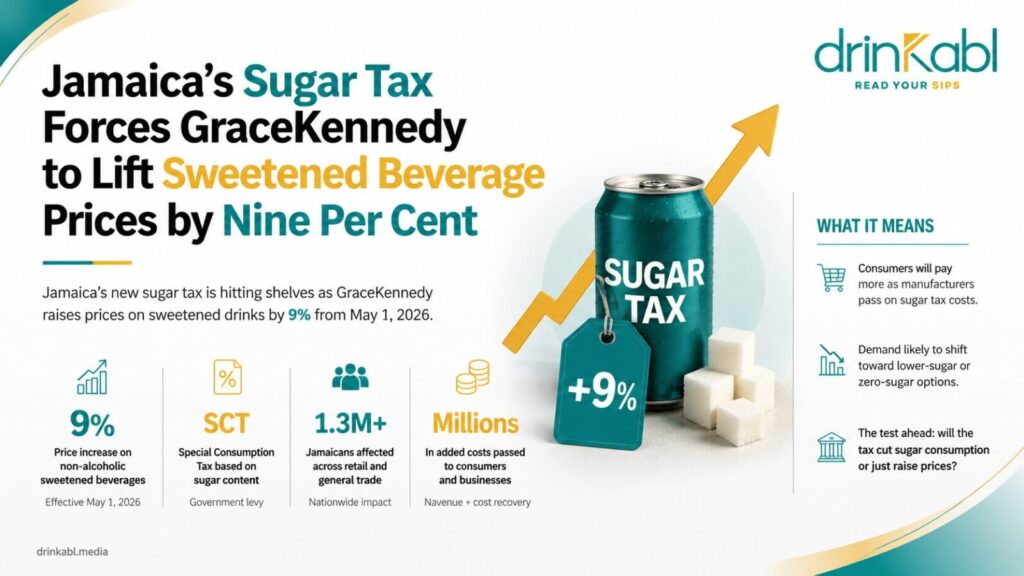
A notice dated April 24, addressed to general trade customers and seen by the Jamaica Observer, confirmed that the nine per cent increase would cover non-alcoholic sweetened beverages alongside other products subject to cost pressure. The company stated it was unable to absorb the combined burden of the SCT and additional cost factors at this time. The notice did not specify individual products affected or indicate whether the increase would extend to other trade channels.
GraceKennedy’s portfolio spans beverages, food manufacturing, and financial services across the Caribbean, making its pricing decisions a reliable signal of broader industry direction. For the sweetened beverage segment, the company’s scale means its move will likely set a reference point for competitors and smaller distributors operating in the same category. Jamaica’s beverage market, like much of the Caribbean, is heavily dependent on imported inputs, which compounds the effect of any domestic tax on manufacturer margins.
The SCT is designed to serve two purposes: generating government revenue and reducing sugar consumption among the Jamaican population. In practice, however, sugar taxes in comparable markets have shown that when the tax is structured as a production or distribution levy rather than a point-of-sale surcharge, manufacturers typically pass it through, often with the addition of margin protection built in. The nine per cent price increase GraceKennedy is implementing sits above what a purely mechanical pass-through would produce, suggesting the company has used the moment to address other accumulated cost pressures as well. That pattern is consistent with what research on beverage sector pricing in emerging markets has documented across previous sugar tax rollouts in Mexico, South Africa, and the Philippines.
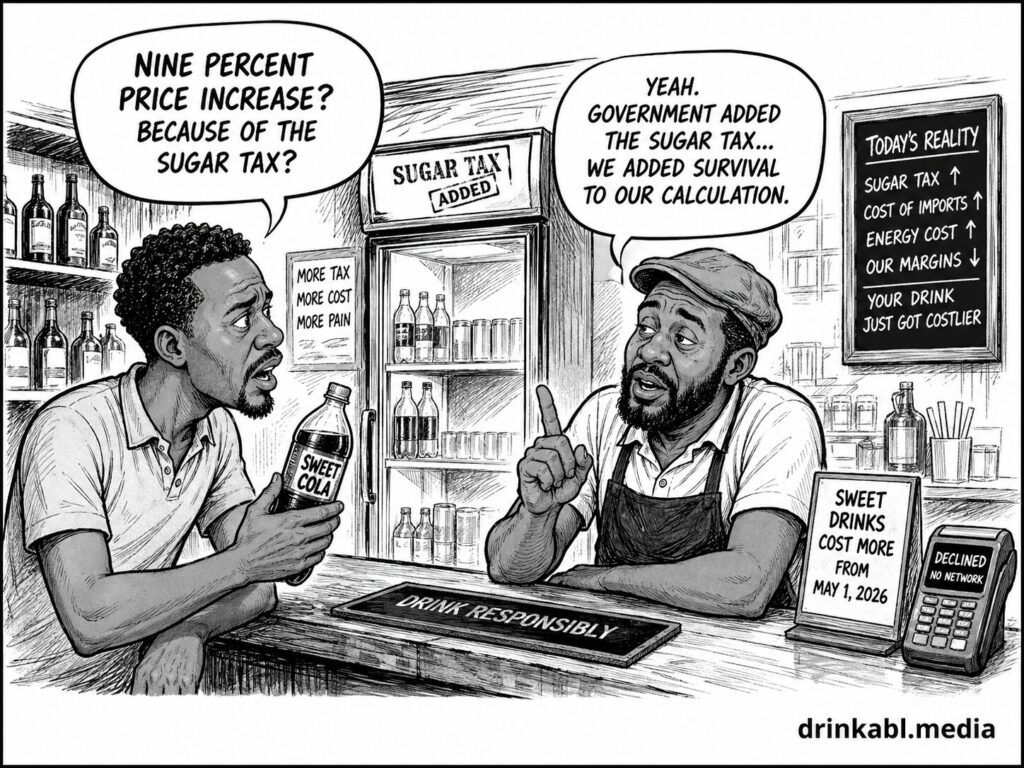
For Jamaican consumers, the increase arrives at a period of broad food price sensitivity. The move is likely to concentrate demand pressure on lower-sugar or zero-sugar product variants, where the SCT is either reduced or absent, and may accelerate reformulation decisions within GraceKennedy’s own portfolio and across the industry. Retailers in the general trade channel will face the choice of absorbing part of the increase to protect volumes or passing it fully to shoppers already adjusting household budgets. How smaller distributors and regional manufacturers respond over the coming weeks will determine whether the nine per cent figure becomes the industry floor or a ceiling.
With the May 1 implementation date confirmed, GraceKennedy’s next reporting period will offer the first measurable read on whether volumes held, shifted, or declined within the affected categories. The government, meanwhile, faces the broader test of whether the SCT delivers its stated public health outcomes or simply shifts consumption patterns to unregulated or informal alternatives. Elsewhere on the continent and across the Caribbean basin, industry observers will be watching Jamaica’s rollout as a live case study in how sugar taxation translates from policy to shelf price, and what that means for the companies caught between the two.
Read More
Inflation is reshaping how vending machine operators in Japan price and stock their ranges, with direct parallels to how cost-push pressure forces portfolio decisions.
Uganda’s tea producers are pressing the government for relief after years of compounding shocks exposed how thin the line is between price recovery and sector collapse.
Africa’s beverage industry in 2026 is being shaped by health, innovation, and younger consumer expectations, all of which intersect with the reformulation pressures sugar taxes create.