
For years, QSR chains watched beverage-first concepts accumulate outsized customer loyalty and margins that food-driven menus could not match. Starbucks built an entire operational model around drink complexity. Dutch Bros turned cold, customised beverages into a cult. The signal was clear well before most burger chains were willing to act on it.
McDonald’s read that signal early enough to launch CosMc’s in late 2023, a spin-off unit designed to test premium beverage formats in a controlled setting. The experiment was short-lived, but it was never meant to be permanent. It was a proving ground, and the data it produced is now flowing directly into mainstream McDonald’s operations.
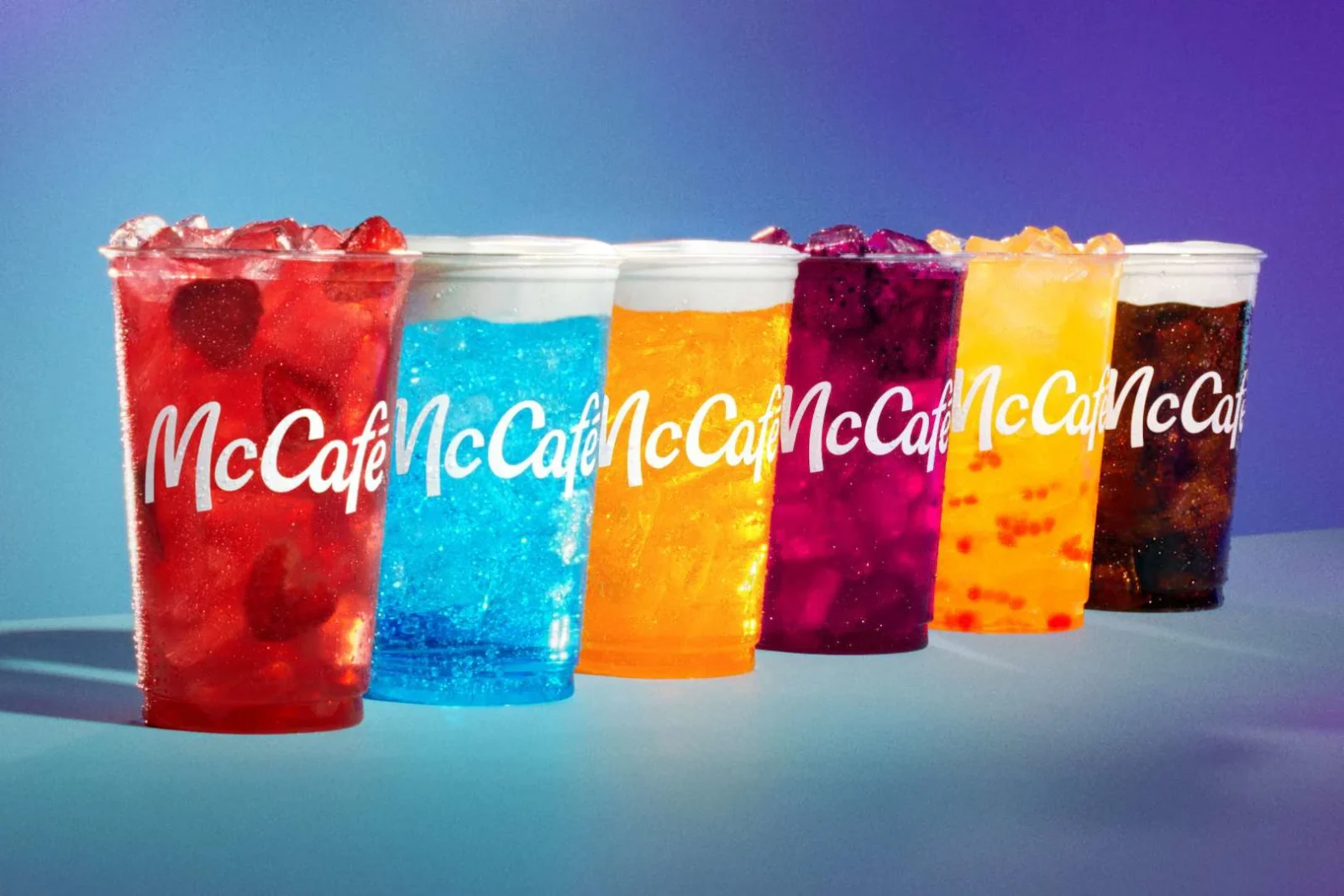
On May 6, 2026, McDonald’s will begin serving six new permanent McCafé beverages across its U.S. locations: three caffeinated refreshers and three flavoured sodas, all hand-crafted at a dedicated beverage station. To support the launch, the chain is introducing a new in-restaurant role, the beverage specialist, trained specifically to manage drink quality and consistency. High-performing crew members will take on the position first, with all staff eventually rotating through the station via video-led training.
The six drinks span two formats. The refreshers, each built on a lemonade base, include a Strawberry Watermelon variant with freeze-dried strawberries, a Mango Pineapple option with strawberry popping boba, and a Blackberry Passion Fruit version finished with freeze-dried dragon fruit. The flavoured sodas, which McDonald’s is positioning within the emerging dirty soda category, comprise a Sprite Berry Blast with blue raspberry syrup and cold foam, an Orange Dream using Hi-C Orange Lavaburst with vanilla and cold foam, and a Dirty Dr. Pepper with vanilla flavour and cold foam.
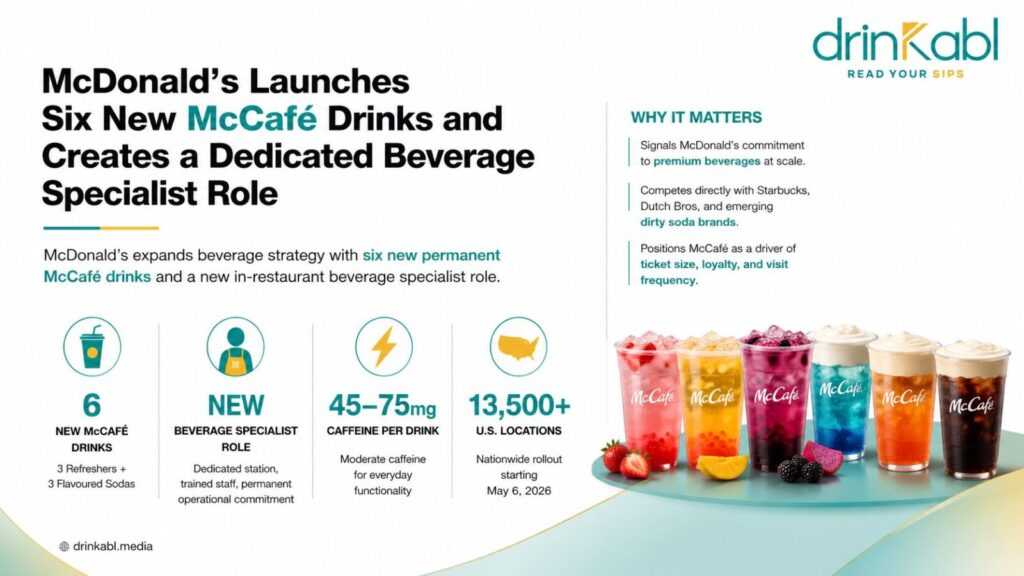
The beverage specialist position is a direct response to the operational friction that premium drink-making introduces into a high-volume QSR environment. McDonald’s said the role was developed after studying segment-leading beverage brands, an acknowledgement that craft drink preparation requires a different skill set and workflow than the chain’s existing kitchen operations. By isolating the beverage function at its own station, the chain is borrowing a page from the playbook that made Starbucks operationally defensible at scale. The refreshers, available on the Starbucks menu for over a decade, are already well understood by consumers, meaning McDonald’s is entering a proven category rather than pioneering one.
That distinction matters. Refreshers have long moved from novelty to expectation across American QSR menus. Taco Bell and Whataburger have both used them to capture new consumer occasions, particularly among younger customers who want caffeinated, visually striking beverages without a full coffee format. McDonald’s refreshers carry between 45 and 75 milligrams of caffeine depending on size, positioning them as functional but moderate, suitable for regular daily consumption rather than a specialist market. As the largest restaurant brand by revenue in the United States, McDonald’s entry into the category at this scale effectively marks the point at which refreshers have crossed into mass-market territory.
The dirty soda side of the launch is a more pointed competitive move. The format, which typically combines a carbonated soda with flavoured syrups and a dairy or foam topping, has grown rapidly through dedicated concepts like Swig, which has built a substantial following in the American Mountain West. KFC has begun testing dirty sodas through its Saucy spin-off, but has not yet rolled the format into its core estate. McDonald’s, by contrast, is taking dirty sodas directly into its full U.S. system from day one, using cold foam rather than coffee creamer and keeping the constructions relatively simple. The chain is betting that accessibility and distribution scale will do what boutique operators cannot.
“We’ve taken the time to get this right, introducing new drinks that are hand-crafted with bold flavors and quality ingredients our fans can taste in every sip,” said Alyssa Buetikofer, McDonald’s USA’s chief marketing and customer experience officer.
The broader portfolio logic here connects to what Drinkabl.media has tracked across the non-alcoholic beverage segment, where Starbucks and its competitors have shown that beverage customisation drives both ticket size and visit frequency. McDonald’s has historically underperformed on beverage revenue relative to its food volume. McCafé has existed for years as the vehicle to close that gap, but the menu has rarely matched the format innovation happening at dedicated beverage chains. The May launch is the most substantive attempt yet to change that, backed by operational infrastructure, specifically the beverage specialist role, that earlier beverage menu additions lacked.
The drinks are permanent McCafé additions, not limited-time offers, which means the beverage specialist role is also a permanent operational commitment for franchisees, which has cost and training implications. For the brand, it is a structural bet that premium beverages will maintain their share of the consumer wallet as the QSR segment continues to compete for younger, more beverage-conscious customers. You can read more on the non-alcoholic beverage trends shaping these decisions here.
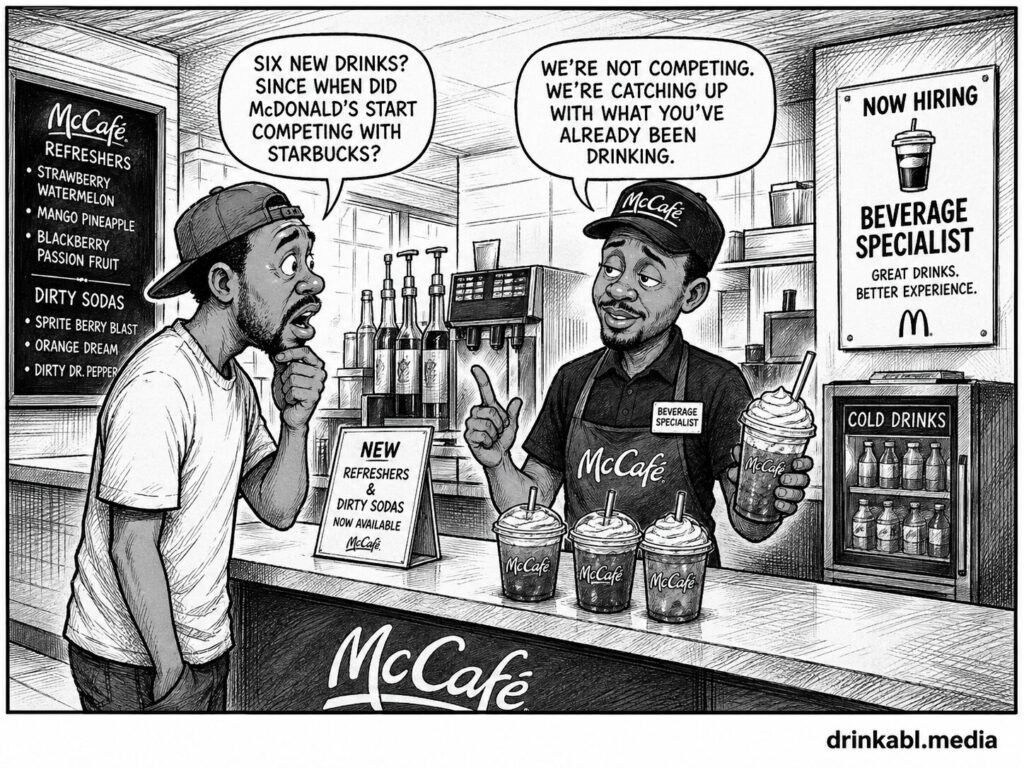
The May 6 rollout will be the first real-world test of whether McDonald’s operational model can consistently execute hand-crafted drinks at the throughput its locations demand. The beverage specialist position solves for quality control on paper. Whether it holds up during a Friday lunch rush is the question the industry will be watching.
Read More
Starbucks has been rewriting its own drink discovery model through AI, a move that reflects how seriously the segment now treats beverage personalisation. Read the full story here.
The cold coffee concentrate segment is approaching a billion-dollar inflection point, with Nestlé and Starbucks both repositioning for the at-home market. Full coverage.
Nigeria’s brewers are pushing back against a proposed three-year excise framework, with ₦425 billion at stake across the industry. Read the analysis.
Paul George has backed Wet Hydration as the brand closes a $10 million funding round, the latest signal of athlete capital flowing into functional beverages. Full story.