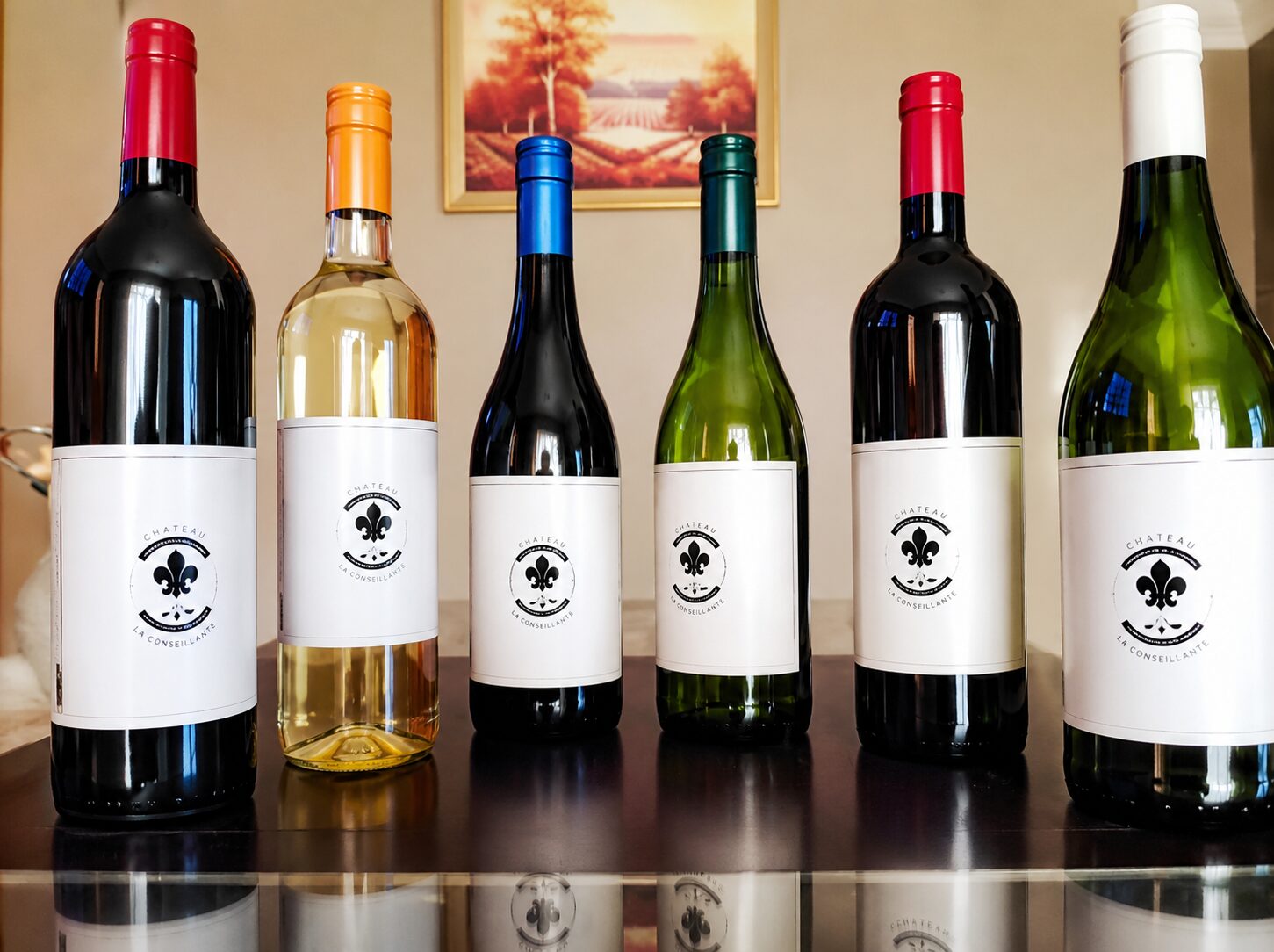

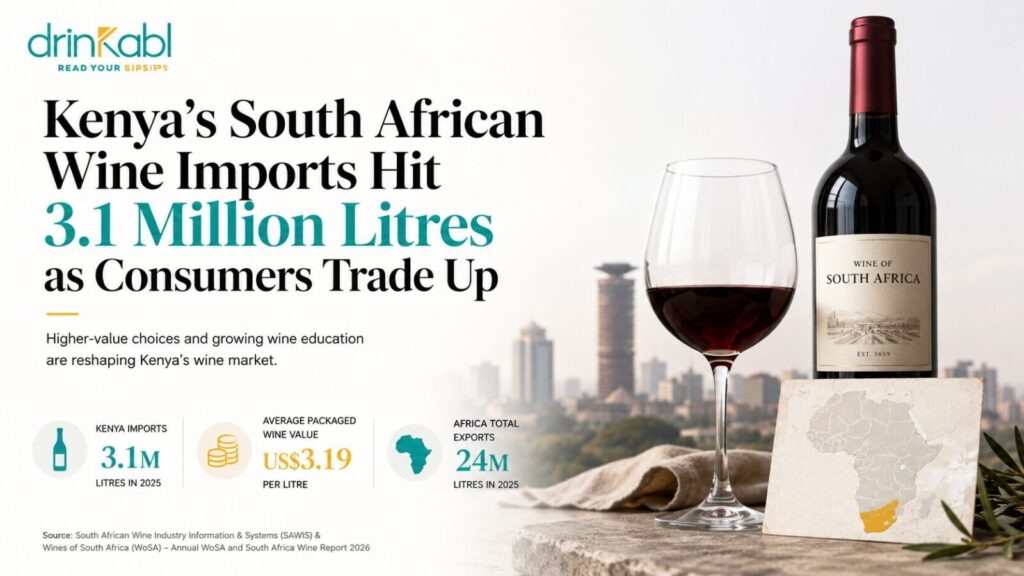
Kenya imported more than 3.1 million litres of South African wine in 2025, according to data from the South African Wine Industry Information & Systems and Wines of South Africa, as the market shifts from entry-level volume to higher-value consumption.
Average packaged wine values climbed to approximately US$3.19 per litre, a figure that tells the real story: Kenyan buyers are reaching past the bottom shelf. Across Africa as a whole, South African wine exports reached 24 million litres last year, per the annual WoSA and South Africa Wine report released in January 2026, with Nigeria leading by volume at 4.2 million litres. Kenya’s 3.1 million placed it firmly among the continent’s top five destinations.
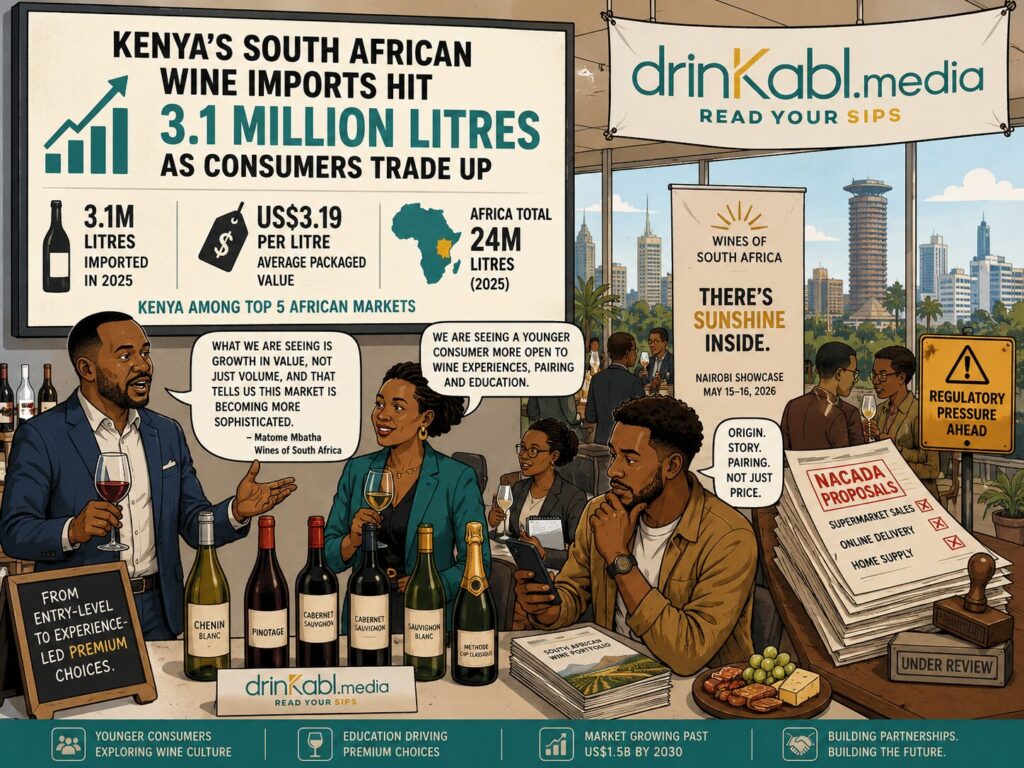
“Kenyan consumers today are researching wine, understanding wine and actively seeking premium experiences,” said Matome Mbatha, Africa Market Manager at Wines of South Africa, speaking at the organisation’s two-day Nairobi showcase on May 15 and 16. “What we are seeing is growth in value, not just volume, and that tells us this market is becoming more sophisticated.”
WoSA’s 2026 East Africa tour brought producers, importers, and hospitality professionals to Nairobi for tastings, masterclasses, and trade sessions under the campaign theme “There’s Sunshine Inside.” The programme leaned into varietals, Pinotage and Chenin Blanc in particular, positioning South Africa as a source of distinctive mid- to premium-tier bottles rather than commodity wine. The event, which included curated influencer luncheons alongside the trade-facing sessions, is part of a deliberate effort to work both ends of the chain: build distributor relationships while converting consumers into informed buyers.
That dual play matters in Kenya right now. The market sits inside a larger regulatory pressure cooker: this publication documented Kenya’s proposed alcohol channel restrictions in March 2026, when the National Authority for the Campaign Against Alcohol and Drug Abuse put supermarket sales, online delivery, and home supply all on notice. The proposals have not yet become law, but the NACADA review casts a long shadow over premium import categories that depend on retail and hospitality channels to reach consumers.
“What we are seeing is growth in value, not just volume, and that tells us this market is becoming more sophisticated.” — Matome Mbatha, Africa Market Manager, Wines of South Africa
Against that backdrop, WoSA’s investment in on-the-ground education looks less like marketing and more like hedging. Sylvia Karanja, founder of Sip & Savour Atelier and East Africa Lead for WoSA, put the consumer shift plainly. “We are seeing a younger consumer becoming more open to wine experiences, wine pairing and wine education,” she said. “South African wines resonate strongly within this market because they are fruit-forward, approachable and diverse. More consumers are now moving from entry-level wines toward mid-tier and premium selections, and that shift is reshaping the wine conversation in East Africa.”
The premium turn is showing up in how consumers make decisions. Purchasing choices are increasingly driven by origin, brand narrative, and food pairing rather than price alone, according to importers and event organisers operating in the market. Kenya’s wine market is projected to grow past US$1.5 billion by 2030, according to StrategyHelix data cited by WoSA, up from roughly US$950 million in 2024.
Judy Ngene, CEO of Galena Wine Importers and co-founder of The Wine Fair Kenya, said the consumer base is maturing beyond passive curiosity. “Consumers today want to understand where the wine comes from, how it pairs with food and the story behind the brand,” she said. “Wine tasting events and educational experiences are helping build a stronger wine culture while also encouraging people to explore more premium categories.”
WoSA has been active in Kenya for more than ten years. The organisation runs free Level 1 and Level 2 online wine certification courses, funds sommelier development, and has used the Nairobi market as a blueprint for its broader East Africa expansion. The next test is whether the hospitality and retail infrastructure that premium wine depends on survives whatever Kenya’s regulators ultimately decide.
Read More: