

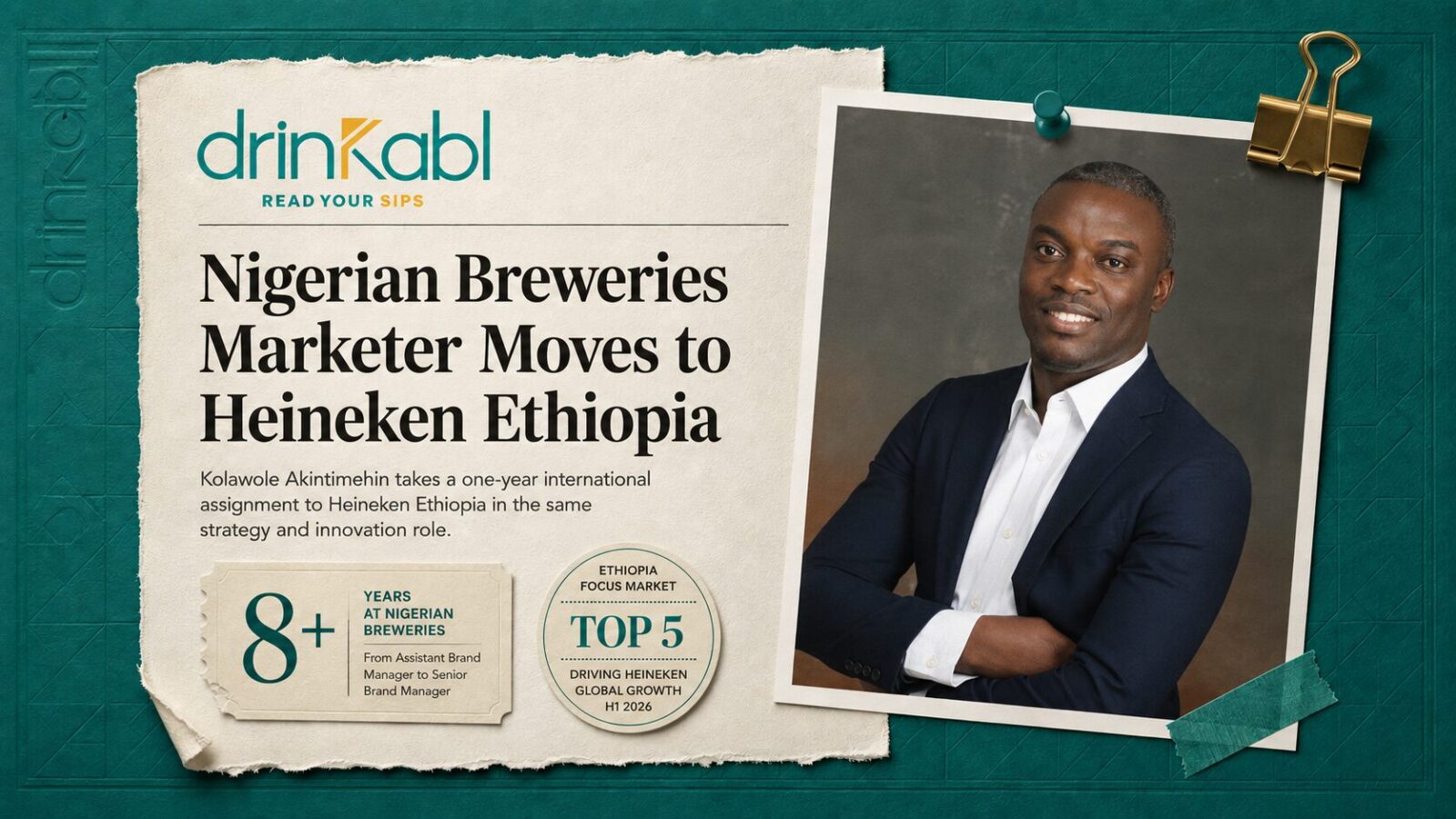
Kolawole Akintimehin, a Marketing Strategy, Planning and Innovation Manager at Nigerian Breweries, has taken a one-year international assignment with Heineken in Ethiopia, moving into the same functional role at the brewer’s Ethiopian operation. He announced the move on LinkedIn, thanking Nigerian Breweries leadership including managing director Thibaut Boidin.
Akintimehin spent more than eight years at Nigerian Breweries, rising from assistant brand manager on Star to senior brand manager on the Heineken and Tiger portfolio, after an earlier stint at PZ Cussons. That tenure covered the brewer’s roughest stretch: Nigerian Breweries swung from steep losses in 2022 and 2023 to a 35 percent revenue jump in 2024, a recovery built on a N599.1 billion rights issue and the temporary suspension of two breweries. Brand teams were tasked with growing volumes through the same period costs were being cut.
Ethiopia is not a routine posting. Heineken is the country’s largest brewer, running the Kilinto plant in Addis Ababa and the Harar and Bedele breweries, and named Ethiopia one of five global focus markets, alongside Vietnam, India, Brazil and the UK, that drove organic revenue growth in its first-half 2026 results. That growth came as the group cut roughly 3,000 jobs worldwide, about half of a planned 6,000-role reduction under a two-year restructuring programme. Talent is moving toward the markets carrying the group’s growth story even as headcount shrinks elsewhere.
The direction of travel has run the other way before. In May, Heineken’s global head of talent management, Nkechi Runsewe, left Amsterdam to become Nigerian Breweries’ HR director, taking over a workforce still absorbing the aftershocks of the rights issue. Akintimehin’s move now sends Nigerian brand expertise back into the group’s international rotation.
What happens to his Lagos role next, whether Nigerian Breweries promotes from within its brand bench or hires externally, will show how deliberately the group is using this Nigeria-Ethiopia pipeline rather than treating it as a one-off.
READ MORE