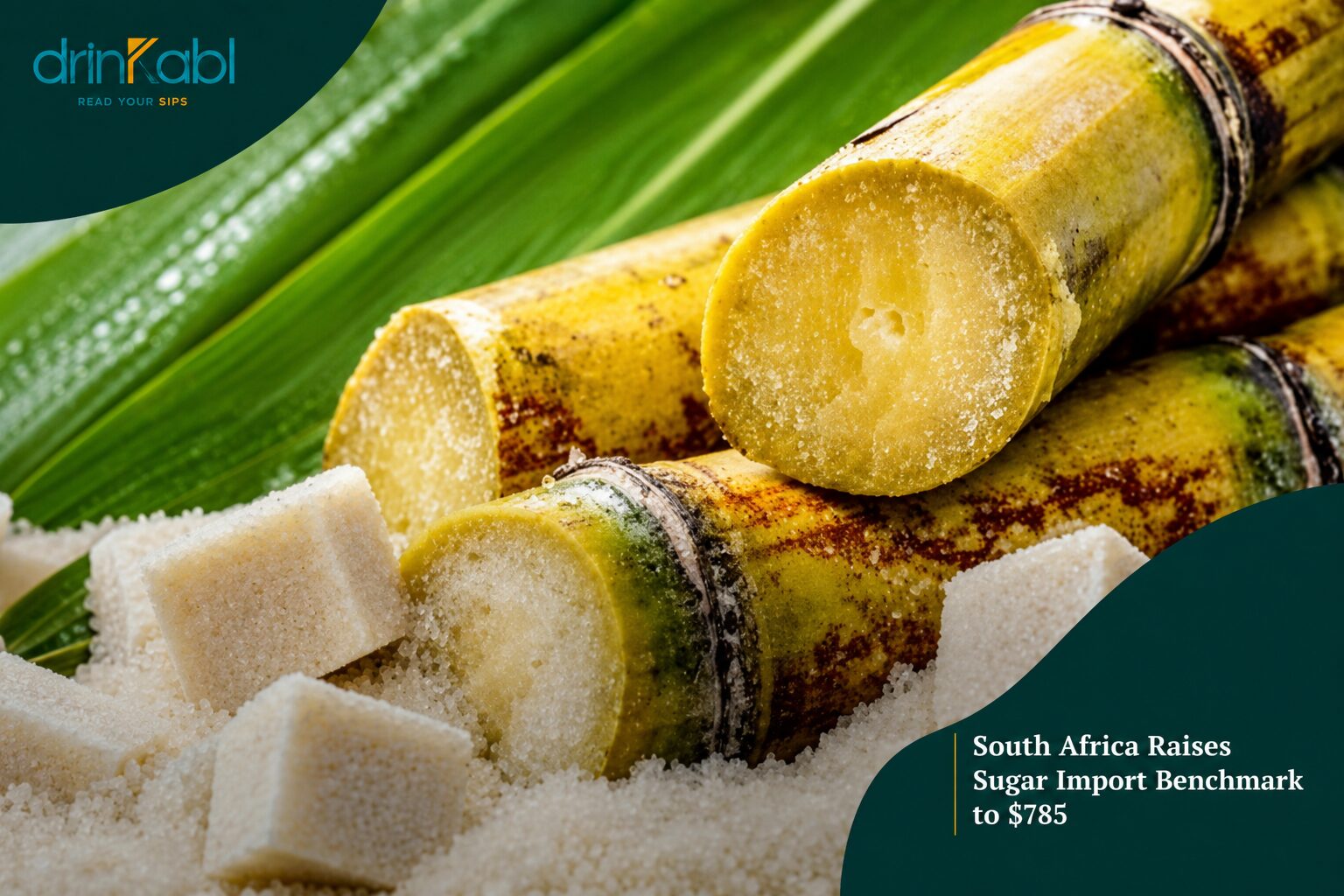

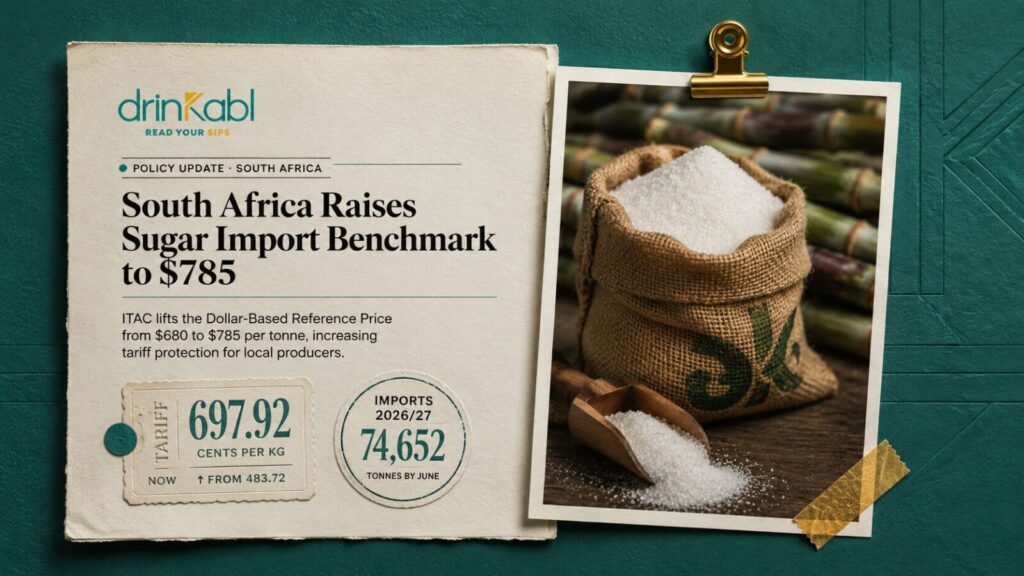
South Africa has raised the Dollar-Based Reference Price (DBRP) for imported sugar from US$680 to US$785 per tonne, increasing tariff protection for domestic producers as import volumes continue to rise.
The change was confirmed through ITAC’s review of competing applications from the sugar and beverage industries. The South African Sugar Association (SASA) had sought a benchmark of US$905 per tonne, while the Beverage Association of South Africa proposed a lower range.
The revised benchmark increases the customs duty on sugar to 697.92 cents per kilogram from 483.72 cents, according to the South African Revenue Service. The DBRP determines the variable duty applied when international sugar prices fall below the reference level.
The increase is still below what producers wanted. SASA said its proposed US$905 benchmark was designed to provide greater protection against imports, particularly from subsidised producers in countries such as Brazil. The association said the industry lost R1.6 billion in the 2025/26 season because of the import crisis, while imports in the 2026/27 season had reached 74,652 tonnes by June.
Import pressure has already changed the domestic market. SA Canegrowers said duty-paid sugar imports rose from 1,619 tonnes in January to June 2022 to 124,594 tonnes in the same period of 2026. Over three seasons, domestic sugar sales fell by about 188,000 tonnes, or 35%, while grower proceeds declined by R1.33 billion.
For beverage manufacturers, the policy creates a different cost equation. A higher import benchmark can make imported sugar more expensive when international prices fall below the threshold, putting pressure on manufacturers that use sugar as an input. That tension was central to the competing applications considered by ITAC.
The issue fits a broader shift in African beverage markets, where input costs and regulation increasingly affect how companies price and distribute products. Drinkabl.media’s recent analysis of the region found that beverage demand is holding up even as regulatory and commercial conditions become harder to navigate.
The next test is therefore practical. SASA wants further measures, while Illovo Sugar South Africa has called for safeguards against deep-sea imports and a tariff system that responds faster to market changes. Illovo said 213,322 tonnes entered South Africa from outside the Southern African Customs Union in 2024/25, with estimated revenue losses of about R1 billion for growers and R500 million for millers.
For producers, the question is whether US$785 is high enough to change import economics before more domestic market share is lost.