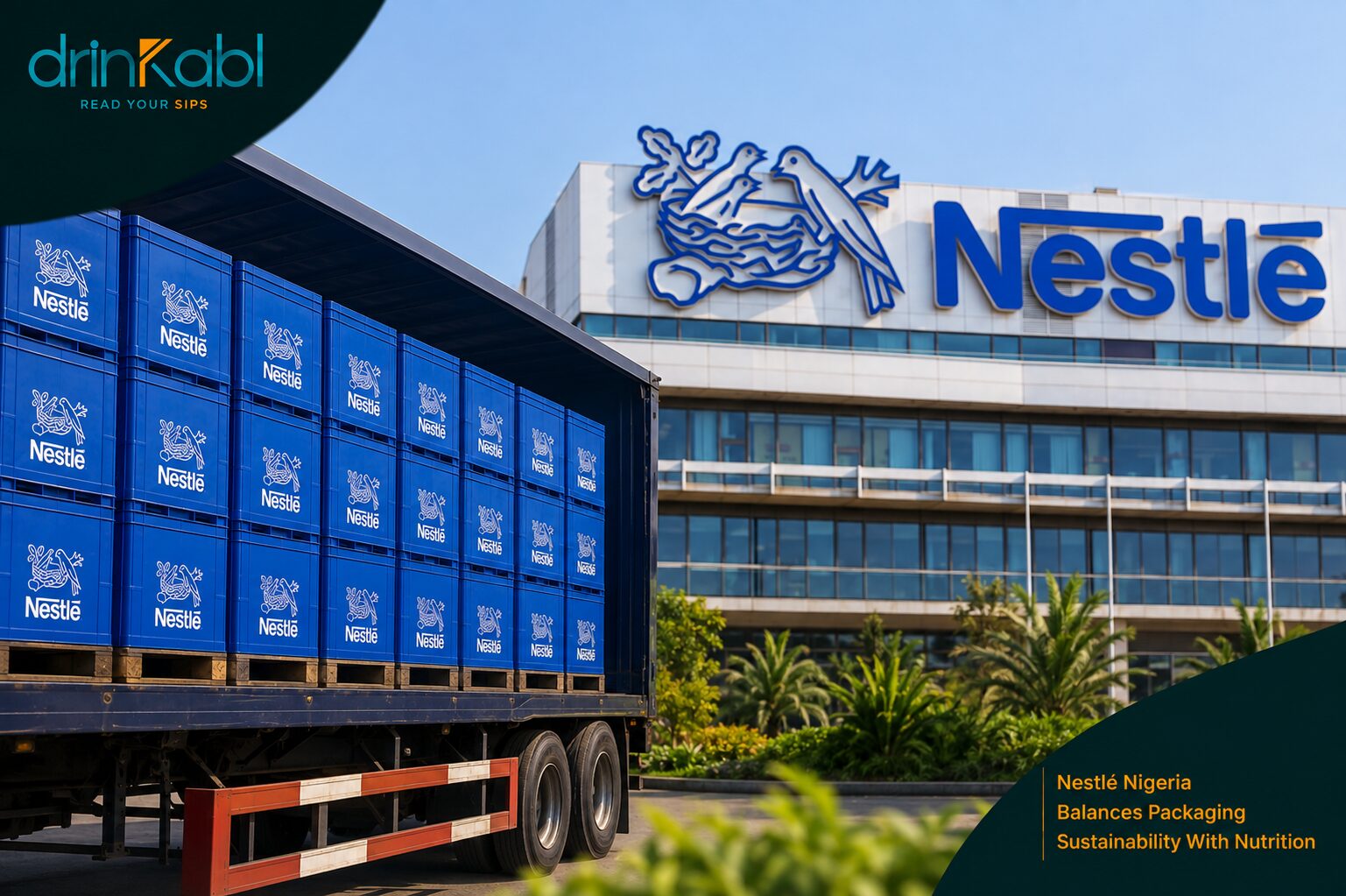

Nestlé Nigeria is redesigning packaging, expanding plastic recovery and investing in climate resilience while keeping food safety and nutrition at the centre of its product strategy.
The challenge is becoming harder to separate from the business itself. The World Meteorological Organization says Africa experienced one of its warmest years on record in 2024, with climate extremes affecting food and water security across the continent. The World Bank has separately warned that rising temperatures, changing rainfall and extreme weather are already pressuring Nigeria’s agriculture and food production.
For Nestlé, that creates a supply-chain problem as much as an environmental one. The company depends on agricultural commodities, water, energy and packaging to make and distribute food and beverages. Its global climate strategy targets a 50% cut in greenhouse-gas emissions from its 2018 baseline by 2030 and net zero by 2050. By the end of 2025, Nestlé reported a 24.5% net reduction against that baseline.
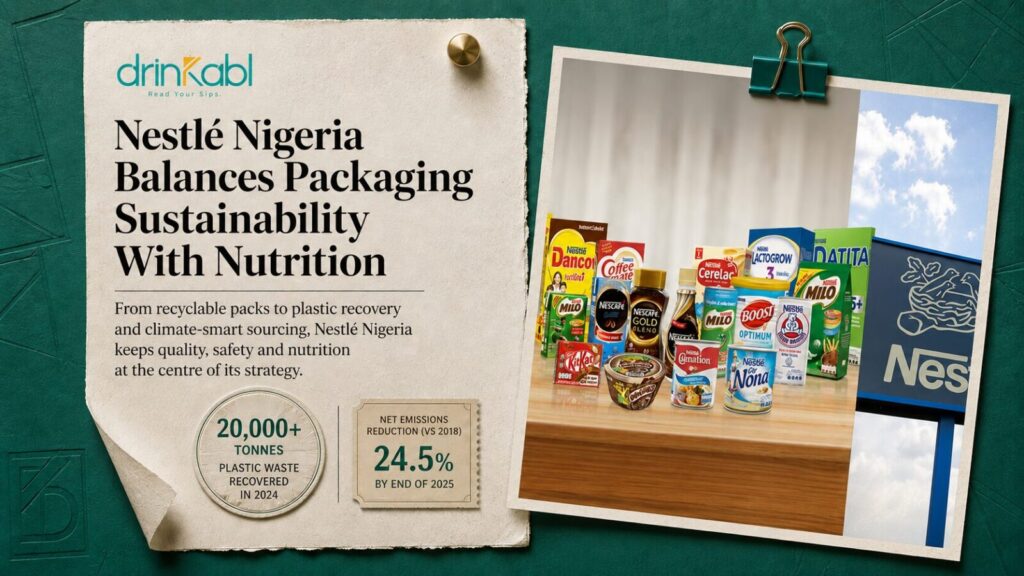
Packaging has become one of the most visible parts of that transition locally. Nestlé Nigeria’s 2024 annual report says Golden Morn moved to a fully recyclable mono-film, while more than 20,000 tonnes of plastic waste were recovered for recycling that year. The company has since expanded its circular-economy activity, including 50% recycled PET in Nestlé Pure Life bottles.
The shift carries a quality constraint too. Nestlé says packaging must protect food, maintain quality and reduce waste, so environmental gains cannot come at the expense of shelf life. MAGGI’s double-cube format cuts packaging material by 25% while keeping the format consumers know, while Golden Morn took the redesign route instead.
The bigger test is what happens after the pack leaves the factory. Nestlé Nigeria has moved toward a multi-stakeholder plastics coalition involving regulators, recyclers and industry bodies, reflecting how circularity depends on collection systems as much as design. That pressure is rising as NESREA enforces the National Environmental (Plastic Waste Control) Regulations, 2026, pushing producers to make packaging lighter, safer and easier to recover without sacrificing affordability.
Nestlé Nigeria’s sustainability record gives it a head start, but the next phase will be measured by recovery rates and the economics of collection, not redesigned packs.
READ MORE