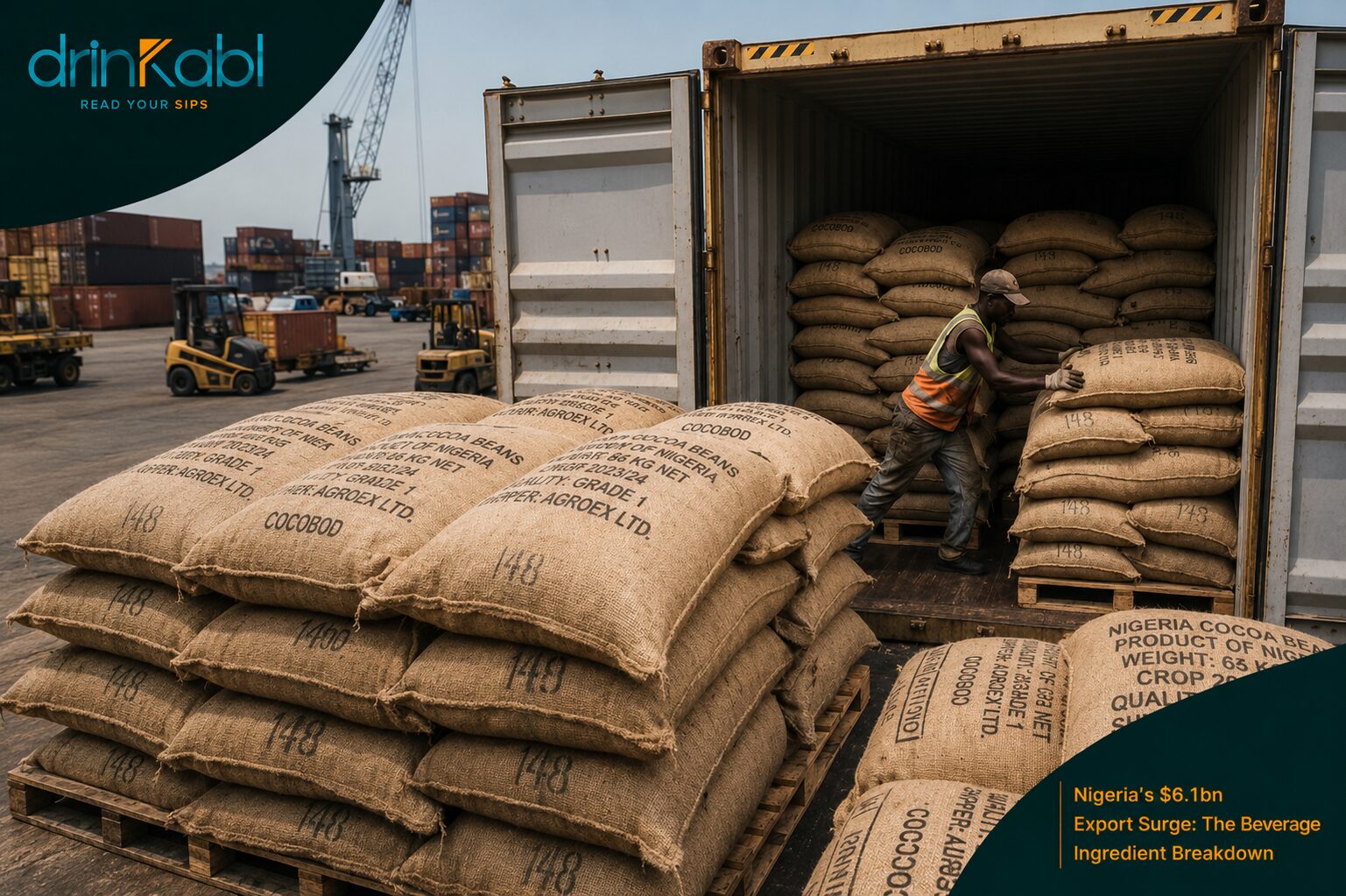

Nigeria’s non-oil export sector hit a record $6.1 billion last year, up 11.5% from $5.46 billion in 2024, according to the Nigerian Export Promotion Council. Total volumes reached 8.02 million metric tonnes across 281 products in 120 countries. While urea fertiliser led the headline figures at $1.29 billion, the sharper story for the beverage industry lies in the agricultural inputs feeding both export markets and domestic drink formulation.
Raw cocoa beans remain the anchor, earning $1.99 billion, or 32.76% of all non-oil export revenue, with cocoa butter, paste and liquor adding another $209 million. That creates a trade-off for local manufacturers. Lucrative pricing in hubs like the Netherlands, which buys 17.53% of Nigeria’s non-oil exports, pulls raw cocoa out of the country, leaving plants that make chocolate-malt drinks and dairy formulations competing hard for consistent cocoa powder supply at volatile local prices.
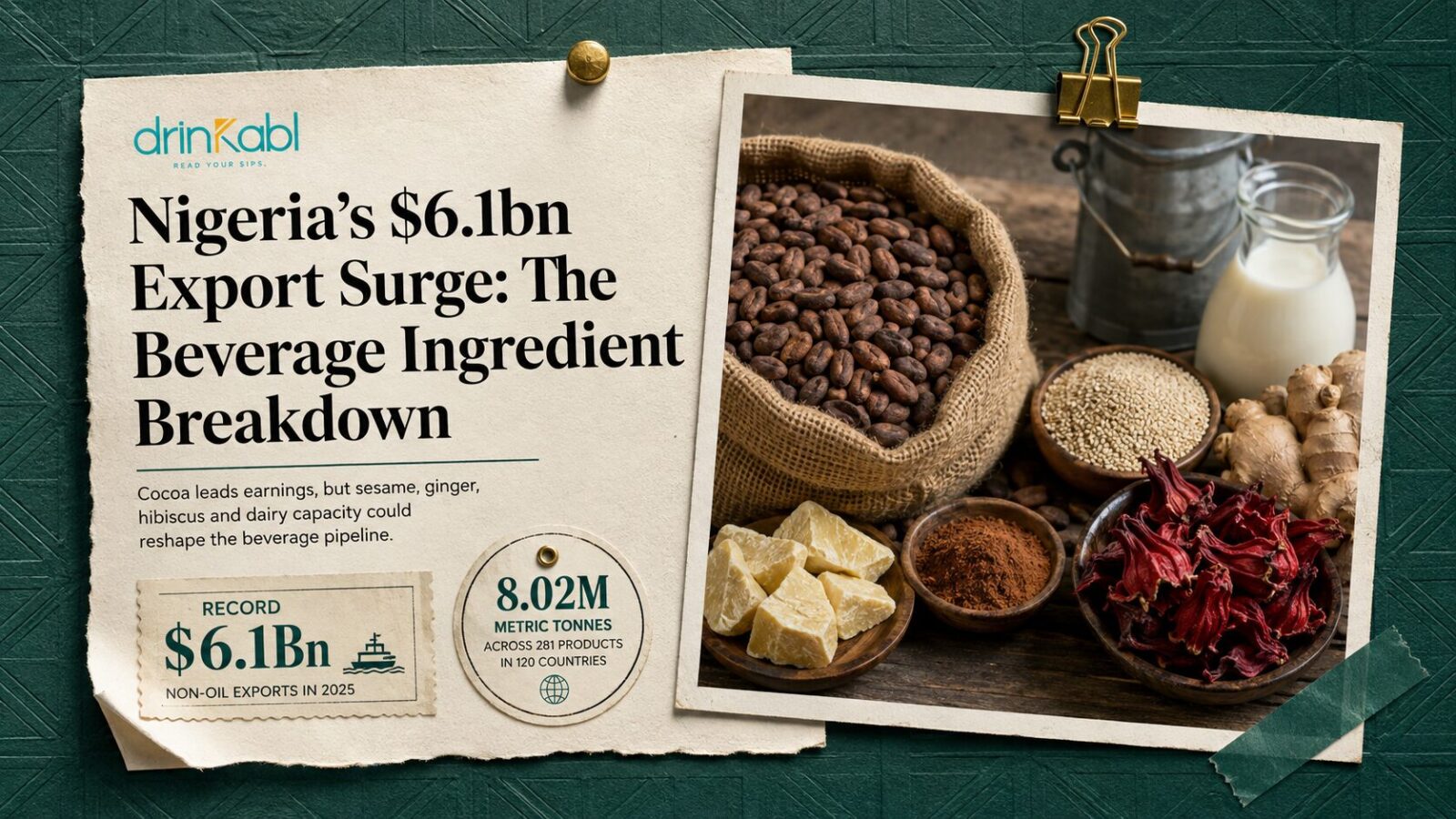
The opportunity extends beyond chocolate. Sesame, ginger and hibiscus are scaling up as bases for functional drinks and herbal teas, while a stronger domestic dairy chain would ease the foreign exchange pressure that has long squeezed milk-and-malt beverage makers reliant on imported powdered milk.
The clearest risk to this pipeline is the European Union Deforestation Regulation, which requires proof that inputs are not linked to land deforested after December 31, 2020. Mandatory compliance for medium and large operators begins December 30, 2026, extending to smallholders by June 30, 2027. Because Nigerian cocoa runs on fragmented smallholder networks, exporters are moving fast on digital farm mapping and geolocation to protect market access.
Capital is following. A €85 million financing deal between EIB Global and the Bank of Industry has directed 70% of its loans to local cocoa and dairy value chains, backing projects like Sunbeth Global Concepts’ 70,000-tonne Ogun State facility and Johnvents’ Ondo State expansion. The industrial test now is whether these processors can convert raw capacity into the standardised inputs local brands actually need.
READ MORE