

X3M Intelligence’s Gen Z Drinking Report, presented at Lagos Marriott Hotel Ikeja on May 9 and drawn from a nationwide survey of 1,015 respondents aged 18–28, places Nigeria’s youth beverage market on a different curve from the one most brand teams have been tracking. The data lands days after Keurig Dr Pepper published its 2026 State of Beverages Trend Report, drawn from YouGov, Ipsos, and Morning Consult surveys of American consumers aged 13–29, and the convergence between the two is commercially legible.
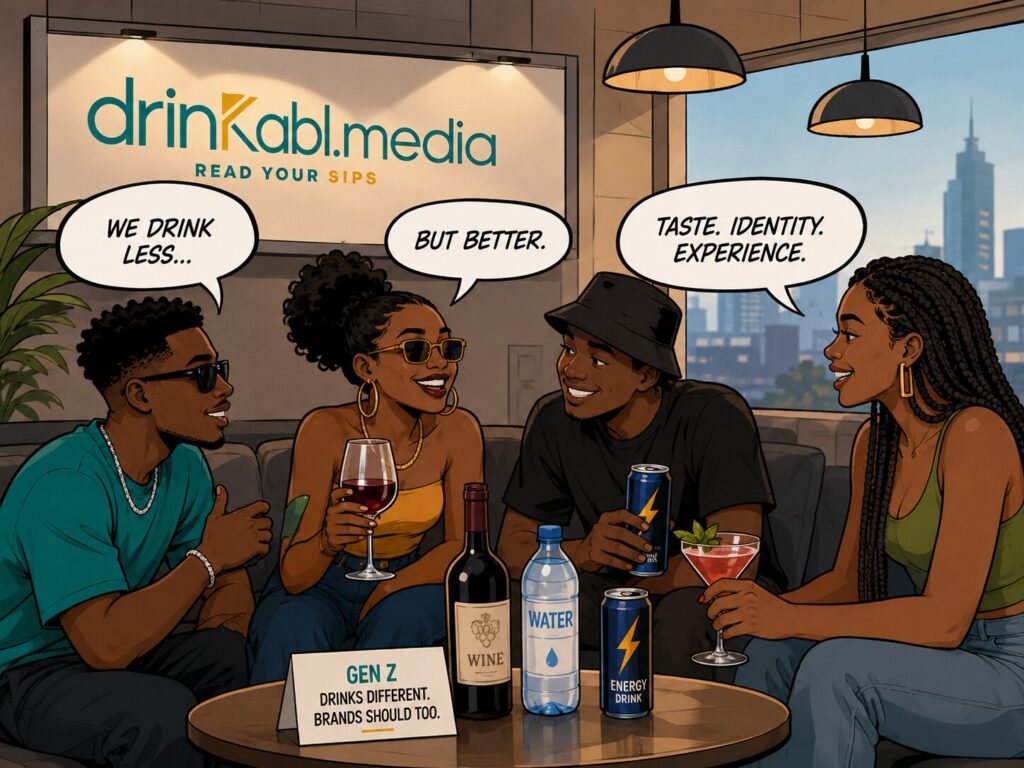
As Drinkabl.media reported, the X3M study found that 74.3% of respondents drink rarely or occasionally, and 56.2% said their alcohol consumption had declined over the past two years. X3M Intelligence reads this not as category exit but as selective engagement: Nigerian Gen Z consumers are drinking less often, with greater emphasis on taste, identity and shared experience. The most commercially striking result is wine’s dominance, accounting for 47% of overall consumption and 42.4% of purchases, ahead of vodka at 36% and whiskey at 32.5%.
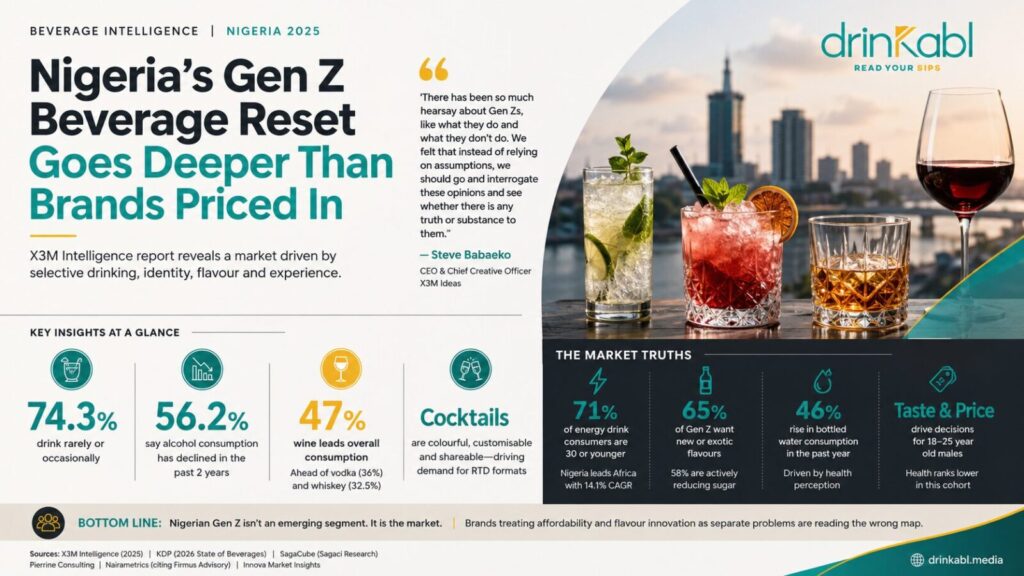
Steve Babaeko, Chief Executive Officer and Chief Creative Officer of X3M Ideas, said the study was designed to replace assumption with evidence. “There has been so much hearsay about Gen Zs, like what they do and what they don’t do. We felt that instead of relying on assumptions, we should go and interrogate these opinions and see whether there is any truth or substance to them.”
“There has been so much hearsay about Gen Zs, like what they do and what they don’t do. We felt that instead of relying on assumptions, we should go and interrogate these opinions and see whether there is any truth or substance to them.” — Steve Babaeko, CEO and Chief Creative Officer, X3M Ideas
The KDP report adds global texture to that finding. American Gen Z and Gen Alpha are nearly 60% more likely than older consumers to choose drinks based on mood or occasion rather than habit, according to KDP. They rotate across roughly six beverage categories weekly and are twice as likely to choose brands that signal something about their identity. The X3M study captures the Nigerian parallel: cocktails have become colourful, customisable, camera-ready, and shareable. Despite cocktails not appearing as a formal survey option, respondents volunteered preferences including Long Island Iced Tea, Chapman Remix, Palmwine Spritz and Zobo Sangria, which X3M Intelligence reads as a demand signal for ready-to-drink formats that replicate the cocktail experience.
The divergences are as commercially significant as the overlaps. Sagaci Research’s SagaCube tracker found that among urban Nigerian males aged 18–25, taste and price dominate beverage decisions, while health concerns rank significantly lower than among Nigerians aged 26 and above. That pattern challenges the global wellness narrative, though Pierrine Consulting’s data on carbonated soft drinks complicates it further: 65% of Nigerian Gen Z consumers want to try new or exotic flavours, and 58% are actively reducing sugar intake.
Energy drinks tell the clearest convergence story. According to Nairametrics, citing Firmus Advisory research, 71% of Nigerian energy drink consumers are aged 30 or younger, with Nigeria leading African growth at a projected CAGR of 14.1%. KDP found that American Gen A and Gen Z are twice as likely as older consumers to drink energy products weekly. The functional drivers differ, but the volume trajectory is the same.
Hydration diverges more sharply. Innova Market Insights found that bottled water consumption in Nigeria rose approximately 46% in the past year, driven by health perception. The KDP equivalent, enhanced and functional water, remains a secondary consideration in Nigeria, constrained by income rather than indifference.
With a median national age of approximately 18, Nigerian Gen Z is not an emerging segment. It is the market. Brands treating affordability and flavour innovation as separate problems are reading the wrong map.
Read More