
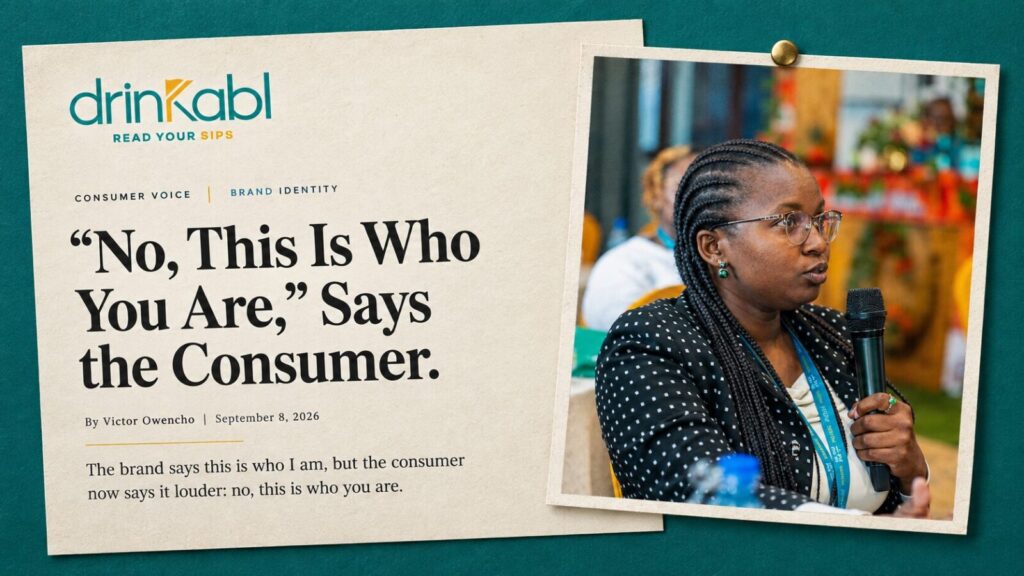
“The brand says this is who I am, but the consumer now says it louder: no, this is who you are.”
That is how Sabina Manu, Marketing & Innovations Director at Guinness Ghana Breweries, described the shift underway in beverage marketing. It is worth reading less as a marketing observation and more as a challenge to the entire industry.
For a long time, a brand could tell consumers who it was. It could build a positioning, choose its language, run a campaign and repeat the message until the market understood the intended identity. That relationship is changing. Consumers now experience the product, interpret the advertising, compare it with competitors, discuss it with friends and reshape it on social platforms, and in the process they decide whether the brand’s claimed identity actually holds up.
A brand can still declare what it stands for, but the declaration is no longer enough on its own. Reputation and cultural meaning are increasingly negotiated with the people drinking, sharing, recommending and rejecting the product, and for beverage brands operating across Africa’s fast-changing markets, that shift matters.
The consumer has entered the brand room
Consumers have always had opinions. What has changed, in Manu’s telling, is how much power those opinions now carry in defining the brand itself. A company might describe a beverage as premium, youthful or culturally relevant, but if consumers experience something different, the market’s version tends to win over the corporate one.
That changes the job of the marketer. The question is no longer simply how a brand communicates who it is, but whether it is actually behaving like the brand it claims to be, a question that pulls brand building out of communications alone and into product development, pricing, distribution and customer experience.
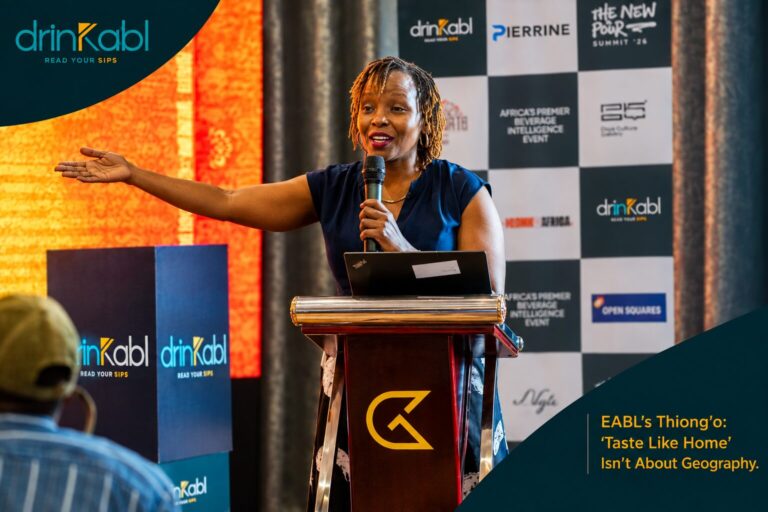
It also explains why Manu’s perspective fits the broader conversation about resilience. Ahead of The New Pour Summit ’26, where she spoke on a panel about sustaining growth in volatile markets, Manu said she did not have a neat formula for building resilient brands. What she had instead, she said, was experience: what had worked, what had failed, and what she had learned from staying close to consumers as their circumstances changed. In markets as volatile as Africa’s, that kind of certainty can become a liability faster than founders expect.
When the product listens
Manu’s own work at Guinness Ghana offers a concrete example of what listening to that shift looks like in practice. In 2025, the company introduced Guinness Smooth alongside its “Make It Yours” campaign, a lighter beer designed for consumers who wanted the Guinness experience without its traditionally full-bodied flavour, kept in the familiar 330ml bottle format and under the same trademark.
The significance goes beyond the launch of another beer variant. It shows the difference between protecting a brand and freezing it in place. A strong brand has equities that consumers value, but those equities do not have to dictate every expression of the product forever, and Guinness Smooth was an attempt to preserve the recognisable Guinness world while responding to a consumer who wanted a different drinking experience.
The campaign name matters here too. Rather than positioning the consumer as someone who simply receives the brand’s message, “Make It Yours” invited a younger generation to help define style, culture and community, with Guinness Ghana bringing in local creators and cultural collaborators as part of the effort. The brand supplied the platform; the consumer supplied part of the meaning.
That may be where Manu’s quote becomes most useful. When a consumer pushes back and says a brand is not what it claims to be, the smarter response is often not to correct them but to ask what they are experiencing that the brand team is not seeing, and what the gap between the intended identity and the lived one is actually telling the business.
Resilience is not the same as consistency
Resilience is often read as the ability to withstand disruption, but for brands, simply holding the line is not always enough. Sometimes it means changing the portfolio, the proposition or the way the brand listens to its market.
Manu’s own career reflects that same instinct for staying close to shifting ground. She joined Guinness Ghana in 2021 as Head of Customer Marketing and moved through brand and marketing leadership roles before becoming Marketing & Innovations Director in April 2026, following more than a decade at Equatorial Coca-Cola Bottling Company, including regional marketing roles across West Africa. That kind of background matters because consumers do not encounter a brand inside a marketing department. They encounter it at the shelf, at the bar, through a friend, or through the price on the shelf, which means brand resilience has to exist beyond the campaign itself.
The uncomfortable question for African beverage brands
The deeper lesson in Manu’s line is that marketers may need to worry less about controlling every interpretation of their brand. A company can control what it puts into the market, the quality of its product and the experience it tries to create, but once that product enters culture, the conversation becomes bigger than the company that started it.
That is especially true in Africa, where beverage brands operate across sharply different consumer realities, purchasing power, culture, distribution systems and regulatory environments, a complexity The New Pour Summit ’26 placed squarely alongside the need for better consumer intelligence and market-specific strategy.
The brands most likely to hold up under that pressure may not be the ones that shout the loudest, but the ones that listen early enough to notice when the consumer’s answer to “who are you” has started to change.