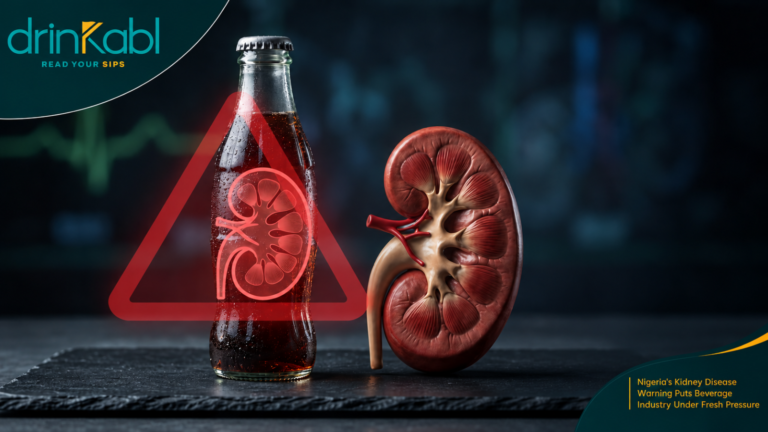

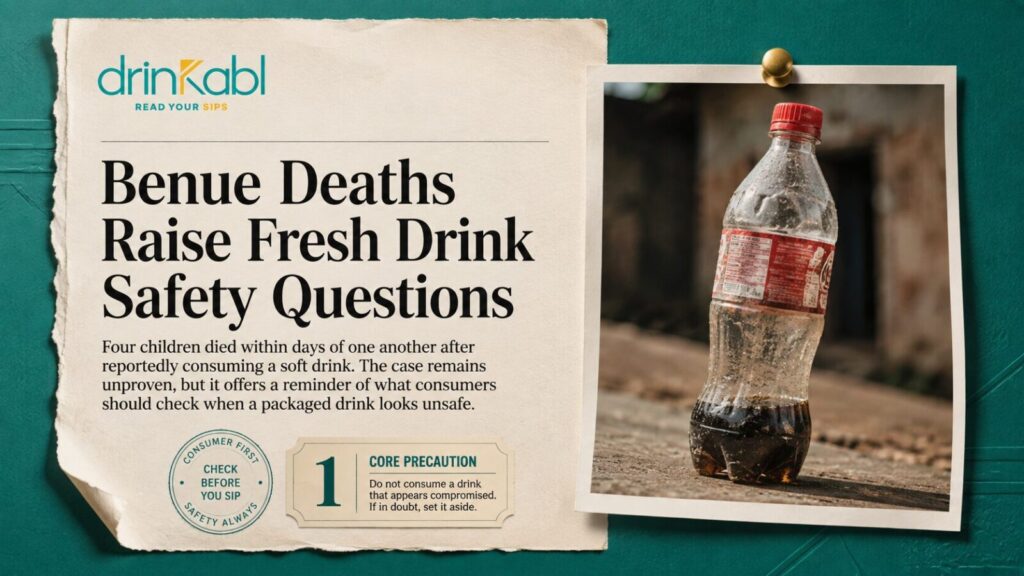
Four children died within days of one another after reportedly consuming a soft drink. The case remains unproven, but it offers a reminder of what consumers should check when a packaged drink looks unsafe.
Four children in Amufu, Edumoga, Okpokwu Local Government Area of Benue State, died between August 20 and 23 after their father said they became ill days after consuming a soft drink reportedly given to them by a relative.
The deaths have prompted calls for a police investigation, post-mortem examinations and toxicology testing. The family believes the drink may have been responsible, but no publicly available laboratory or medical evidence has established that the beverage caused the deaths.
That distinction matters. A suspected food or beverage incident should trigger evidence collection, not assumption. Nigeria’s food-safety response guidelines call for samples to be collected from affected patients and suspected food or drinks when multiple people become ill after consuming a common source.
For consumers, the first precaution is simple: do not consume a drink that appears compromised. A bottle or can with a broken seal, damaged closure, unusual swelling, leakage, unexplained sediment, strange odour or other visible abnormality should be set aside rather than tested by taking a sip. Food can also be unsafe without obvious changes in smell, taste or appearance, according to the World Health Organization.
Consumers should also check the product label, expiry or use-by date and, where applicable, the NAFDAC registration information. NAFDAC provides an online system for checking registered food products and their registration numbers.
If a drink is suspected of causing illness, keep the evidence. Do not throw away the bottle, remaining liquid, cap, packaging or receipt if available. Photograph the product, including the batch number, production details and label, and record where and when it was purchased or received. Those details can help investigators trace a product through the supply chain.
The same principle applies to suspected adulterated or counterfeit drinks. Consumers should avoid products from questionable sources and report suspected unsafe products rather than relying on rumours or social-media claims.
For households, safe drinking water remains fundamental. The WHO advises consumers to use safe water and raw materials and to follow basic food-safety practices, while Nigeria’s Centre for Disease Control and Prevention advises people who become unwell after suspected foodborne exposure to seek care rather than self-medicate.
The Benue case therefore leaves two questions for investigators. What caused the children’s deaths, and can any product or exposure be scientifically linked to them?
Until those questions are answered, the responsible position is precaution rather than accusation. For consumers, that means checking what they buy, refusing visibly compromised products, preserving suspicious packaging and reporting suspected safety incidents promptly.
Drinkabl has previously examined the wider safety question around packaged beverages, while its reporting on beverage safety and transparency has looked at the industry’s relationship with regulators and consumers. The Benue deaths put that relationship into a more immediate public-health frame.