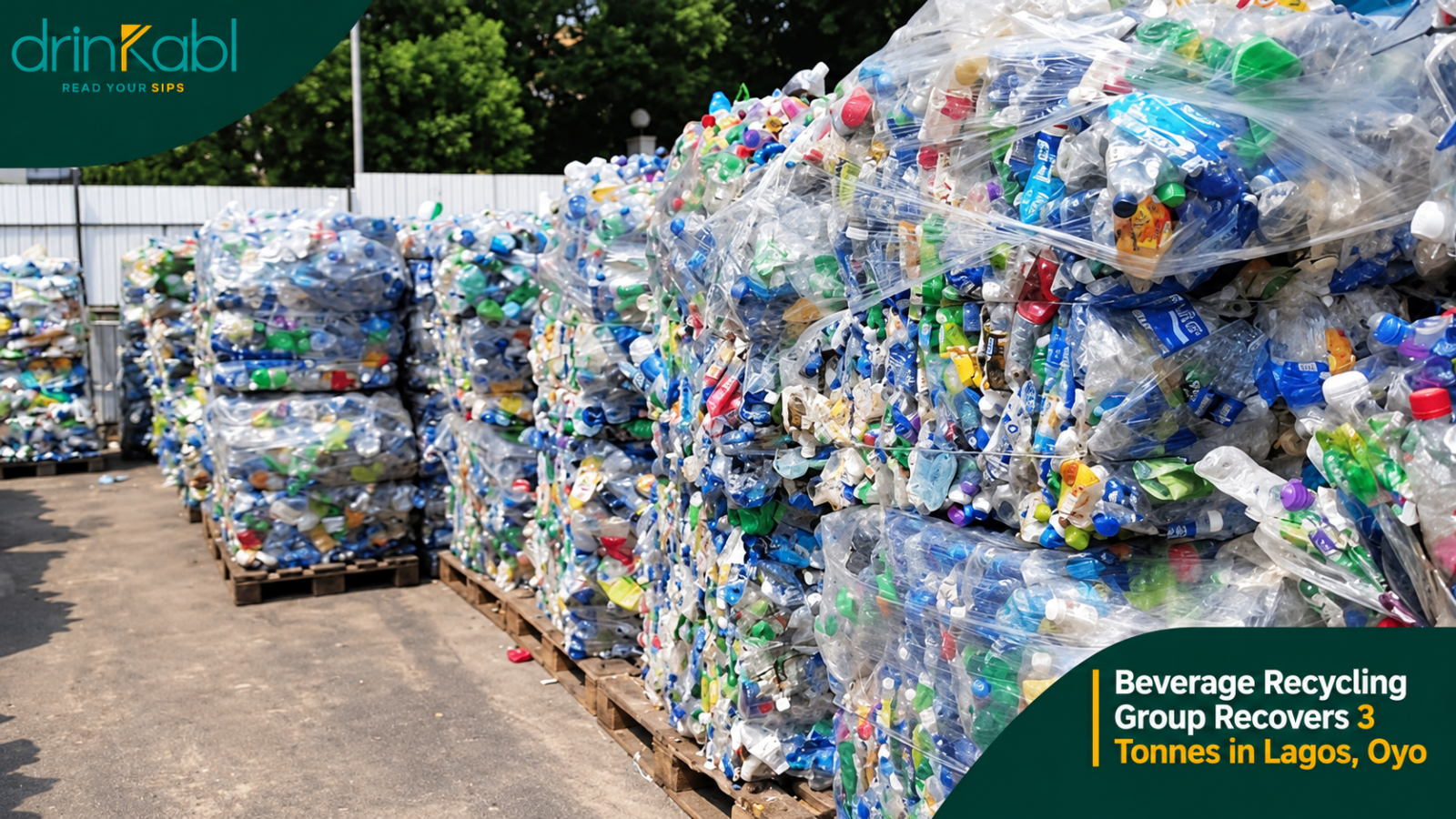

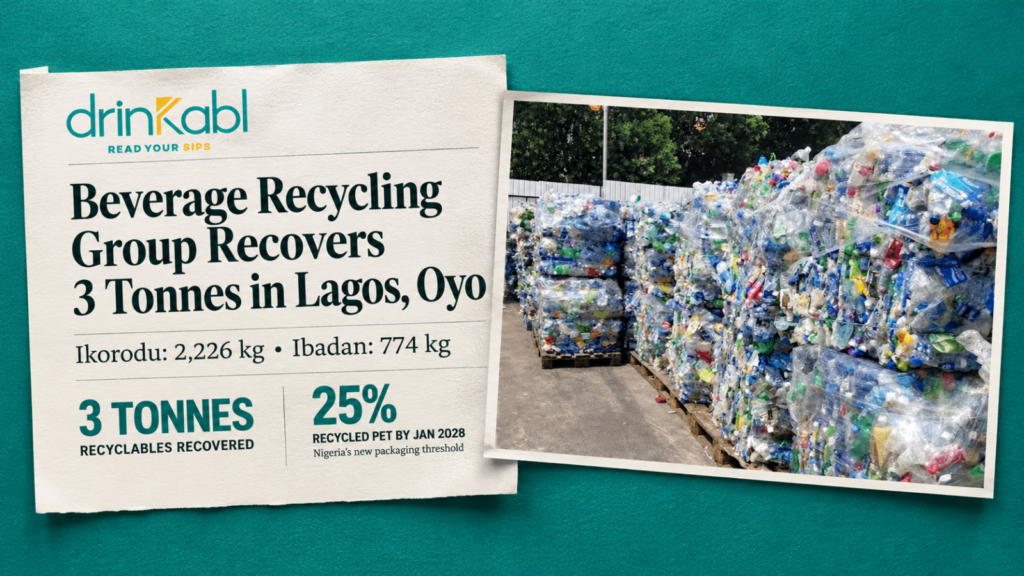
The Food and Beverage Recycling Alliance (FBRA) said in a statement issued over the weekend of 10 and 11 October that it recovered about three tonnes of recyclables in Lagos and Oyo states for World Cleanup Day 2026. Ikorodu in Lagos supplied 2,226 kilograms and Ibadan in Oyo 774 kilograms. The figures are FBRA’s own and have not been independently confirmed.
FBRA is the producer responsibility organisation for Nigerian food and drinks companies, meaning its members share responsibility for recovering the packaging they sell. It reported 49 members in November 2025, including Nestlé Nigeria, and says it has recovered more than 100,000 tonnes of packaging waste since it began. The cost of the October exercise and member contributions were not disclosed.
Small against the national total
Three tonnes is a small amount against the 2.5 million tonnes of plastic waste Nigeria produces each year, or about 0.0001 per cent, although FBRA’s recyclables are not all plastic. The October total is also close to the more than three tonnes the alliance reported from a buyback in Igando, Lagos, in June, so the latest exercise shows no step up in scale.
How the buyback works
In Ikorodu, residents could swap recyclables for product incentives, and FBRA’s collection partner Zyntomax took the material into the formal recycling chain. FBRA says it is working on a collection centre in the community but gave no opening date or capacity. The statement does not say how much of the haul was PET, the plastic the new rules cover for recycled content.
Recycled content rules loom
The Plastic Waste Control Regulations 2026, unveiled in early September, require PET packaging to contain at least 25 per cent recycled PET by January 2028, rising to 50 per cent after that. Violations may bring financial penalties and, where applicable, imprisonment and personal liability. The Manufacturers Association of Nigeria has raised concerns, and the regulator has rejected calls to suspend the rules.
Early movers, open questions
Nestlé Nigeria says it was the first company in Nigeria to put 50 per cent recycled PET into its Pure Life water bottles, a level that would already meet the higher tier of the new rule. That is the company’s own claim. For other drinks makers, the open question is whether community buyback events can supply enough food-grade recycled PET, which the regulator says the rules are meant to source locally, and FBRA’s statement does not address it.