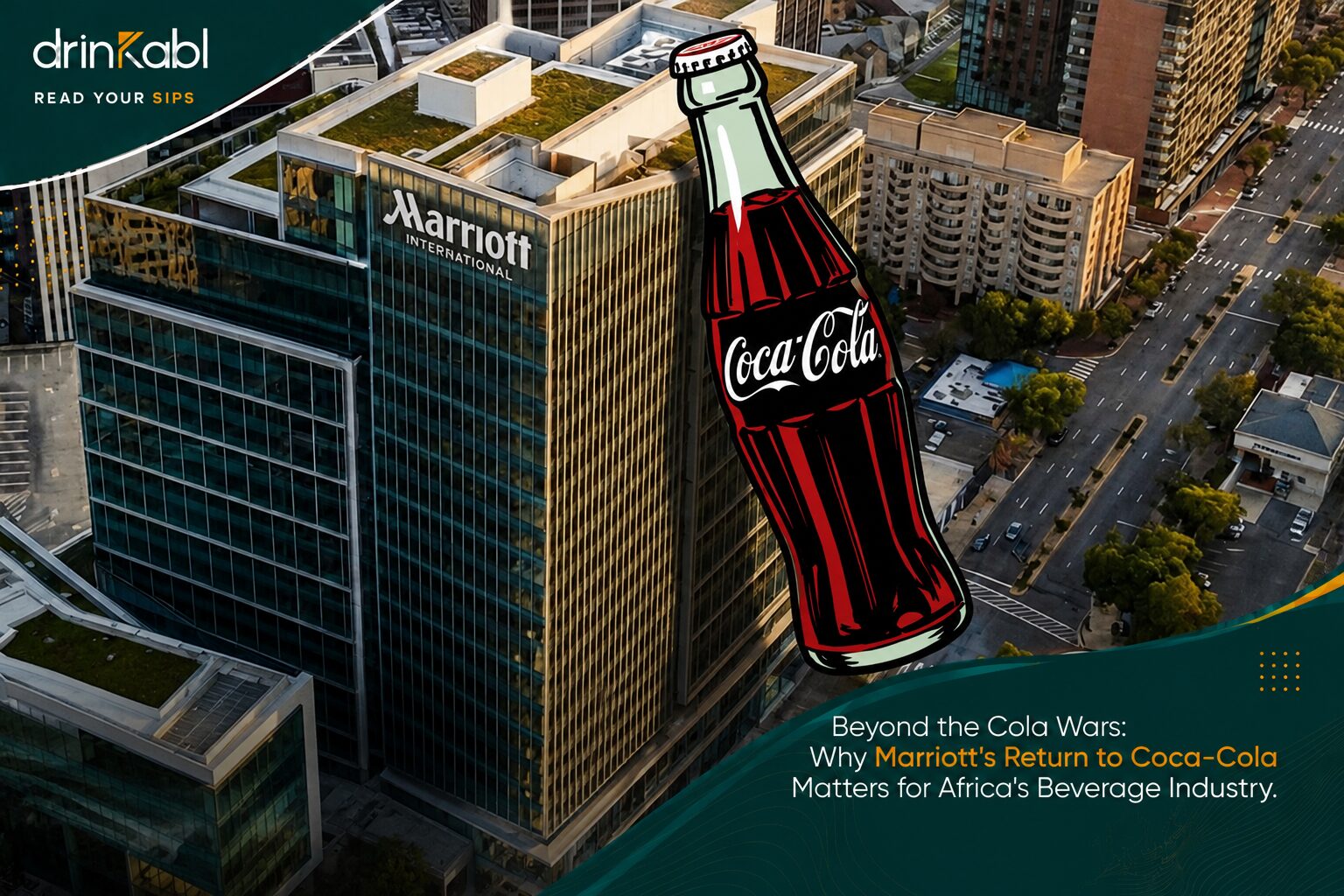

Marriott International’s decision to replace PepsiCo with The Coca-Cola Company as its global beverage partner marks far more than another chapter in the decades-old cola rivalry. It represents one of the hospitality industry’s largest beverage procurement shifts in decades, with implications that extend well beyond hotel restaurants and minibars.
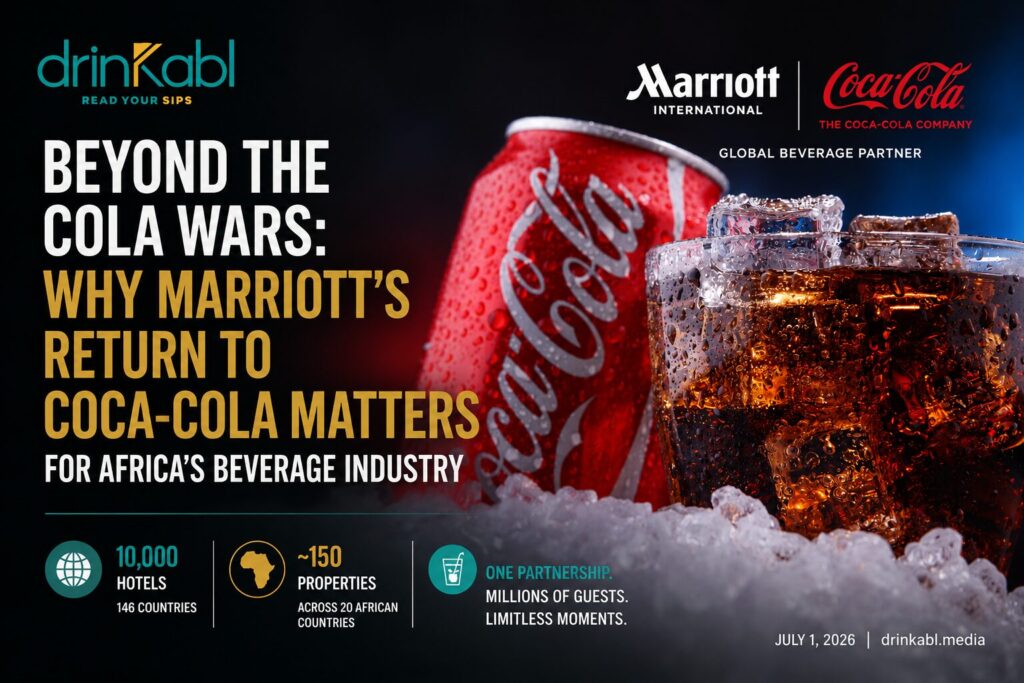
The agreement, announced on July 1, gives Coca-Cola exclusive beverage supply rights across Marriott’s portfolio of approximately 10,000 hotels in 146 countries and territories. The phased rollout, already underway, will introduce Coca-Cola’s portfolio across guestrooms, restaurants, bars, lounges, meetings and event spaces over the coming months.
While the headline centres on Coca-Cola reclaiming a customer it lost more than three decades ago, the commercial story is considerably bigger.
A Global Contract With African Consequences
Africa has become one of Marriott’s fastest-growing regions, with nearly 150 operating properties across 20 countries and plans to open more than 50 additional hotels by 2027. As Marriott expands its footprint across business, leisure and conference travel, every new property becomes another outlet for Coca-Cola’s beverage portfolio.
That makes the agreement particularly significant for Coca-Cola’s African bottling system and hospitality partners.
Unlike supermarket sales, hotel beverage contracts provide brands with access to affluent travellers, corporate events, conferences and premium dining occasions, where purchasing decisions are influenced by venue partnerships rather than retail shelf competition.
The agreement also reaches beyond traditional carbonated soft drinks. Coca-Cola will supply bottled water, juices, hydration products, dairy beverages and functional drinks, reflecting Marriott’s growing focus on offering broader beverage choices to guests.
The End of a 34-Year Partnership
The move also closes one of hospitality’s longest-running supplier relationships.
Marriott switched from Coca-Cola to Pepsi in 1992, beginning a partnership that lasted 34 years and was renewed as recently as 2018. The latest agreement reverses that decision, returning Coca-Cola to one of the world’s largest hotel groups.
Neither company has disclosed the financial value or duration of the new contract, but industry observers consider it one of Coca-Cola’s most strategically important away-from-home wins in recent years.
Marriott said the decision was driven by guest preferences and the opportunity to create greater value for hotel owners and franchise operators. Company executives said the partnership aligns with Marriott’s strategy of delivering products that guests already know and prefer while improving commercial returns across its global network.
Why the Deal Matters
For beverage companies, winning hospitality contracts is about far more than serving soft drinks.
Hotels influence brand visibility during conferences, weddings, tourism, executive travel and premium dining experiences. They also generate recurring demand through restaurants, banqueting operations, room service and corporate events.
For Coca-Cola, the agreement secures access to millions of travellers annually through one of the world’s largest hospitality platforms.
For PepsiCo, it represents the loss of a prestigious global account, although the company continues to maintain strong positions across airlines, foodservice, quick-service restaurants and retail channels.
What It Means for Africa
The timing is notable as Marriott accelerates expansion across African markets, including new developments in East and West Africa.
Properties scheduled to open during the rollout period, including the upcoming Kampala Marriott Hotel, are expected to begin operations under Coca-Cola’s new global supply arrangement rather than the Pepsi system that had defined Marriott hotels for more than three decades.
For Africa’s beverage industry, the announcement serves as another reminder that competition between global beverage companies is increasingly being fought through strategic partnerships, distribution channels and away-from-home consumption rather than supermarket shelves alone.
The cola wars may be decades old, but the battleground continues to evolve. This time, one of hospitality’s biggest prizes has changed hands.
Read More