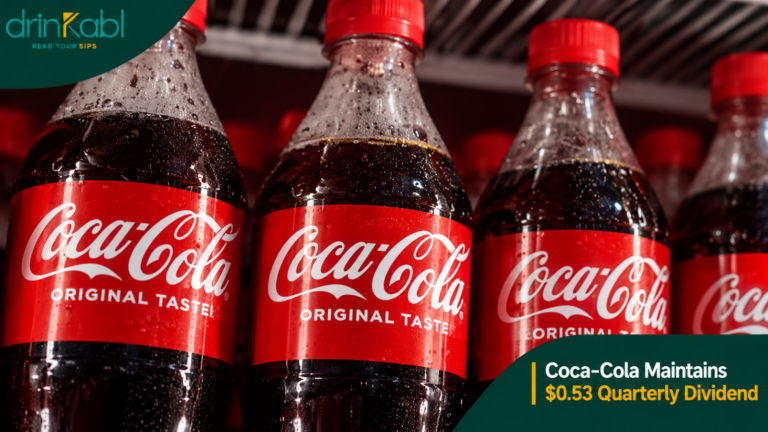

Coca-Cola is turning one of its smallest product lines into a bet on an entirely new drinking occasion. The company has named its zero-sugar, zero-caffeine cola the official partner of Céline Dion’s Paris residency, a 26-date run at Paris La Défense Arena running from September 2026 through May 2027. On the surface, the pairing looks like a routine sponsorship. Underneath it is a year-long repositioning effort that has already reshaped how the product is packaged, marketed and sold across Europe.
The product change behind the headline
Coca-Cola Zero Sugar Zero Caffeine, branded in France as Zero Zero, relaunched in late 2025 with a new black-and-gold pack design built specifically around evening consumption. Javier Meza, Coca-Cola’s president of marketing and Europe CMO, said at the time the brand was responding to “consumers looking for ways to fully enjoy their evenings while making mindful choices.” Coca-Cola Europacific Partners, the company’s largest European bottler, has described the same relaunch as a deliberate shift from a niche caffeine-free option toward what it calls a premium evening choice, one meant to sit alongside dinner, screen time or simply unwinding at home.
The product itself has not changed much. What has changed is the occasion Coca-Cola wants people to reach for it in. For decades, Coca-Cola’s marketing has covered nearly every moment of the day: meals, sport, refreshment, socialising. Zero Zero narrows that down to a specific tension the company is betting people actually feel, wanting something indulgent at night without sugar, calories or a jolt of caffeine before bed.
Céline Dion is the amplifier, not the strategy
The Paris residency did not invent this positioning. Coca-Cola had already rolled the same evening framing out across Great Britain earlier in 2026, where the relaunched product carried the tagline of a “sophisticated evening choice.” Rob Yeomans, vice president of commercial development at CCEP GB, said the UK variant was growing by 36% and worth almost £10 million, positioning it to capture what he called incremental occasions later in the day. That UK push ran alongside a tie-in with the 007 First Light video game, giving Coca-Cola a second entertainment property built around the same repositioning before Céline Dion ever entered the picture.
Seen against that backdrop, the Paris deal reads less like the beginning of a strategy and more like its biggest stage yet. Sébastien Lesage, Coca-Cola Europe’s director of partnerships, framed the concert deal in exactly those terms, saying the partnership exists to “accompany the most beautiful moments of the evening” around the product. The France campaign will extend beyond the arena itself, activating more than 600 points of sale, a national contest offering 100 concert tickets through QR codes on bottles starting in October 2026, and sampling stations at the venue exits.
Why the numbers matter more than the concert dates
The commercial case behind the Céline Dion tie-up rests on results Coca-Cola’s French operation has already posted. Following the late-2025 relaunch, the company reported a gain of 120,000 new buying households, alongside volume up 34% and value up 37%. Those figures come directly from Coca-Cola’s own communications rather than independent market audits, so they should be read as the company’s account of its own campaign rather than externally verified data. Still, the scale of the claimed growth explains why Coca-Cola is willing to attach one of the biggest entertainment properties returning to Paris to a product line that, until recently, occupied a fairly obscure corner of its portfolio.
The visual campaign itself, built around a black-and-white Céline Dion image paired with the black-and-gold Zero Zero identity, signals something else worth noting. Coca-Cola is not making the product itself more expensive or exclusive. It is attaching premium cultural capital, in this case fashion photography and a sold-out arena residency, to a mass-market soft drink, borrowing a technique long used by champagne, wine and spirits brands to sell an occasion rather than a beverage.
The competition Coca-Cola is really entering
That borrowing points to the more interesting question sitting underneath this campaign. Champagne has long owned celebration. Beer owns socialising and nightlife. Wine owns the dinner table, and spirits increasingly own the premium cocktail hour. By building Zero Zero around evening entertainment and sophistication without alcohol, sugar or caffeine, Coca-Cola is positioning the drink to compete less with other colas and more with the entire category of drinks people reach for after dark, including non-alcoholic beer and other zero-sugar functional drinks that African markets are increasingly stocking too.
That is a genuinely different competitive set than the one Coca-Cola has spent most of its history in. It also raises the real test of this strategy, one that has nothing to do with Céline Dion’s ticket sales. Coca-Cola does not need people to drink more cola across the day. It needs them to discover one additional moment, specifically the evening, when reaching for a Coke feels like the obvious choice rather than an afterthought. Whether that habit sticks once the concert lights go down is the question worth watching, far more than whether the residency itself sells out.