
The FIFA World Cup 2026 is creating winners and losers long before the final whistle. For Coca-Cola, one of the biggest opportunities is not on television, social media, or inside a fan park. It is on the retail shelf.
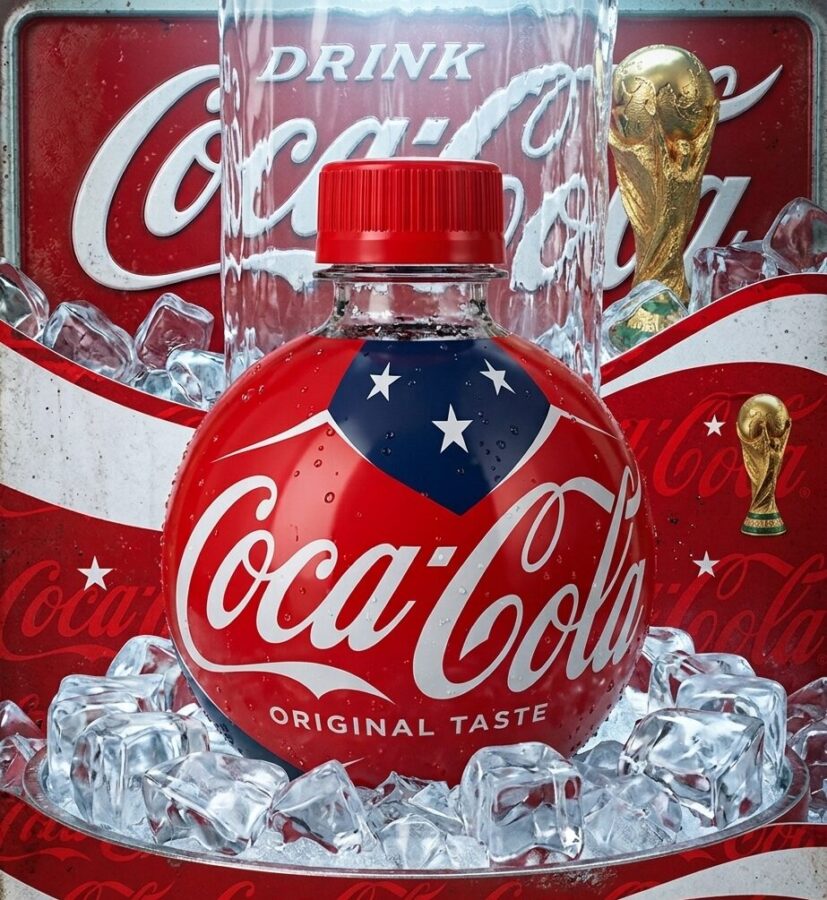
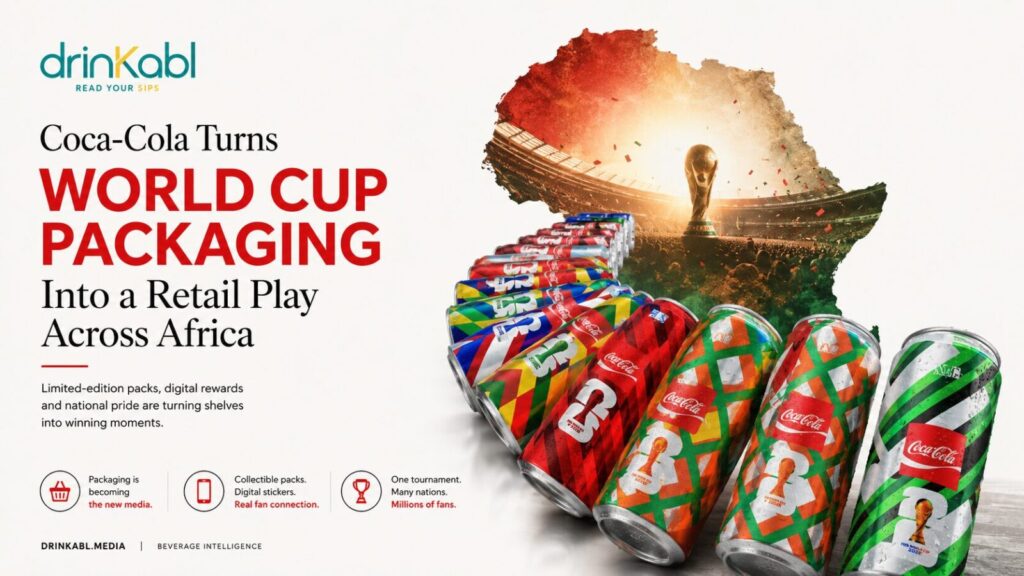
Across South Africa and other African markets, the beverage giant has launched limited-edition FIFA World Cup packs designed around national teams, turning ordinary cans and bottles into collectibles. The strategy reflects a growing reality in beverage marketing: packaging is increasingly functioning as media. Consumers are no longer simply buying a drink. They are buying a connection to a team, a tournament, and a moment.
Coca-Cola’s South African collection features packaging inspired by participating nations including South Africa, Brazil, Argentina, France, England, Germany, Portugal, and Spain. For South Africa, the campaign carries added significance, with Bafana Bafana’s return to the World Cup after a 16-year absence giving the packaging emotional resonance beyond traditional tournament branding.
The company has also expanded its partnership with Panini, embedding collectible player stickers beneath peel-back labels and linking purchases to digital sticker albums and rewards. The programme, now active across multiple markets, effectively turns each bottle into both a collectible and a loyalty mechanic. Coca-Cola has further extended the initiative through QR-enabled experiences, competitions, and fan activations tied to the tournament.
Morocco, another African representative at the tournament, has received dedicated collectible bottles in both Coca-Cola Original Taste and Coke Zero variants. The Atlas Lions’ popularity across North and West Africa gives the packaging appeal beyond Morocco itself, creating opportunities for cross-border demand.
Recent developments suggest the collectability strategy is working. In several markets, limited-edition World Cup packs and bottles have become sought-after items, with some collectibles appearing on secondary marketplaces at significant mark-ups, reinforcing the value of scarcity-driven packaging campaigns.
Yet the campaign’s effectiveness ultimately depends on distribution. Across much of Africa, informal retail channels remain primary purchase points for millions of consumers. If limited-edition packs are concentrated in supermarkets and organised retail, many consumers may never encounter the products despite widespread marketing exposure.
The initiative aligns with a broader trend across Africa’s beverage industry, where brands are increasingly investing in culture, experiences, and identity rather than relying solely on traditional advertising. The bigger question is not whether Coca-Cola sells more beverages during the tournament. It is whether competitors conclude that major sporting events are becoming retail opportunities as much as advertising opportunities.
For decades, World Cup marketing was measured by sponsorship visibility and media reach. Increasingly, success may be determined by what happens in the shopping aisle. Coca-Cola’s campaign suggests that in an era of fragmented media consumption, the package itself may be one of the most valuable advertising assets a brand owns.
READ MORE