
Africa’s beverage industry, seven days at a time
Ondo Deaths, EABL’s $2.3bn Sale, and a Counterfeit Reckoning
Africa’s beverage industry moved on several fronts this week. In Nigeria, the death toll from a suspected mass alcohol poisoning in Ondo State climbed past two dozen, prompting a statewide ban and a wave of arrests. In Kenya, regulators cleared the last major hurdle in Diageo’s $2.3 billion exit from East African Breweries. And new industry data confirmed what many operators already suspected: local producers, not multinational entrants, control most of the continent’s beverage market.
This week’s top lines:
- Ondo State’s poisoning toll stands at 29 confirmed deaths and 60 suspected cases; police have arrested 14 people and a statewide ban is in force.
- Kenya’s competition regulator has cleared Diageo’s $2.3 billion EABL stake sale to Asahi, with conditions attached.
- IWSR data shows Sub-Saharan Africa’s alcohol volumes rose 1 percent in 2025, though local products already dominate every category.
- NAFDAC has disclosed ₦1.5 trillion in counterfeit goods destroyed and 64 convictions secured over the past year.
- A US-Canada trade dispute and a Nairobi industry summit rounded out a busy week.
The Ondo poisoning toll keeps climbing
Health officials in Ondo State confirmed 29 deaths and 60 suspected cases linked to a locally brewed alcoholic drink, with local media reports putting the toll as high as 32. Most of those affected are men between 16 and 55, and cases have spread from an initial cluster in Odigbo to Araromi-Obu and neighbouring communities.
Commissioner for Information Idowu Ajanaku announced a statewide ban on the production, sale and distribution of unverified alcoholic drinks and substances, covering sachets, bottles and any product whose source cannot be verified.
Police have arrested 14 suspects across the affected communities and say they recovered methanol-linked evidence, though laboratory results confirming the exact cause of death are still pending. NAFDAC, the Nigeria Centre for Disease Control and the World Health Organisation are all involved in the investigation.
The episode reopens a familiar question for Nigeria’s beverage market: how much of what reaches consumers sits entirely outside the formal manufacturing and regulatory system.
Kenya clears the Diageo-Asahi mega-deal
Kenya’s competition regulator approved Diageo’s sale of its 65 percent stake in East African Breweries, plus its 53.7 percent holding in spirits group UDV Kenya, to Japan’s Asahi Group Holdings. The deal, first announced in December 2025, is worth about $2.3 billion.
The approval carries conditions. EABL must reserve 20 percent of its retail cooler space for competing brands, a rule that exempts supermarkets, petrol-station liquor stores and three-star-and-above hotels. The company must also set aside sufficient funds, reportedly around $116 million (roughly KSh15 billion), to cover any liabilities that surface after the sale closes, alongside protections for smaller suppliers.
Diageo keeps a hand in the business even after selling it. Guinness, Smirnoff and Captain Morgan will stay under Diageo’s brand ownership through licensing and transitional service agreements, while EABL remains listed on the Nairobi Securities Exchange and Asahi’s stake is capped at 65 percent. Completion is guided for the end of 2026, though minority shareholder litigation dating back to 2025 remains unresolved.
For African beverage markets, this is bigger than a change of shareholder. Diageo is completing a broader retreat from the continent, having already exited Nigeria, Ghana, Cameroon, Seychelles and Ethiopia. Asahi gains its first direct African operations through decades of EABL brand, manufacturing and distribution infrastructure.
IWSR: Africa’s growth is real, but it’s already local
New data from IWSR made a longer-term case for the continent’s alcohol prospects, even as it complicated the usual growth story. Sub-Saharan Africa’s beverage alcohol volumes grew 1 percent in 2025, with ready-to-drink products up 11 percent and spirits up 6 percent, while wine fell 3 percent. IWSR expects roughly 2 percent annual growth through 2035.
The more telling number is who already serves that market. Locally produced products account for 97 percent of beer volumes, 87 percent of RTDs, 80 percent of spirits, 71 percent of cider and 59 percent of wine sold across Sub-Saharan Africa. Downtrading, not premiumisation, remains the dominant pattern, with drinkers moving from spirits to beer and from imports to local brands.
That reframes the opportunity for multinationals. Entering Africa is rarely the hard part. Competing against products already built around local price points and distribution networks usually is.
A new value pack in Nigeria’s soft-drinks fight
Nigeria’s crowded soft-drinks market saw one notable move this week. Ultimum Limited relaunched its 60cl Razzl bottle as “Razzl-Boss,” priced at ₦400 for 20 percent extra volume, alongside continued investment in its recently commissioned production facility.
One relaunch is a small story by itself. It matters more as a signal of where Nigeria’s non-alcoholic beverage market is headed: local manufacturers competing hard on price per volume while building the scale needed to survive against established national portfolios.
NAFDAC’s counterfeit numbers keep growing
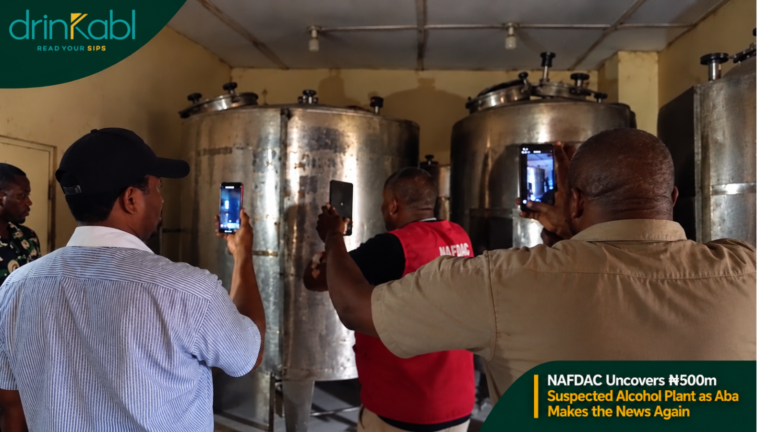
The counterfeit-beverage problem shadowing Nigeria’s market all year picked up new scale this week. NAFDAC disclosed that a coordinated raid across Lagos and the south-east between February and March 2025 destroyed regulated products worth more than ₦1.5 trillion, and that it has secured 64 convictions between June 2025 and June 2026, the highest number the agency has recorded in a single year. Sentences range from one to seven years in prison, with no option of a fine.
The agency also said 47,830 facilities are now under post-market surveillance nationwide, with about 80 percent of that work aimed at detecting fake, adulterated or non-compliant food and drink products. Separately, three companies were caught refilling branded 19-litre water dispenser bottles from unapproved sources, putting a name-brand label on an unverified product.
Placed next to the Ondo deaths, this gives Nigeria’s beverage industry a genuinely serious safety story this week, spanning both the formal regulatory system and the informal market operating around it. Counterfeiting is a public-health problem as much as a brand-protection one, and this week’s numbers suggest it runs larger than most earlier estimates.
A trade war reaches the drinks aisle
The industry’s exposure to policy was not confined to Africa. The United States announced a ban on a broad range of Canadian alcoholic beverages, including beer, wine, whisky and vodka, along with dairy products and motorcycles, taking effect September 29. The move followed Canada’s own retaliatory tariffs on roughly $20 billion of US goods, after trade talks between Washington and Ottawa collapsed last month.
It is a reminder that alcohol markets are unusually exposed to policy shocks: heavily regulated, geographically fragmented, and dependent on cross-border supply chains that a single executive order can redraw.
Nairobi looks past the week’s headlines
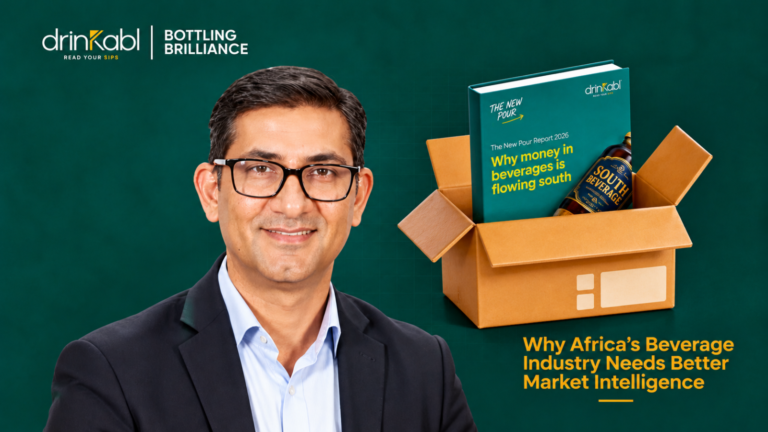
Away from enforcement and deal-making, beverage executives, investors and creatives gathered in Nairobi this week for the New Pour Summit, convened by Drinkabl Africa under the theme “Liquid Resilience.” The event’s inaugural New Pour Report, built on ten trends and more than 15 data sources, found capital shifting toward Southern and Sub-Saharan Africa on the back of demographics, urbanisation and connectivity.
It’s a useful counterweight to the rest of the week’s news. Enforcement and safety dominate the headlines, but the investment case for African beverages keeps building underneath them.
What the week adds up to
Safety and growth are not separate stories in Africa’s beverage industry right now. The Ondo deaths and the counterfeit numbers both show what happens when products move through poorly controlled channels, while IWSR’s own data confirms that local producers already hold most of the market that global operators are chasing. Ownership of the continent’s infrastructure keeps shifting too, with Diageo stepping back and Asahi stepping in, which suggests the strategic value of African beverage assets hasn’t disappeared. It’s being repriced.
Threads to watch
- Rwanda’s alcohol import ban: Kigali has suspended 52 imported alcohol brands from Kenya, Tanzania, Uganda and Burundi after a contamination crisis linked to more than 50 deaths and around 100 cases of sight loss. Kenya and Uganda have formally challenged the measure; an East African Community resolution is awaited.
- Kenya’s drinking-age bill: A bill to raise the minimum legal drinking age from 18 to 21 is moving through Kenya’s parliament and remains at committee stage.
- Nigeria’s sachet alcohol ban: NAFDAC’s ban on alcohol in sachets and sub-200ml bottles, in force since January, now has fresh momentum from the Ondo tragedy, with a nationwide recall already underway.
- Nigeria’s excise schedule: Beer and spirits excise rates are rising on a three-year schedule; listed brewers reported a combined ₦113 billion tax bill for the first half of 2026, with further price rises expected.
- Nigeria’s sugar-sweetened beverage levy: The Senate is reviewing the ₦10-per-litre levy after it generated ₦108.6 billion in collections, alongside plans for a new Health Fund.
- EABL minority shareholder litigation: Claims tied to Diageo’s 2021 stake increase remain unresolved and do not block completion of the Asahi deal, though court rulings could still surface before the sale closes.
- Ghana’s alcohol control bill: A comprehensive alcohol control law has been announced but has not yet been tabled in parliament.
- Coca-Cola HBC’s African acquisition: The $2.6 billion deal for Coca-Cola Beverages Africa has cleared South African and Botswana regulators and is awaiting completion and a Johannesburg Stock Exchange listing.