
As Lionel Messi continues to inspire Argentina’s run at the FIFA World Cup, now into the quarterfinals as the defending champions chase back to back titles, another story has been unfolding away from the pitch. It is not about who pays Messi to appear in an advert. It is about what happened when Messi decided to become a beverage owner rather than just a beverage face.
For nearly two decades, global beverage companies have paid to associate their brands with football’s most enduring icon. That endorsement economy is well documented and, in Pepsi‘s case, still running strong. But in 2024, Messi tried something riskier: putting his own name and equity behind a hydration drink built to compete directly with the category’s giants. Its 20 month journey from launch to shutdown offers a sharper lesson for Africa’s beverage industry than any endorsement deal could.
From endorser to owner
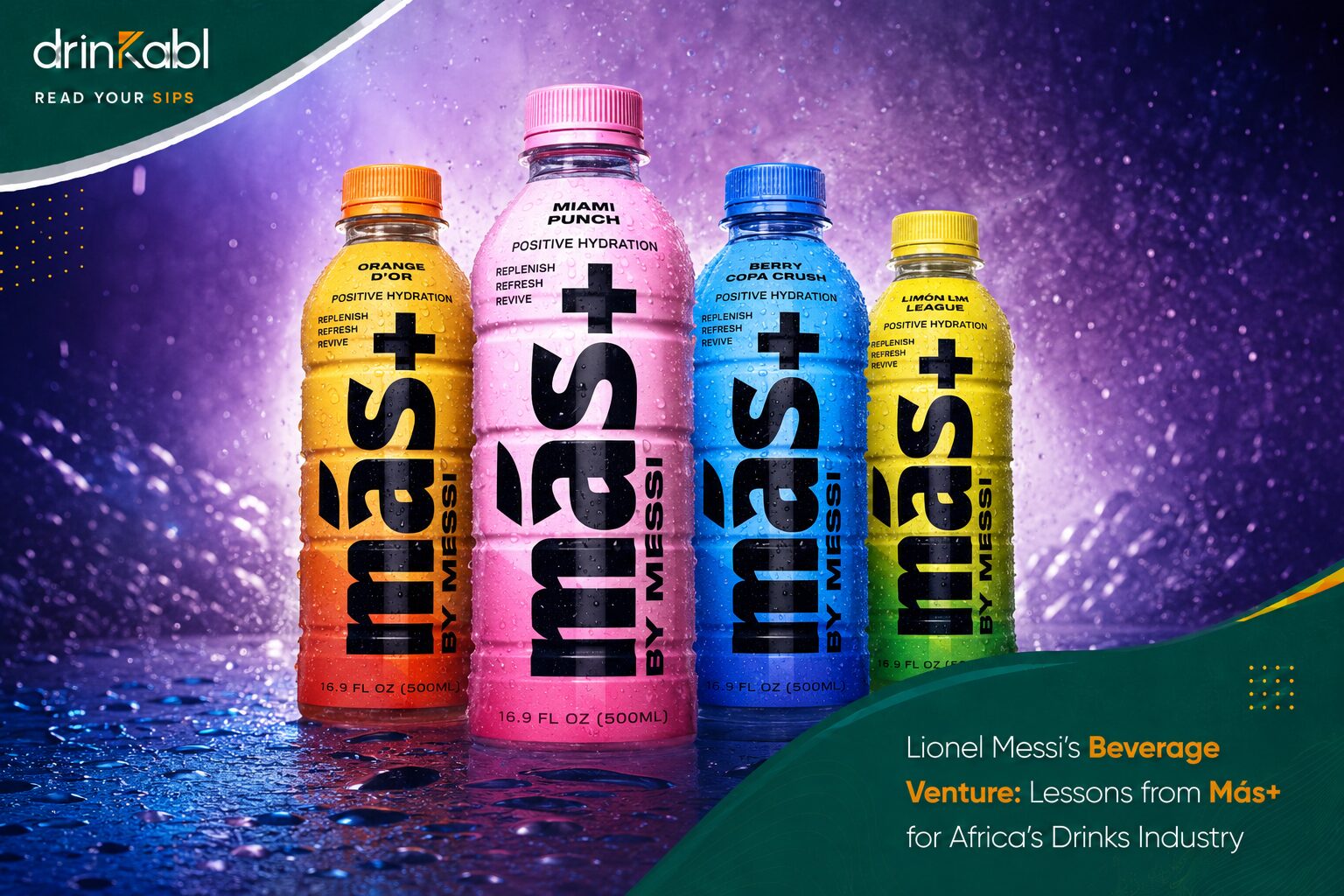
In June 2024, Messi partnered with Mark Anthony Brands, the company behind White Claw, to launch Más+ by Messi, a low sugar hydration drink built around electrolytes and vitamins with no artificial sweeteners, colours or caffeine. The brand debuted in Miami on June 13, 2024, before expanding to US supermarkets and, later, Canada and the UK.
Messi framed the launch around a health positioning. “Hydration is essential to overall wellbeing. I believe everyone deserves a drink with amazing ingredients and taste,” he said at launch, adding that Más+ was “a drink I’m proud to share with family and friends.”
The strategy was explicit: go after Prime, the KSI and Logan Paul-backed drink that had dominated celebrity beverage headlines, while also chipping into territory long held by Gatorade and BodyArmor. Andrea Hernández, founder of the food and beverage insights platform Snaxshot, told CNN that Messi’s advantage lay in reach rather than product design alone, noting his fanbase stretched deep into Latin America, a region Prime had barely touched.
Early momentum
For a while, the bet looked sound. Más+ became the official hydration partner of Inter Miami CF, and in May 2025 it struck a multi-year deal to become the official hydration partner of MLS NEXT and MLS GO, reaching more than 40,000 young players across North America. The following month, Más+ was named the official hydration partner of the Argentine Football Association, covering the men’s, women’s, youth and futsal national teams ahead of the 2026 World Cup.
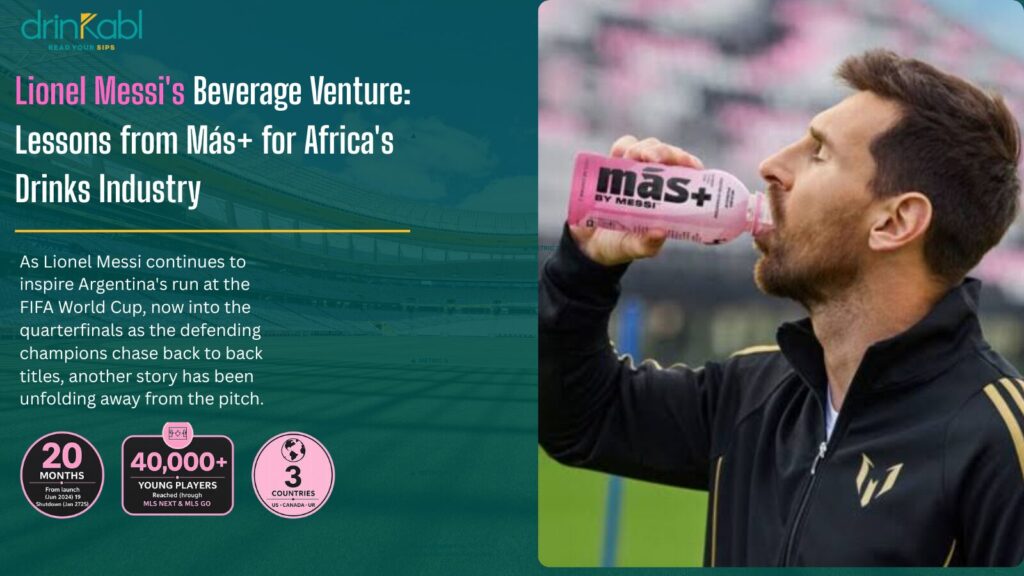
The commercial logic was straightforward: fold Messi’s on-pitch story into the product itself, from flavour names tied to his career milestones to sponsorships that put the brand in front of exactly the youth soccer audience it needed to convert.
Cracks beneath the surface
The competitive response came fast. Prime filed a countersuit against Mark Anthony Brands in late 2024, alleging that Más+’s bottle design and tagline infringed its trademark and caused consumer confusion, a dispute that escalated into further litigation through 2025 over claims about how directly Messi had shaped the product.
Analysts had flagged the risk from the start. George Shaw of GlobalData warned at launch that the hydration category was already saturated, and that success would come down to “price parity and distribution” rather than star power alone.
The phase-out
In January 2026, Mark Anthony Brands quietly decided to wind the brand down, a decision the company confirmed publicly only months later. “When we launched Más+ By Messi, we went all-in on our belief in creating a next-generation sports hydration beverage,” said Phil Rosse, chief executive of the Mark Anthony Group. “Many great milestones were achieved. However, despite our best efforts, we did not achieve all of our objectives.” By May 2026, the brand’s UK website had been shut down and its products pulled from Amazon and Tesco.
What still works
The contrast with Messi’s endorsement-only partnerships is instructive. Pepsi’s relationship with Messi has run for years without needing him to carry commercial risk, built on football culture and shared campaigns rather than product ownership. Budweiser‘s association with Messi followed the same low-risk model during the 2022 and 2023 tournament cycles, though its 2026 World Cup platform, “Let It Pour,” now fronts Erling Haaland and Jürgen Klopp instead. Messi’s current tournament beverage tie-in sits with a different Anheuser-Busch InBev brand, Michelob ULTRA, which cast him alongside Christian Pulisic in its 2026 campaign.
Lessons for Africa’s beverage industry
African beverage companies chasing celebrity partnerships face a choice that Messi’s own career now illustrates clearly. Endorsement deals, where the athlete lends image and reach without operational stake, spread risk and can run for years, as Pepsi’s Messi relationship shows. Founder-owned or equity-linked ventures promise deeper brand equity but expose the athlete, and the backing company, to the full weight of category competition, distribution costs and legal disputes.
Más+’s trajectory also underscores that fandom alone does not clear shelf space. Even a founder as globally recognised as Messi could not out-compete entrenched players like Gatorade on price and distribution once the initial buzz faded.
As Argentina pushes for a second consecutive World Cup title, Messi’s value as a pitchman remains intact. What Más+’s shutdown shows is that the more valuable the athlete, the higher the stakes when a brand asks them to own the outcome rather than simply represent it.