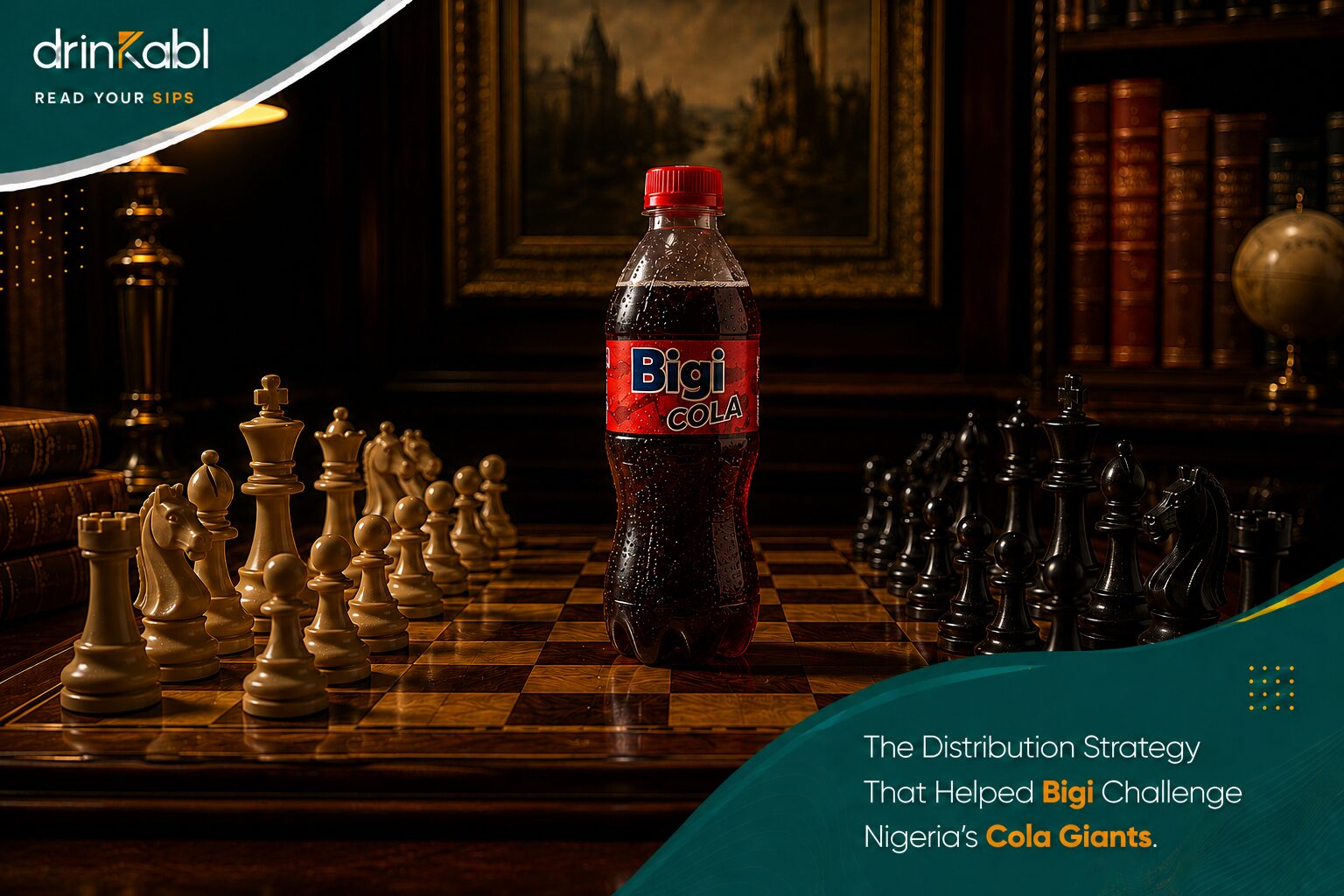

The rise of Bigi Cola is often framed as a pricing story. Bigger bottles, competitive pricing and an expanding flavour portfolio certainly helped the brand gain attention in Nigeria’s crowded carbonated soft drinks market.
But the company’s real competitive advantage may have been built decades before its first bottle rolled off the production line. Long before founding Rite Foods Limited, entrepreneur Sulaiman Adebola Adegunwa spent years building one of West Africa’s distribution businesses through Ess-Ay Holdings, which held the regional distribution franchise for AGFA photographic products across eight countries. Although the business operated in a different industry, it exposed the company to the realities of moving products through complex African markets, building retailer relationships and managing regional supply networks.
When digital photography disrupted the film business, Adegunwa shifted into fast-moving consumer goods, establishing Rite Foods in 2007. Rather than entering beverages immediately, the company first built its route-to-market capabilities through bakery products, including sausage rolls, strengthening relationships with wholesalers, retailers and informal trade channels before expanding into drinks. That groundwork would prove critical.
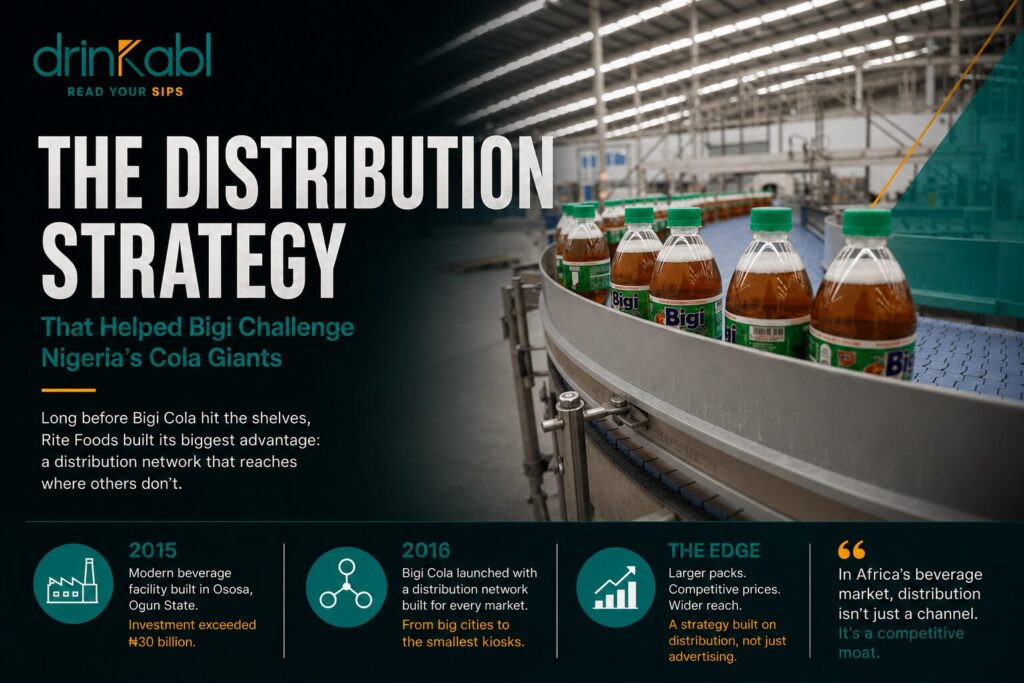
In 2015, Rite Foods commissioned a modern beverage manufacturing facility in Ososa, Ogun State, reportedly backed by an investment exceeding ₦30 billion. The following year, the company entered Nigeria’s highly competitive cola market with the launch of Bigi Cola, challenging two multinational brands that had dominated the category for decades.
Instead of competing solely on brand heritage, Rite Foods differentiated itself through larger pack sizes, competitive pricing and a broader product portfolio tailored to local consumer preferences. More importantly, the company entered the market with an established distribution network capable of reaching neighbourhood retailers, roadside kiosks, open markets and informal trade channels that continue to account for a significant share of beverage sales in Nigeria.
Industry analysts have long argued that distribution remains one of the biggest competitive advantages in Africa’s beverage sector. Manufacturing capacity can be expanded and marketing campaigns replicated, but building trusted relationships across fragmented retail networks takes years.
That lesson is becoming increasingly relevant as African beverage companies seek growth beyond their home markets. Rite Foods has signalled ambitions to expand across the continent under a broader “Proudly African” positioning, identifying regional markets including Benin, Togo, Niger and Cameroon as potential growth opportunities. The strategy aligns with growing interest in intra-African trade under the African Continental Free Trade Area (AfCFTA), where companies with established distribution expertise may hold a competitive edge.
The Bigi story therefore reflects more than the emergence of another soft drink brand. It illustrates how long-term investment in manufacturing, route-to-market capability and local market knowledge can reshape competitive dynamics in markets once considered difficult to penetrate.
For beverage manufacturers across Africa, the lesson is clear: success is rarely built on product innovation alone. Distribution remains one of the industry’s most durable competitive advantages.
Read More