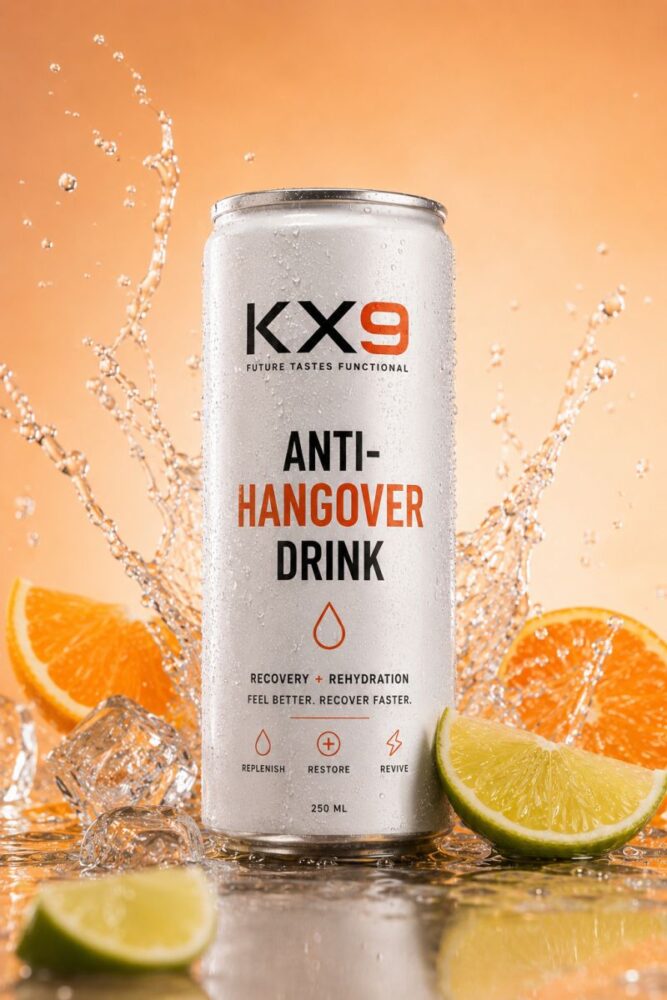

KX9, an India and Canada-based nutraceutical contract manufacturer, is publicly positioning itself to formulate and produce post-alcohol recovery beverages for brands willing to enter the category. The pitch is straightforward: the morning after a night out is a commercial problem no African beverage brand has seriously tried to solve.
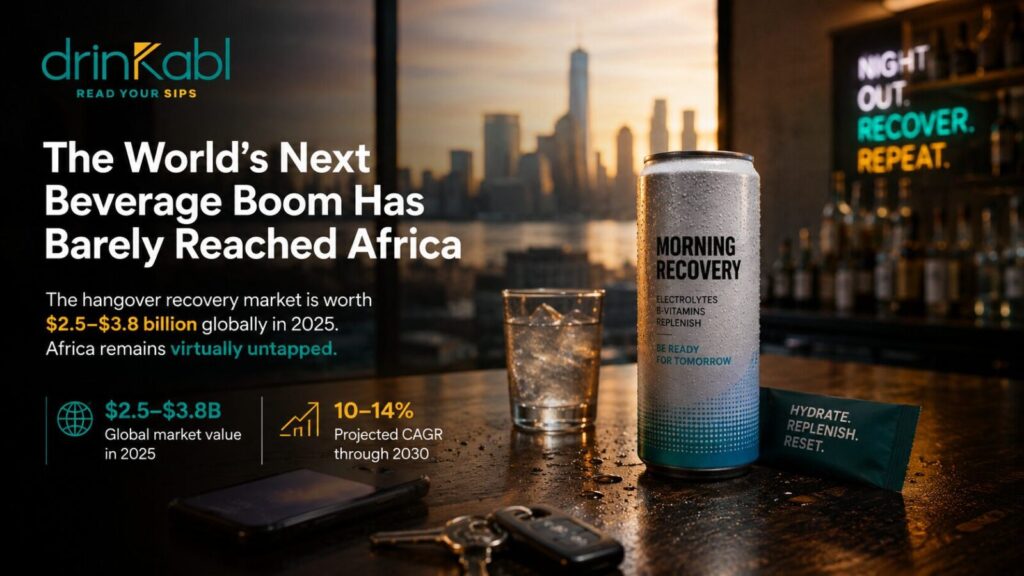
The global market for hangover recovery products is valued somewhere between $2.5 billion and $3.8 billion in 2025 across multiple analyst reports, with double-digit compound annual growth projected through 2030. The RTD segment sits at roughly $520 million globally in 2025 according to 24 Market Reports, with functional beverages occupying the fastest-growing format position. North America and Asia-Pacific have produced most of the category’s established players: More Labs’ Morning Recovery, Cheers Health, Flyby, and ZBiotics have built distribution primarily through e-commerce and convenience retail in developed markets.
Africa is largely absent from that category map. KX9 co-founder Diksha Kaur framed the gap as intentional opportunity in a LinkedIn post this week: brands have been building for the night, not the morning after. The pitch targets electrolyte rehydration, vitamin replenishment, and functional recovery positioned around social occasions rather than athletic performance, with RTD as the preferred format, designed to sit at the point of purchase near alcohol rather than in a pharmacy aisle.
The commercial logic holds up to a point. Nigeria’s beverage market is expanding in on-trade volume, and the wellness category is drawing investment from established brewers and challenger brands alike. Nigerian Breweries’ “Beyond Beer” push and Guinness Nigeria’s Orijin brand both reflect the same consumer shift: occasions are no longer owned by a single beverage type. A recovery drink does not need to displace a beer. It needs to earn the morning slot.
The practical obstacles are more interesting than the opportunity framing suggests. Distribution into informal trade, where the majority of off-premise alcohol volume moves across West Africa, requires cold-chain capability or ambient stability that most premium functional formats do not have. Shelf pricing is also a constraint: products in the established global category retail at price points that exclude a significant share of urban Nigerian consumers at current FX rates. The brands most likely to capture this occasion are locally manufactured products priced into the ₦500–₦1,500 window, exactly where KX9’s contract manufacturing model is pitching.
Ingredient credibility is the remaining question. The hangover recovery category has a global credibility problem: most products make physiological claims that outrun their clinical evidence. NAFDAC has become progressively stricter on functional claim substantiation since 2023. Any brand entering on the back of electrolytes and B-vitamins is on safe ground. Brands claiming hepatoprotective effects or accelerated alcohol metabolism will need an evidence base that most contract manufacturers currently do not supply.
Drinkabl.media’s earlier coverage of Nigeria’s beer market traced how functional formats are encroaching on occasions that brewers once owned. Post-alcohol recovery is the next adjacent slot: it does not require a consumer to drink less, only to spend more around the same occasion. Whether any African brand moves quickly enough to own it before an import does is the open commercial question for 2026.
READ MORE