
Tanzania Breweries Limited posted a 15 percent revenue increase and a 23 percent rise in operating profit for 2024, driven by Safari Lager, Konyagi spirits, and a distribution network that now reaches 22,000 points of consumption nationwide. The volume story looks clean. The generational story underneath it does not.
Tanzania’s beer market is projected to reach approximately USD 1.39 billion in 2025, growing at roughly 4.5 percent annually according to Statista estimates, with urban demand in Dar es Salaam, Arusha, and Mwanza driving the bulk of commercial consumption. TBL holds more than two-thirds of that market. What the headline numbers don’t capture is how the consumer cohort that will define the next decade of demand is already spending differently.
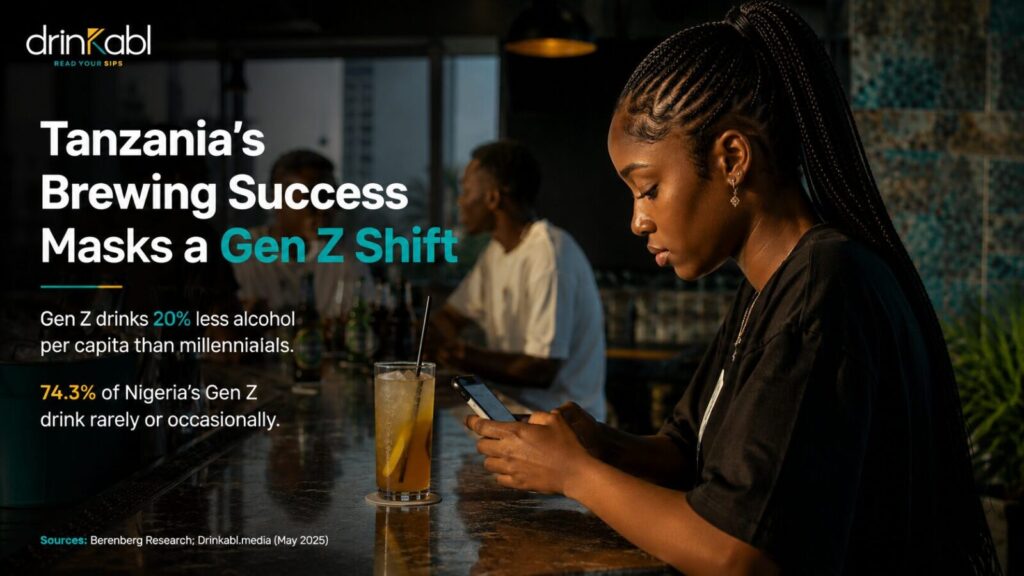
Gen Z drinks an estimated 20 percent less alcohol per capita than millennials, according to data from Berenberg Research cited across multiple market analyses. Younger consumers who do drink are compressing frequency and concentrating spend on products with social or aesthetic signal: premium packaging, flavored formats, lower-ABV options. For brands organized around returnable-bottle economics and mass lager SKUs, that is a channel mismatch.
Drinkabl.media’s May coverage of Nigeria’s youth market found that 74.3 percent of Gen Z respondents drink rarely or occasionally, yet the generation has not exited the category. The pattern documented in Lagos is the same one brand teams in Dar es Salaam should be modeling: reduced frequency, higher per-occasion spend, strong preference for products that double as social currency.
TBL’s 2024 capital expenditure included a new malting facility in Kilimanjaro and expansion of its BEES and KUJA digital distribution platforms. Neither signals a product-level pivot toward the formats younger consumers are selecting. The ready-to-drink segment is growing across East Africa, with imported formats and regional producers testing flavored malt beverages in modern trade. Tanzania’s urban on-trade still leans heavily on draught and returnables, but hospitality operators in Dar es Salaam are increasingly stocking products their younger customers will actually order.
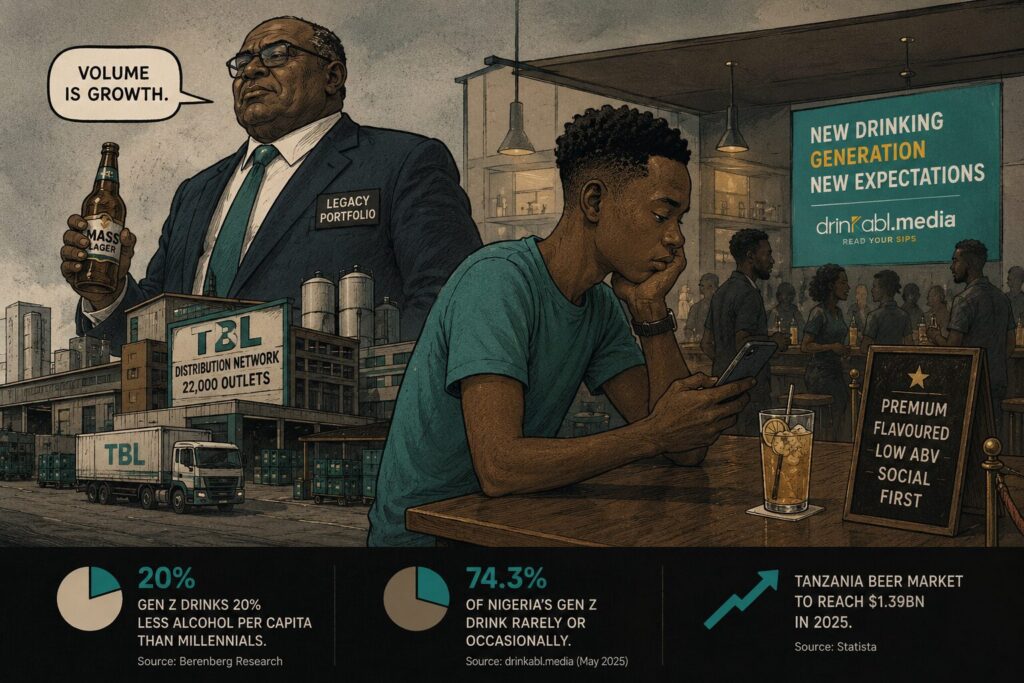
TBL’s own expansion into digital retail channels suggests the company is tracking where purchase behavior is shifting. Whether that translates into a repositioned portfolio or stays a logistics play will determine which brands own the urban Gen Z occasion by the end of the decade.
READ MORE