
The brewer is testing a South African vodka cooler in a market where it already controls almost all clear-beer sales.
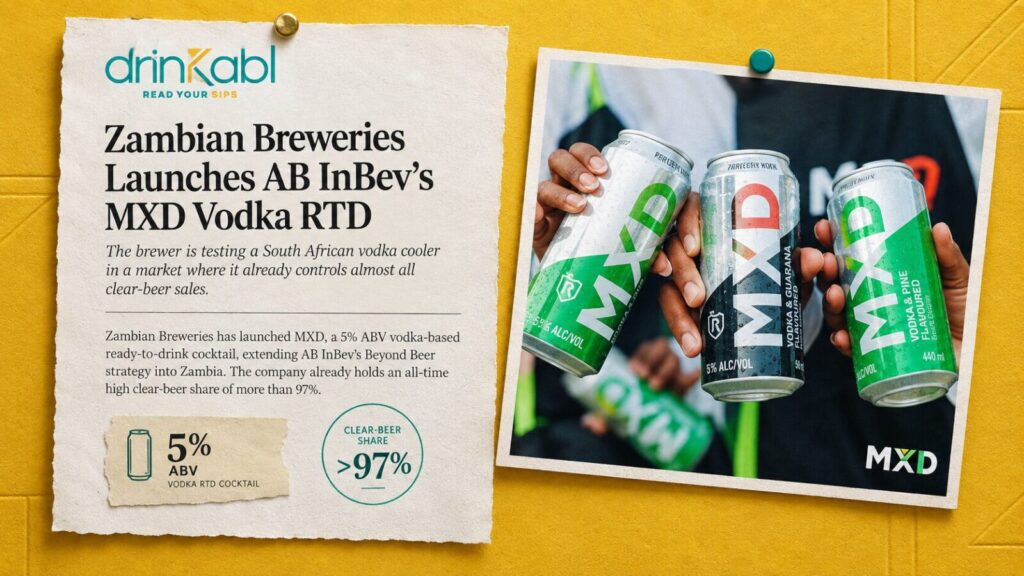
Zambian Breweries has launched MXD, a 5% ABV vodka-based ready-to-drink (RTD) cocktail, extending AB InBev’s Beyond Beer strategy into Zambia. The company already holds an all-time high clear-beer share of more than 97%. Clear beer is the industry term for commercially brewed, filtered beer.
The launch gives Zambian Breweries a route into the fast-growing RTD segment. It also lets AB InBev extend a product already proven in South Africa.
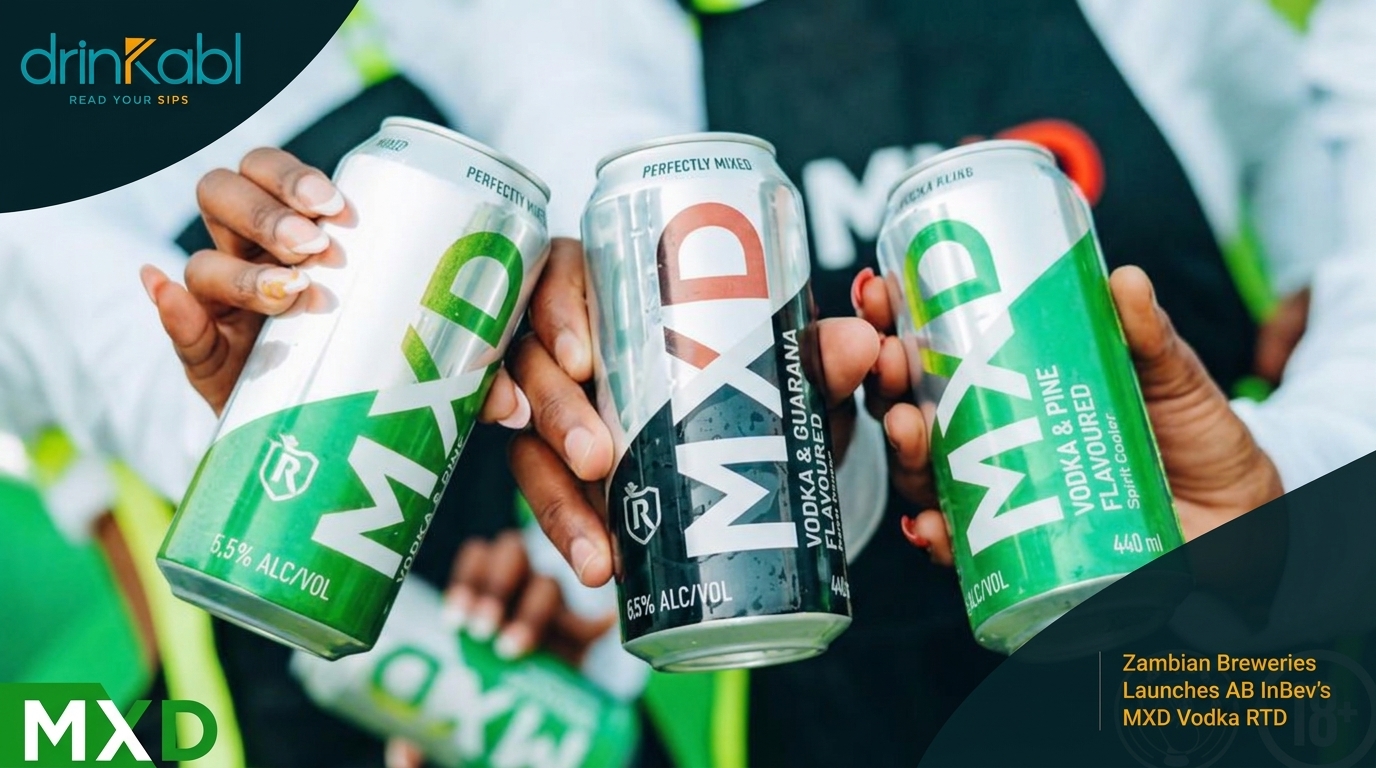
MXD is sold there as Redd’s MXD, a vodka-flavoured spirit cooler in 440ml cans with flavours that include Vodka & Guarana and Vodka & Pine. Zambian Breweries says the brand lets it take part in a high-growth category and recruit new consumers.
Imported, not made in Zambia
Managing Director Thais Cavinatto said in a September 2026 interview that MXD is imported from South Africa because the company does not currently produce mixed spirits locally. That gives Zambian Breweries a low-capital way to test demand before deciding whether local production makes commercial sense. The company has not disclosed MXD’s price.
Why AB InBev is going beyond beer
MXD joins a Beyond Beer line-up that includes Brutal Fruit Spritzer, Mike’s Hard Lemonade and BEATS. AB InBev’s Beyond Beer revenue rose 23% in 2025, though the category still made up only 3% of group revenue.
South Africa is the model. IWSR reported that RTD volumes there grew 12% in 2024, lifting the country from fifth to third among the 10 leading RTD markets it tracks. Rivals are moving too. Castel has launched lower-ABV fruity drinks, and Coca-Cola has teamed up with Brown-Forman on a Jack Daniel’s and Coca-Cola cooler for Africa.
A dominant brewer needs new growth
The timing matters. Zambian Breweries returned to profit in 2025 after two consecutive years of losses. Net revenue rose 14% to ZMW6.11 billion, and it posted a ZMW295 million profit against a ZMW673 million loss in 2024.
With beer share already this high, growth has to come from new categories and drinking occasions. The company’s first-half 2026 results point the same way. Net revenue rose 4% to ZMW2.86 billion, gross profit rose 31% to ZMW1.54 billion and operating profit rose 27% to ZMW413 million.
Profit after tax, however, fell to ZMW106.3 million from ZMW202.3 million. The company blamed higher finance costs and a higher effective tax charge.
The tax and price question
Tax will shape MXD’s economics. In July 2025, Parliament raised excise duty on clear beer from 40% to 50%. The accompanying customs and excise bill also proposed higher duty rates on some alcoholic drinks, including certain spirits. It is not yet clear how MXD is classified for excise, which will affect its landed cost and shelf price.
Price matters because MXD must compete with locally brewed beer, including the affordable Eagle brands that led the company’s value segment in 2025. The same premium-versus-affordability tension is shaping Nigeria’s brewing market.
Will the South Africa playbook travel?
South Africa supplies the product and the manufacturing base. Zambian Breweries brings distribution, commercial execution and local market knowledge. If MXD sells, AB InBev will have shown that a South African RTD can work elsewhere in the region.
That is not guaranteed. IWSR has noted that outside South Africa, African RTD demand is largely driven by local flavoured alcoholic beverages prized for affordability. Spirits-based RTDs are also drawing deals elsewhere on the continent, as in Champion Breweries’ acquisition of the Bullet portfolio.
What to watch
The real test is whether MXD’s drinkers are genuinely new. If it mostly attracts existing beer drinkers, it may only shift sales within Zambian Breweries’ own portfolio. If it takes share from rival RTDs and spirits, it adds revenue. If it brings new drinkers into packaged alcohol, it widens the category.
Zambian Breweries has not yet disclosed enough to show which is happening. If MXD works, it could become the template for bringing more Beyond Beer products into Zambia and other African markets through AB InBev’s regional network.