
Champion Breweries has posted its strongest revenue growth on record, but the numbers behind the headline show a company still working out the cost of its own expansion.
The Uyo-based brewer reported group revenue of ₦35.73 billion for the six months ended June 30, 2026, up 124 percent from ₦15.93 billion a year earlier. Operating profit rose 60 percent to ₦6.17 billion. Profit before tax, however, fell 34 percent to ₦2.28 billion, as financing costs jumped from ₦544 million to ₦4.91 billion.
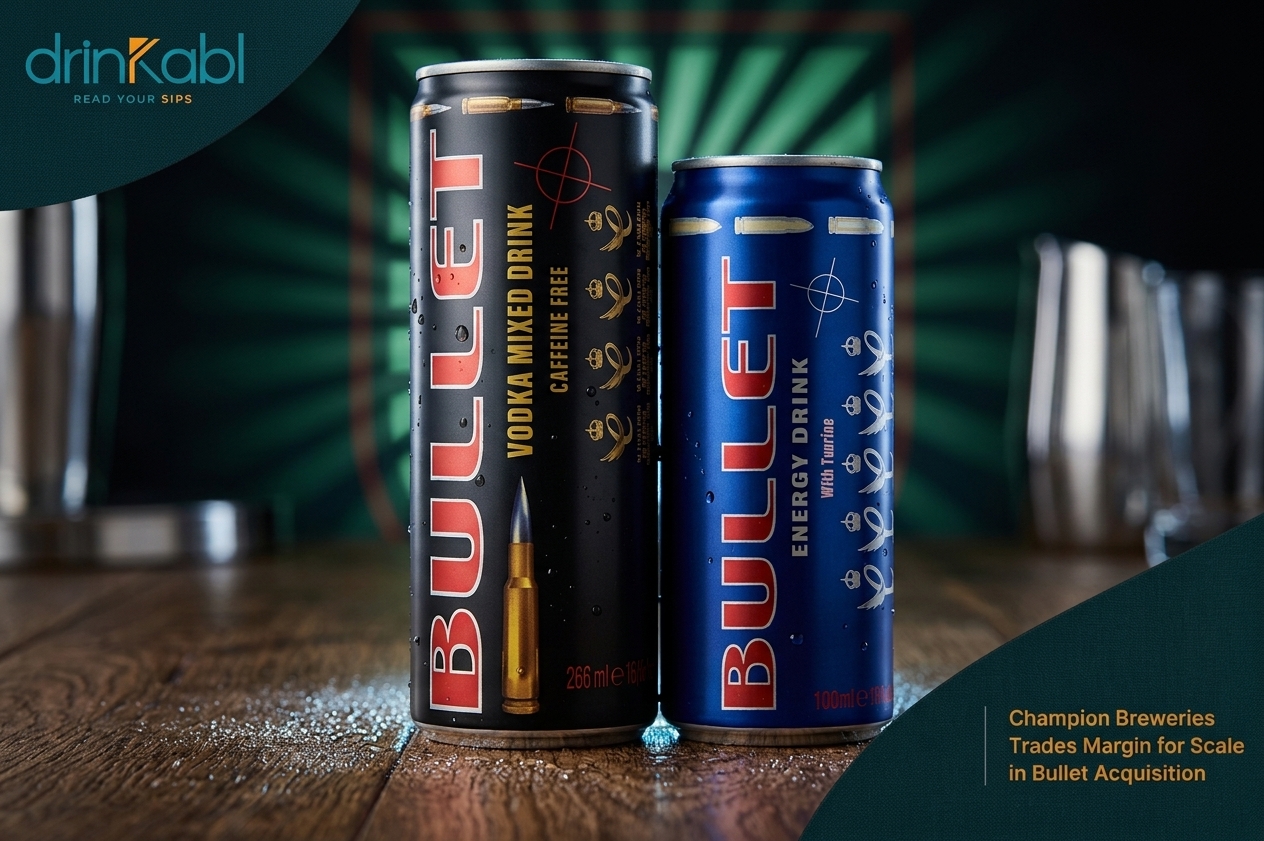
The growth traces back to two ownership changes. In 2024, EnjoyCorp bought Heineken’s 86.5 percent stake in Champion, taking over a brewer built around Champion Lager and Champ Malta. In August 2025, Champion agreed to buy the Bullet drinks portfolio, a range of ready-to-drink alcoholic beverages and energy drinks sold in 14 African markets, from Sun Mark International. The deal closed on February 26, 2026, through a Netherlands-based entity, EnjoyBev B.V., in which Champion holds 80 percent.
That timing matters. The 124 percent revenue jump is largely the result of folding EnjoyBev’s numbers into Champion’s accounts for the first time, not a sudden surge in beer sales. Champion effectively bought an established business, with its own customers and distributors already in place, rather than building one from scratch.
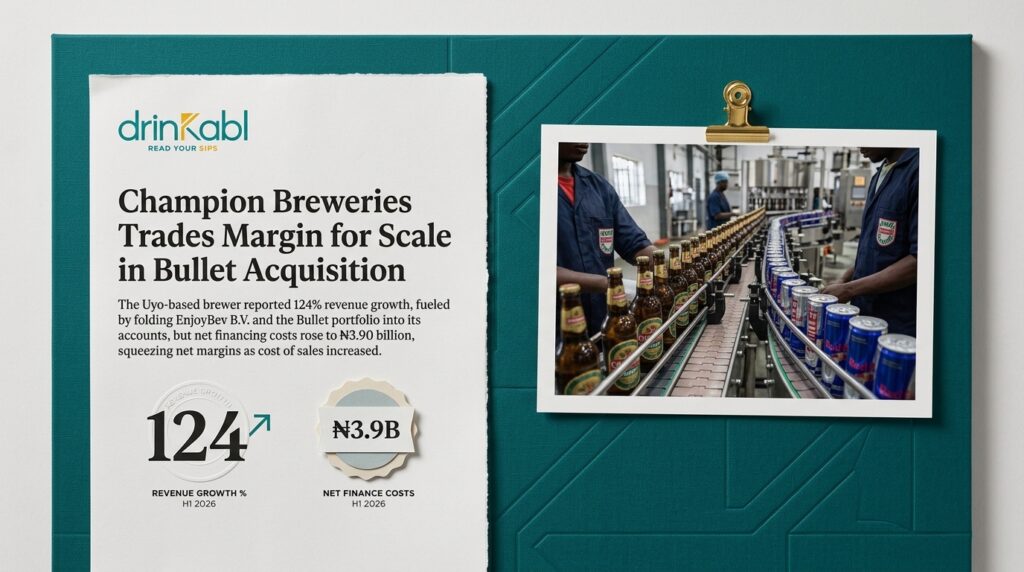
The operating profit gain suggests the enlarged business can generate more earnings, but the cost side tells a tighter story. Cost of sales rose almost 194 percent to ₦22.58 billion, and selling and distribution expenses climbed 77.5 percent, squeezing gross margin even as revenue grew.
Financing has been the more immediate price of the deal. Net finance costs rose to about ₦3.90 billion, pulling profit before tax down despite the larger top line. Profit after tax still rose 15.6 percent to ₦2.65 billion, helped by a tax credit, but earnings per share fell to 16 kobo from 26 kobo as the enlarged share base diluted returns.
Champion funded the acquisition mainly through equity rather than debt, raising ₦15.91 billion in a rights issue earmarked for the Bullet purchase, followed by a public offer. Total equity climbed to roughly ₦69.08 billion from ₦13.08 billion at the end of 2025, and total assets rose to about ₦130.8 billion.
Beyond the balance sheet, the deal changes what Champion is. Bullet adds energy drinks and RTDs to a business once built solely around beer and malt, along with foreign-currency revenue that could hedge against naira volatility. Champion has said it may eventually manufacture more of the Bullet range locally, which would turn Nigeria into a potential export base for the wider group.
The next few reporting periods will show whether that potential converts into margin. The key questions are whether cost of sales can grow slower than revenue, whether finance costs ease as the new debt structure settles, and whether Champion can extract real distribution savings from running Bullet and its own beer business on shared infrastructure. Champion has bought scale. It has not yet proven it can carry that scale profitably.