
Toxic alcohol, counterfeit marks and a major bottling deal defined Africa’s drinks week.
Across Africa’s drinks markets, the week exposed the fault lines behind what consumers see on the shelf: toxic alcohol linked to dozens of deaths in Nigeria, counterfeit tax and quality marks under scrutiny in Kenya, billions of dollars moving deeper into bottling infrastructure, and new taxes and plastic rules reshaping the economics of everyday beverages.
From methanol-contaminated drinks in Ondo to fake stamps on Kenyan alcohol and a $2.6 billion Coca-Cola bottling deal, the stories were different but the underlying question was the same: how much trust can Africa’s beverage industry carry when safety, regulation, affordability and supply chains are all under pressure at once?
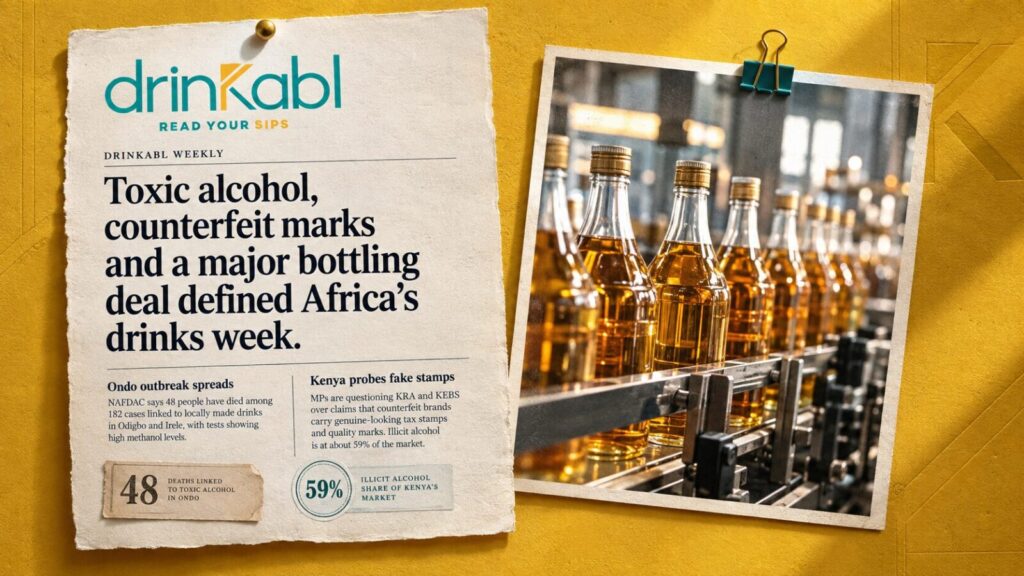
Ondo outbreak spreads
NAFDAC says 48 people have died among 182 cases linked to locally made drinks in Odigbo and Irele, with tests showing high methanol levels. The state government puts the toll at 49, Drinkabl reported. Police arrested 15 people, but arrests do not establish responsibility. Residents blame the herbal drink Monkey Tail, AP reported, yet no authority has tied a product or batch to every death.
Kenya probes fake stamps
Kenyan MPs are questioning the Kenya Bureau of Standards and Kenya Revenue Authority over claims that counterfeit brands carry genuine-looking tax stamps and quality marks. The Anti-Counterfeit Authority says 77% of seized illicit alcohol is locally made, and puts illicit alcohol at about 59% of the market by volume, including homemade and smuggled drinks.
Coca-Cola bets on bottlers
South Africa’s Competition Tribunal has conditionally approved Coca-Cola HBC’s purchase of 75% of Coca-Cola Beverages Africa for $2.6 billion, with conditions on jobs and distribution investment. Coca-Cola’s US system plans $10 billion of spending through 2030, mostly by independent bottlers. NBC, HBC’s Nigerian unit, marked 75 years on September 14.
Soft-drink tax could jump
A ThinkBusiness Africa report warns that swapping Nigeria’s ₦10-per-litre soft-drink excise for a value-based levy could lift the burden to about ₦130 per litre, a projection rather than a confirmed rate. The Senate passed the change on June 4, and the House has yet to act.
Plastic rules test recyclers
New rules require 25% recycled PET from January 1, 2028, rising to 50% by 2030. NESREA refused manufacturers’ call to suspend them in June. A Lagos aggregator told Drinkabl price swings and scarce capital decide whether bottles get collected, while Indorama, Nigerian Breweries and Genesis Energy plan a Lagos plant for 45,000 tonnes of rPET a year.
Castel launches FEROX
Castel Group unveiled the FEROX energy drink in Douala and Yaoundé on September 15, the first of four African markets, with Francis Ngannou as ambassador through 2029.
Also on Drinkabl
An Abuja shop owner named five drink brands over customer complaints. None is confirmed, and NAFDAC cautioned that social media allegations alone cannot prove adulteration.