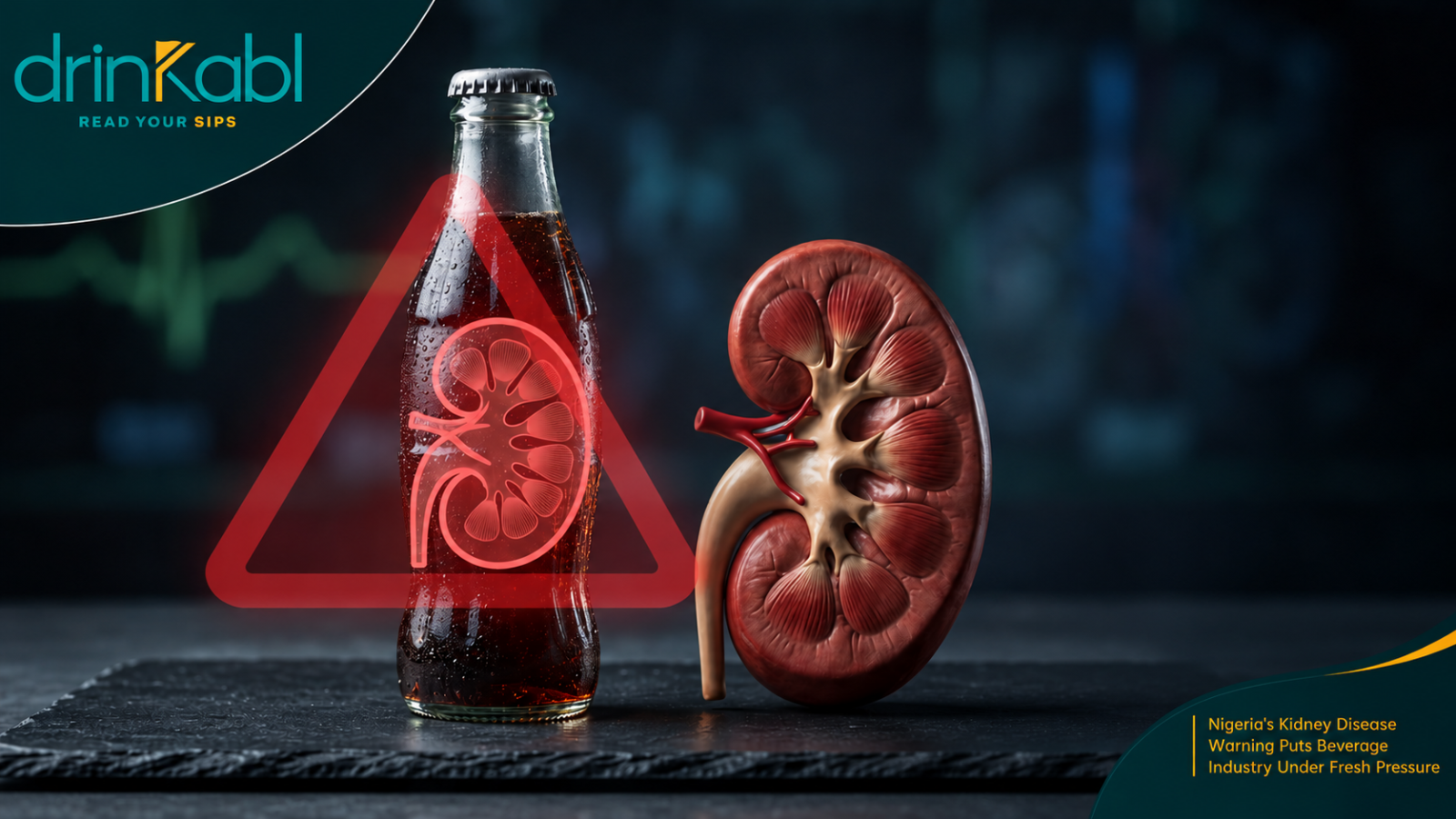

A 25.4 million estimate for chronic kidney disease has reached a drinks trade already fighting over a sugar levy. The numbers carry limits that both sides of that fight tend to skip, and the questions they leave open are about prices, labels and trust.
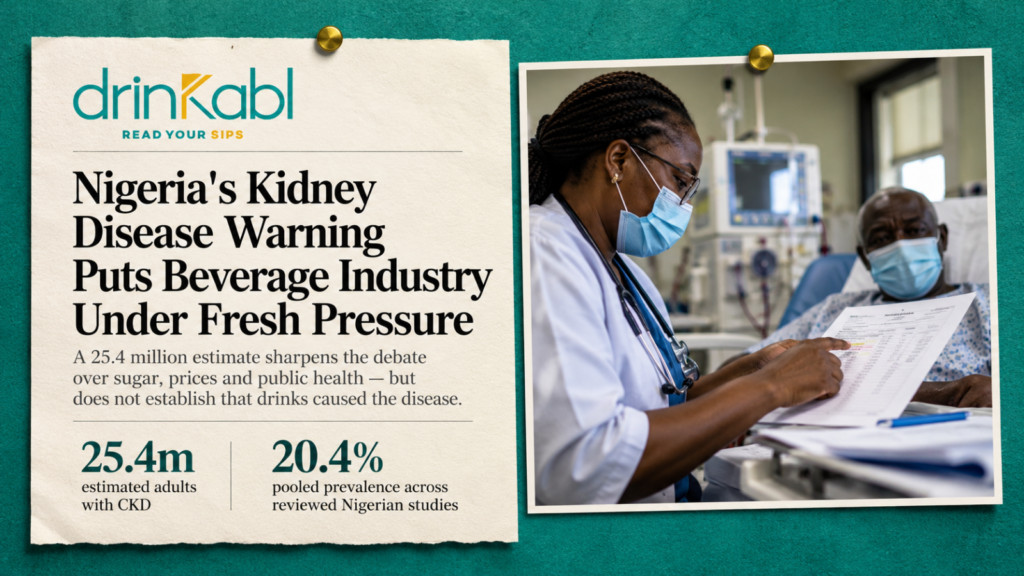
The figure began as a percentage. A review of Nigerian studies covering 14,250 participants put chronic kidney disease (CKD) at 20.4 per cent, and Professor Fatiu Arogundade, a nephrologist who is vice chancellor of the University of Medicine and Medical Sciences in Abeokuta, applied that rate to the country’s adults in the 430th inaugural lecture at Obafemi Awolowo University in Ile-Ife. The result was 25.4 million people with overt or covert disease, meaning diagnosed or silent, offered as a possibility because Nigeria has no national registry to confirm it. Nothing in the reported findings blames a drink, yet the number has arrived in a trade that is already arguing about sugar, price and trust.
This feature looks at what the estimate can and cannot carry, where the evidence on sugary drinks stands, and why a levy bill waiting in the House of Representatives has made the question urgent for manufacturers. It also separates the sugar argument from two others that get tangled with it, safe water and unregulated products. The policy fight is being waged on both Nigerian evidence and evidence borrowed from elsewhere, and the two are not equally strong. What a drinks company should do with that mixture is a different matter from what anyone can prove.
What the estimate can carry
Arogundade was open about the limits. He said the true burden is hard to fix without a registry, which means the 25.4 million inherits any bias in the studies behind it, and he put the number with advanced disease or end-stage kidney failure at about 127,000. End-stage is the point at which dialysis or a transplant becomes the only way to stay alive.
The causes he named are mostly not about what people drink. Hypertension, meaning high blood pressure, and glomerulonephritis, an inflammation of the kidney’s tiny filters, lead the list, with diabetes, HIV-related kidney damage, blocked urinary tracts, sickle cell disease and environmental exposure behind them. His team found that people with high hydrocarbon exposure had more than four times the risk of one form of the disease, and that 35 per cent of the sickle cell patients it studied had CKD. Cases cluster between the ages of 20 and 50, he said, a younger pattern than in richer countries where the disease follows an ageing population.
What the sugar evidence shows
The strongest evidence linking drinks to kidney disease comes from Britain, not Nigeria. In a cohort of 127,830 adults with an average age of 55, those who drank more than one serving of sugar-sweetened drinks a day had a 19 per cent higher risk of developing CKD than those who drank none. Swapping a daily serving for water or natural juice was associated with lower risk, and artificially sweetened drinks showed an association too.
Those results describe a pattern, not a cause, and the participants were not Nigerians, whose cases arrive earlier in life. A pooled analysis of earlier studies was more hesitant, because its comparison of heavy and light drinkers did not reach statistical significance, although its dose-response analysis found a clear rise in risk above seven servings a week. For a manufacturer the reading is narrower than either camp wants. Nothing here shows that Nigerian kidney disease comes from soft drinks, and nothing shows the portfolio is irrelevant to it, while serving size and frequency are the variables the research keeps returning to.
A tax bill waiting in the House
The Senate passed a bill on 4 June that would replace the fixed N10-per-litre excise on sugar-sweetened drinks with a levy set as a percentage of retail price. Part of the proceeds would go to disease prevention, primary healthcare and insurance cover for poorer Nigerians, and the Senate committee concluded that inflation has eroded the N10 duty until it deters little and raises less. The percentage has not been confirmed, which matters a great deal, because an earlier version put to a hearing in November 2025 proposed N130 a litre, thirteen times the present rate.
The strongest objection comes from the workforce rather than the boardroom. The National Union of Food, Beverage and Tobacco Employees has written to the Speaker, Abbas Tajudeen, asking the House to withhold concurrence until the effect on workers and manufacturers is weighed. Its president, Garba Dankama, argues that producers already carry high borrowing, energy, logistics and foreign exchange costs, and that a heavier tax could bring production cuts and retrenchments across farming, haulage and retail. The union puts the livelihoods tied to the sector at more than one million, a figure not independently confirmed, and it warns that dearer legitimate drinks could push buyers towards cheaper unregulated ones.
Health groups see it differently. The Nigerian Cancer Society and the Diabetes Association of Nigeria backed the proposal at its hearing, and one speaker argued it could reduce obesity, diabetes, heart disease and cancer, a benefit that remains a projection because no levy of this design has operated in Nigeria. The kidney estimate settles none of this, since it cannot say what rate is right or how much any levy would lower CKD. It adds one reason to ask what the earmarked revenue would buy, in a treatment system that most patients pay for themselves.
Water, herbs and drinks outside the system
Water raises a separate question from sugar. Severe dehydration can injure the kidneys, yet people with advanced CKD or kidney failure often must limit fluids on medical advice, so a campaign telling everyone to drink more would be wrong for some of the patients it hopes to reach. For companies selling packaged water, that makes safe supply and plain guidance easier to defend than a health claim on a label.
Informal drinks complicate the picture further. A community survey of 1,757 Lagos residents with an average age under 34 found that 46.4 per cent regularly drank herbal preparations and 33.2 per cent used alcohol chronically, both recorded as lifestyle risk factors for kidney disease. A questionnaire about habits cannot identify a harmful product, and it would be wrong to read it as proof against herbal or locally made drinks as a class. It does show how common the habit is, which matters because ingredients, dosage and quality control are hardest to verify in preparations made outside a licensed factory. Arogundade’s own advice to Nigerians included avoiding excessive alcohol.
Who pays for the damage
The lecture was most pointed about money. Dialysis is paid for mostly out of pocket because insurance coverage is thin, Arogundade said, and families face a choice between treatment and everything else, with some abandoning it and dying early. Kidney-care centres have grown from fewer than five in the 1980s to more than 100, still too few for the population and concentrated in cities. His requests included subsidised dialysis and transplantation, wider insurance, a national kidney-care policy, and peritoneal dialysis, which filters blood through the lining of the abdomen, using fluids made in Nigeria to cut its cost.
The habits he urged on ordinary Nigerians were short enough to list. He advised less salt, no smoking, less alcohol, a healthy weight and no indiscriminate use of painkillers, and sugary drinks do not appear in the reported version of that advice. The absence is not an acquittal, because the British evidence points at sweetened drinks and the bill that would reshape their tax is still waiting for the House. Until Nigeria has a registry that can trace cases to causes, the 25.4 million will remain an estimate, and the argument over drinks will run ahead of the data.