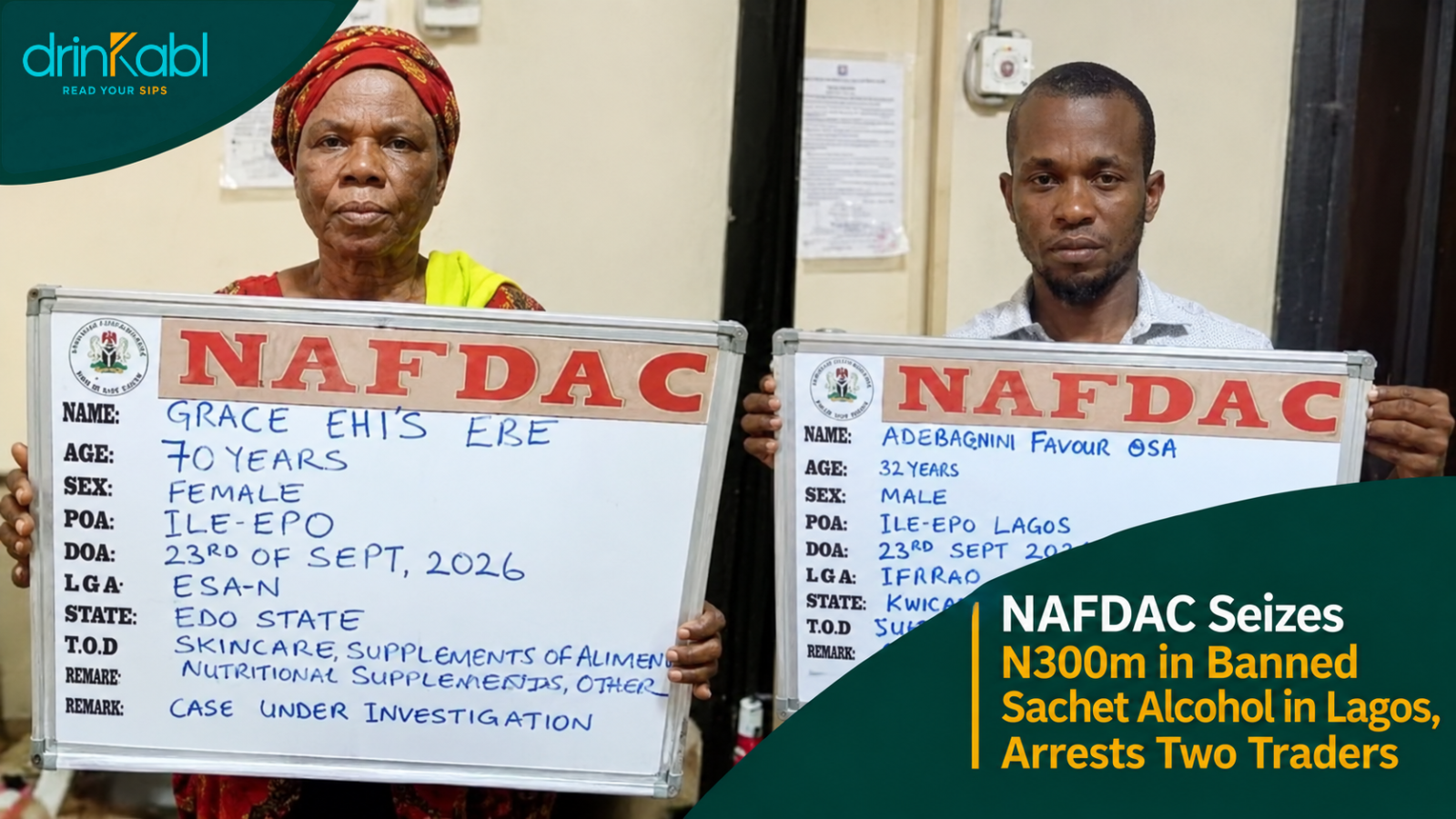

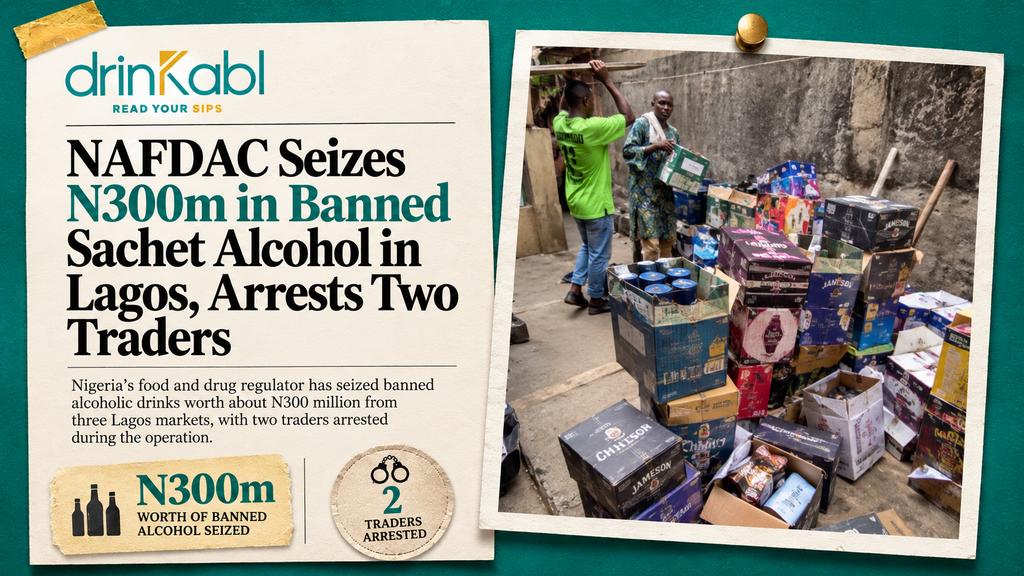
Nigeria’s food and drug regulator has seized banned alcoholic drinks it values at about N300 million from three Lagos markets. NAFDAC announced the operation on Sunday, 4 October 2026. Officials raided Ile-Epo Market, Ojuwoye Market in Mushin and Oke-Arin Market on Lagos Island, and two people were arrested.
The drinks were sold in sachets and PET bottles below 200 millilitres, formats the federal government has prohibited over concerns about underage drinking and easy access. Several cartons were carried out of the markets, and the two people arrested are under investigation. The N300 million figure is the agency’s own estimate, and no independent valuation has been given.
Hoarding allegation
NAFDAC said its investigation indicated that some distributors and retailers were holding stock back as demand and prices rose. That is the agency’s allegation, and the side of those arrested has not been made public. NAFDAC has not said whether the two will be charged.
The agency warned that selling, distributing or hoarding the drinks will bring action, and said enforcement will continue across Lagos State. Teams have also been sent to motor parks, bars and retail outlets, which means a trader holding a few cartons now faces the same risk as a warehouse.
From factories to stalls
NAFDAC began enforcement with manufacturers in January 2026, then moved to a nationwide sweep of markets in July. Inspectors found 100ml PET bottles and packaging with production dates as recent as 23 July 2026, which the agency said showed factories kept producing after the ban took effect. The agency’s director-general, Mojisola Adeyeye, also said one officer narrowly escaped a stabbing in Lagos and another was assaulted.
In August the agency ordered a nationwide recall from distributors and warehouses. Recalled stock is to be counted and destroyed under NAFDAC supervision, and manufacturers pay the cost. Their trade bodies, DIBAN and AFBTE, signed a binding enforcement undertaking before the order was issued.
Why the deadline held
Manufacturers were given a five-year moratorium agreed in December 2018 to move to larger packs, and it expired on 31 January 2024. NAFDAC says its current push follows Senate resolutions against any further extension.
What to watch
The Lagos seizures show that banned stock was still sitting in market stalls after the factory closures and the recall. If traders really are holding it for higher prices, the next test is whether NAFDAC can clear that stock without the trade moving to hidden channels. Charges against the two arrested would be the first sign of how far the agency intends to take cases against traders rather than producers.
Read more