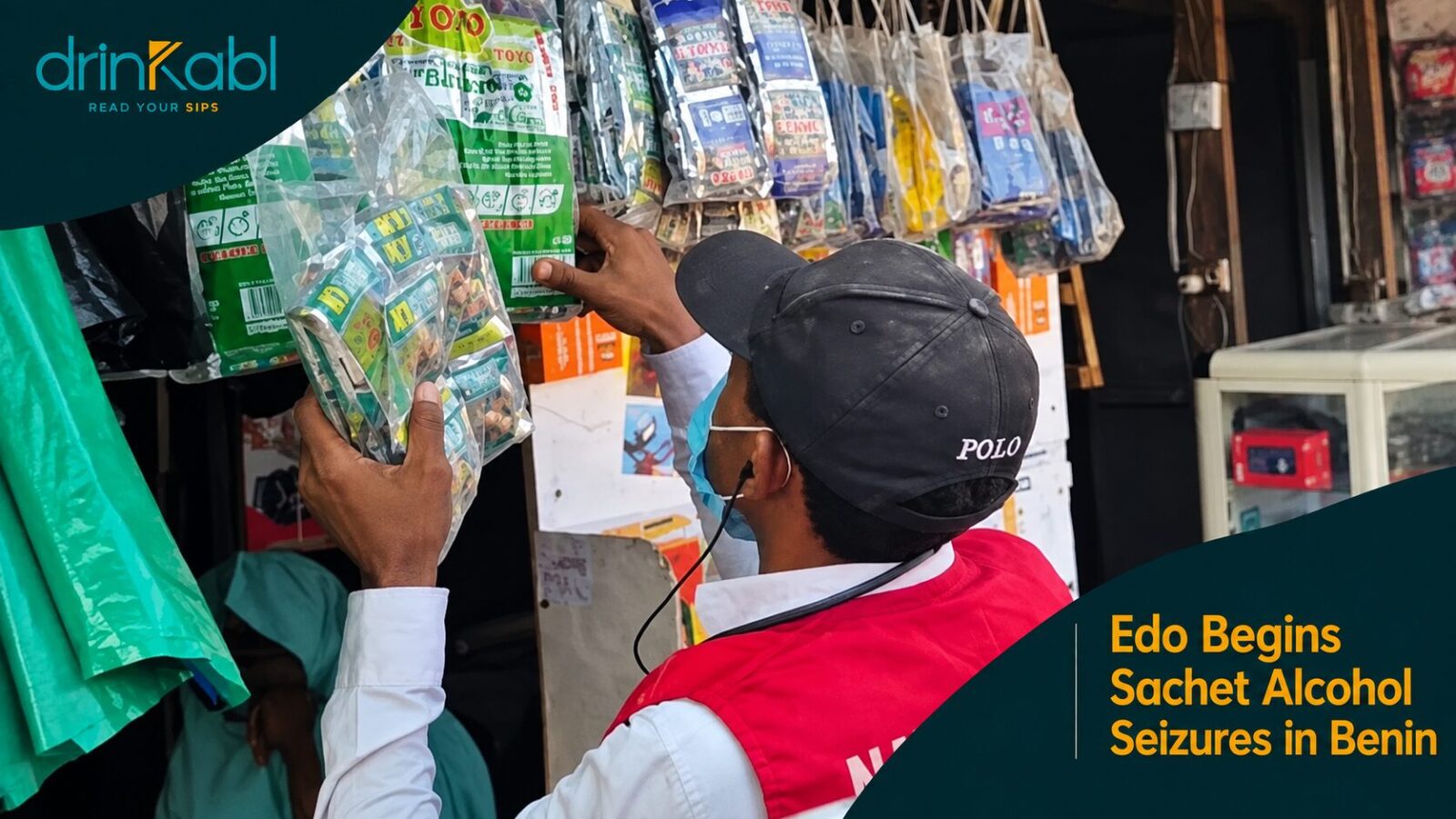

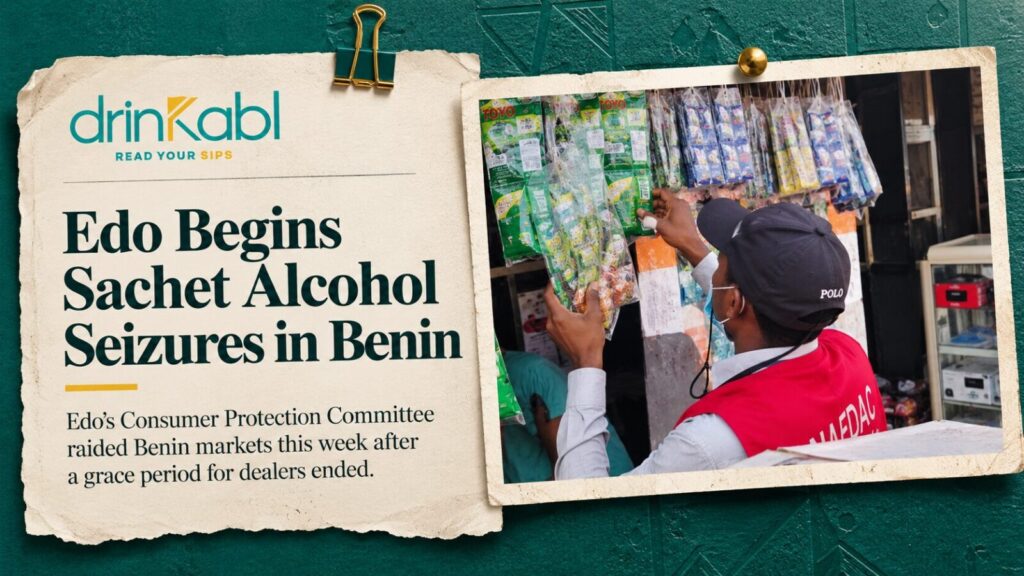
Edo’s Consumer Protection Committee raided Benin markets this week after a grace period for dealers ended.
The Edo State Government has begun enforcing the ban on sachet alcohol, with officials inspecting shops and markets in Benin City and seizing prohibited products.
The operation started on Tuesday, September 22, and was led by Osaro Culture Iyamu, chairman of the Edo State Consumer Protection Committee. It covered Mission Road, Ekiosa Market and St. Saviour in Benin metropolis.
Iyamu said the aim is to protect consumers, especially children, who can easily buy alcohol in small packs that are simple to hide. He added that the exercise will also help remove fake, adulterated and harmful products from circulation.
Grace period ends
The raids followed a two-week extension for dealers. Traders had asked for time until December 30. The committee refused and set September 20 instead, telling dealers not to resell sachet gin and to return their stock to manufacturers.
With that deadline gone, the committee says anyone found selling, hawking or hoarding sachet gin faces fines paid into the Edo State Government Single Account, and the products will be confiscated. It says enforcement will spread beyond Benin City.
Traders say manufacturers will not take stock back
Some traders resisted the seizures, citing heavy losses. Some also said manufacturers had declined to take back sachet products already in their hands.
Iyamu told affected traders to approach the committee formally. He said it would engage manufacturers and seek a resolution where the products are genuine.
The dispute shows that the ban cannot be enforced at the shop counter alone. Manufacturers, distributors, wholesalers and retailers all have to act.
The federal ban behind it
Nigeria’s ban covers alcohol sold in sachets and PET bottles below 200ml. It took effect on January 1, 2026, though the federal government halted enforcement for a time in February. NAFDAC launched a nationwide seizure operation in July. On August 24, it ordered manufacturers to recall banned products after industry associations DIBAN and AFBTE signed an Irrevocable Enforcement Undertaking. Recalled stock is inventoried and destroyed under NAFDAC supervision, at the manufacturers’ cost.
NAFDAC frames the ban as a public-health measure. Its own survey found that 47.2 percent of minors who buy their own drinks get them in sachets. The agency says the ban targets packaging formats, not alcohol production in general. Some consumer-rights advocates have objected, citing jobs and economic hardship.
Agbo and fake products
The Edo committee is also acting against the sale and hoarding of Agbo, a locally made herbal alcoholic mixture. That action is a state consumer-protection measure, separate from the federal packaging ban. It comes days after officials in Ondo State reported at least 48 deaths linked to a locally brewed herbal drink suspected to contain methanol.
Civil society representatives who joined the operation said some seized products proved fake once their identifying numbers were checked. That claim has not been independently verified. It also needs to be kept apart from the ban: a genuine product in banned packaging is not counterfeit, and counterfeit alcohol is a separate safety problem.
What comes next
For traders and distributors, the question is no longer whether the ban applies. It is how fast leftover stock can be returned, destroyed or written off. Edo says enforcement will continue until prohibited products are cleared from markets and streets across the state.
The test will be whether removal holds in informal markets, where cheap sachets have long relied on small traders.
Read more: