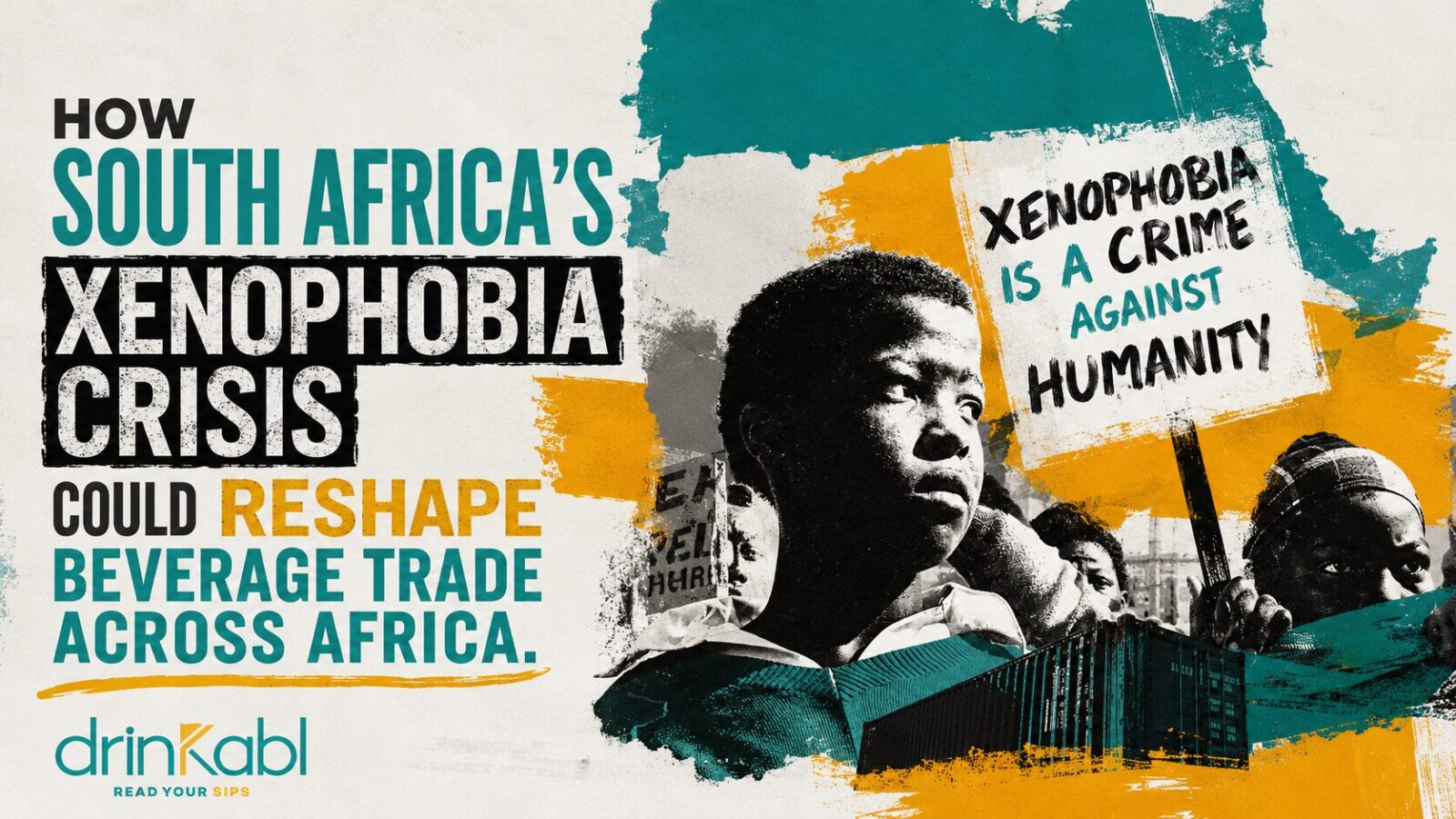

South Africa’s latest wave of xenophobic attacks is creating more than a humanitarian and political challenge. For Africa’s beverage industry, the unrest highlights how social instability can disrupt retail networks, distribution, hospitality demand and regional trade. As one of the continent’s largest beverage markets and a key manufacturing hub, prolonged disruption in South Africa has implications that extend well beyond its borders.
South Africa serves as a production and distribution base for major beverage companies including South African Breweries, Heineken Beverages South Africa, Coca-Cola Beverages South Africa and Distell. Their supply chains depend on thousands of wholesalers, retailers, taverns, restaurants and informal traders to move products efficiently across domestic and regional markets. When those networks are disrupted, sales volumes and operating efficiency are affected almost immediately.
The greatest commercial impact is often felt at the retail level. Migrant-owned convenience stores, liquor outlets and township retailers frequently become targets during outbreaks of violence, forcing temporary closures and causing stock losses. Every affected outlet represents a lost point of sale for beverage manufacturers and distributors. Deliveries may be delayed, routes diverted and inventory replenishment suspended, increasing logistics costs while reducing product availability in communities where informal retail remains a major sales channel.
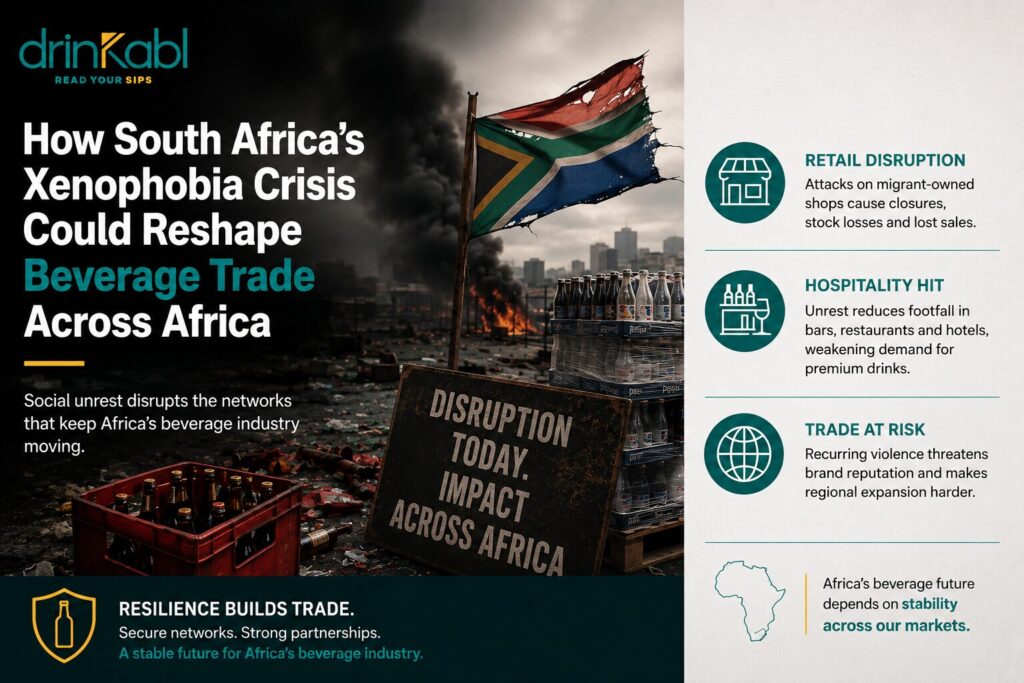
The disruption extends into hospitality. Restaurants, taverns, hotels and tourism businesses account for significant demand for premium beers, wines, spirits and soft drinks. Civil unrest discourages both domestic leisure spending and international tourism, reducing foot traffic across licensed premises. Lower hospitality activity can quickly weaken demand for higher-margin beverage categories, particularly in urban centres and tourism destinations.
Supply chains also face labour-related pressure. Foreign nationals play important roles across retail, logistics, warehousing and foodservice. When workers leave affected areas or temporarily suspend operations because of security concerns, distributors and hospitality operators can experience staffing shortages that slow deliveries and reduce service levels. Even where manufacturing continues uninterrupted, weaker execution across the distribution network can limit products reaching consumers.
Recurring unrest also presents a strategic challenge for South African beverage brands expanding across the continent. Years of investment have strengthened regional distribution partnerships and consumer recognition, but repeated episodes of xenophobic violence risk damaging commercial goodwill in neighbouring markets. While widespread consumer boycotts remain unlikely, deteriorating public sentiment can make market expansion and partnership negotiations more difficult.
Operating costs are rising at the same time. Companies exposed to high-risk areas often increase spending on warehouse security, vehicle protection, insurance and employee safety. These additional expenses come as beverage producers continue to manage inflation, volatile input costs and increasingly price-sensitive consumers. Capital that could otherwise support innovation, marketing or production expansion may instead be directed toward risk management.
Investors are equally attentive to these developments. South Africa remains one of Africa’s most sophisticated beverage markets, offering advanced manufacturing infrastructure and established distribution systems. However, repeated episodes of social unrest raise questions about supply chain resilience and long-term operating risk. Multinational beverage companies evaluating future investments may increasingly consider diversifying manufacturing and distribution footprints across multiple African markets to reduce concentration risk.
For beverage executives, the lesson is clear. Resilience is no longer measured solely by production capacity or brand strength. It also depends on secure distribution networks, diversified retail channels and stable trading environments. As Africa’s beverage market becomes more integrated through regional trade, disruptions in one major economy will increasingly influence investment decisions, route-to-market strategies and cross-border commerce. Companies that strengthen operational flexibility today will be better positioned to compete in a more uncertain regional landscape.
READ MORE