
For years, Africa’s beverage industry has pursued growth through new product launches, premiumisation, packaging innovation and manufacturing investments. Yet across much of the continent, one challenge continues to determine commercial success long after a beverage leaves the production line: getting it into consumers’ hands.
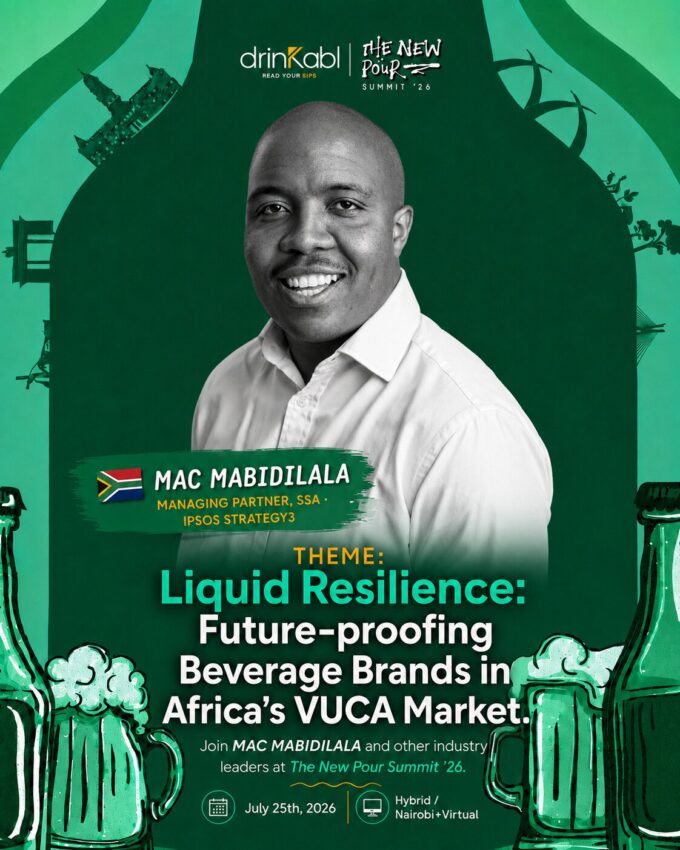
In many African markets, traditional supermarkets account for only a fraction of beverage sales. Neighbourhood shops, kiosks, open-air markets, bars, wholesalers and informal distributors remain the backbone of retail, creating a complex route-to-market environment that global playbooks often fail to address. It is this commercial reality that Mac Mabidilala, Managing Partner for Sub-Saharan Africa at Ipsos Strategy3, will unpack when he takes the stage at The New Pour Summit 2026.
Mabidilala will lead a session exploring how beverage businesses can rethink route-to-market strategies and distribution models to scale successfully across Africa’s informal economies. Rather than focusing solely on marketing or product innovation, his presentation promises to examine the commercial systems that determine whether brands achieve sustainable market penetration.
His perspective is grounded in years of advising multinational corporations, consumer goods companies and investors on growth strategy across Sub-Saharan Africa. As Managing Partner at Ipsos Strategy3, the global advisory arm of Ipsos, Mabidilala helps organisations combine consumer intelligence, strategic planning and market activation to identify where future growth will come from and how to capture it.
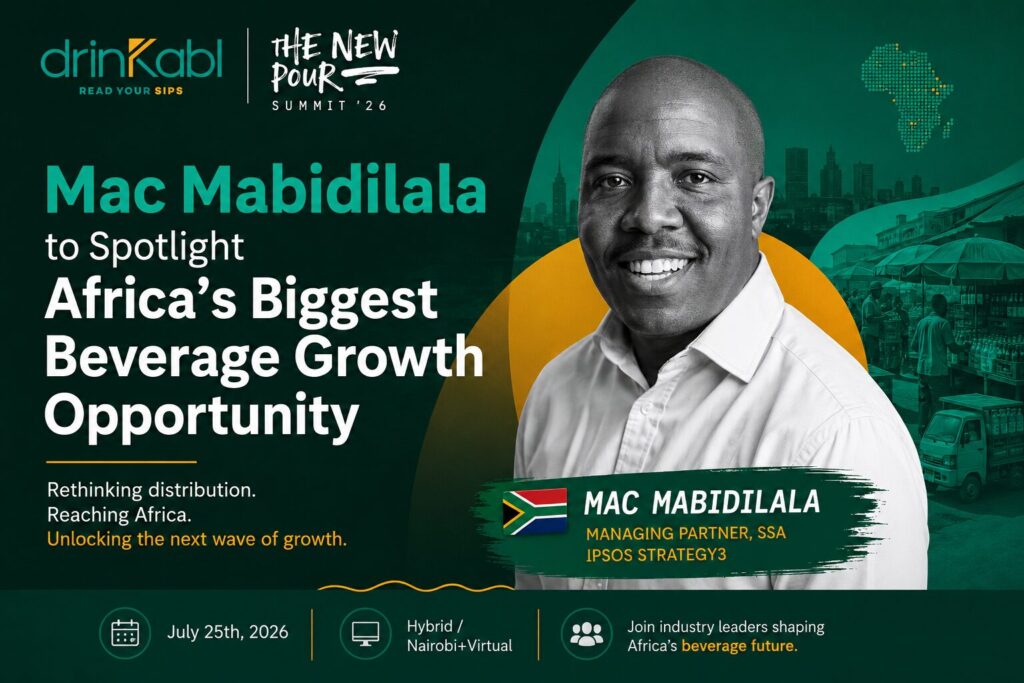
His career has placed him at the centre of some of Africa’s most important conversations on retail transformation. Before joining Ipsos Strategy3, he led research and advisory businesses at Trade Intelligence, where his work focused extensively on retail ecosystems, informal commerce, consumer purchasing behaviour and route-to-market effectiveness across African economies. Those experiences have shaped a consistent argument throughout his published research and industry engagements: companies that fail to understand Africa’s informal retail landscape risk overlooking their largest commercial opportunity.
For beverage manufacturers, that message is particularly relevant.
While investment often concentrates on production capacity, advertising campaigns and portfolio expansion, success frequently depends on factors much closer to the consumer. Product availability, distribution efficiency, retailer relationships, execution quality and last-mile delivery continue to influence purchasing decisions across both alcoholic and non-alcoholic beverage categories.
This becomes even more significant as companies navigate inflationary pressures, shifting consumer spending, urbanisation and rapidly evolving retail channels. Beverage businesses are increasingly expected to serve modern retail alongside millions of independent outlets that operate with different purchasing cycles, inventory patterns and consumer behaviours.
Mabidilala argues that Africa cannot be approached as a single market. Consumer expectations, retail structures and purchasing habits differ markedly between countries and even between cities within the same country. Effective growth strategies therefore require locally informed decisions supported by robust consumer data rather than broad continental assumptions.
That philosophy aligns closely with the changing priorities of Africa’s beverage industry. Increasingly, competitive advantage is being defined not only by what companies produce, but by how intelligently they distribute, activate and scale their brands across fragmented markets.
Delegates attending his session can expect practical insights into how consumer intelligence can strengthen commercial decision-making, how businesses should rethink distribution strategies in informal economies, and why route-to-market execution is becoming one of the industry’s most important competitive differentiators.
As Africa’s beverage sector enters a new phase of growth, characterised by tighter margins, greater competition and increasingly sophisticated consumers, these discussions have become strategic rather than operational.
The New Pour Summit has consistently brought together leaders shaping the future of Africa’s beverage industry. By adding Mac Mabidilala to this year’s programme, the summit introduces a voice whose expertise extends beyond consumer research to the commercial realities of building resilient, scalable beverage businesses across one of the world’s most dynamic retail landscapes.
For executives seeking Africa’s next growth opportunity, the answer may not lie in creating another beverage. It may lie in building a smarter route to the millions of consumers already waiting to buy one.
READ MORE
Kenyan court rejects third bid to halt Diageo’s $2.3bn EABL exit
Diageo’s Africa-Europe Merger Reopens the Question of Whether Global FMCG Takes the Continent Seriously
The Cooler, The Club and The Cloud: How Africa’s Beverage Consumer Is Being Rewired