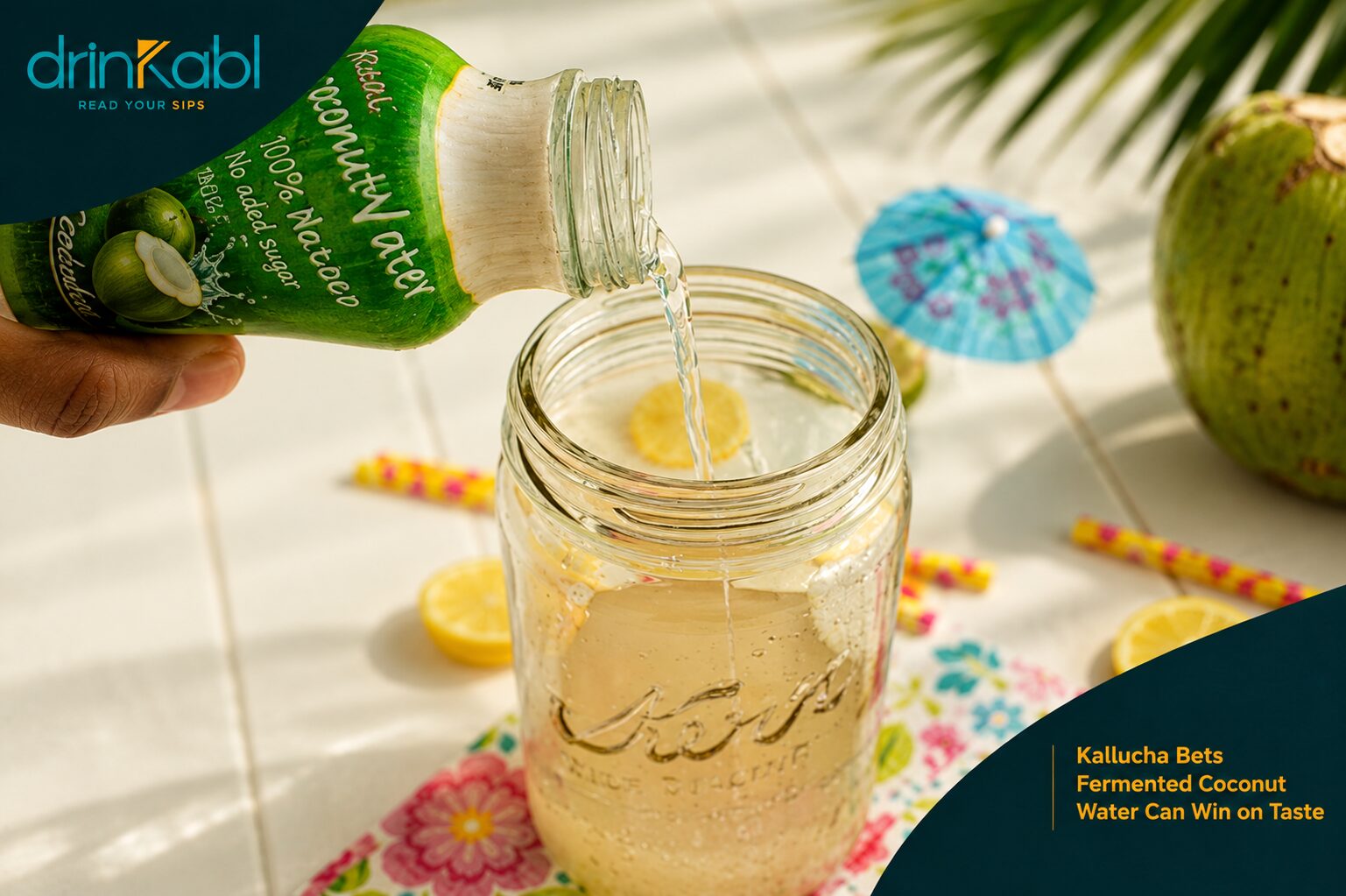

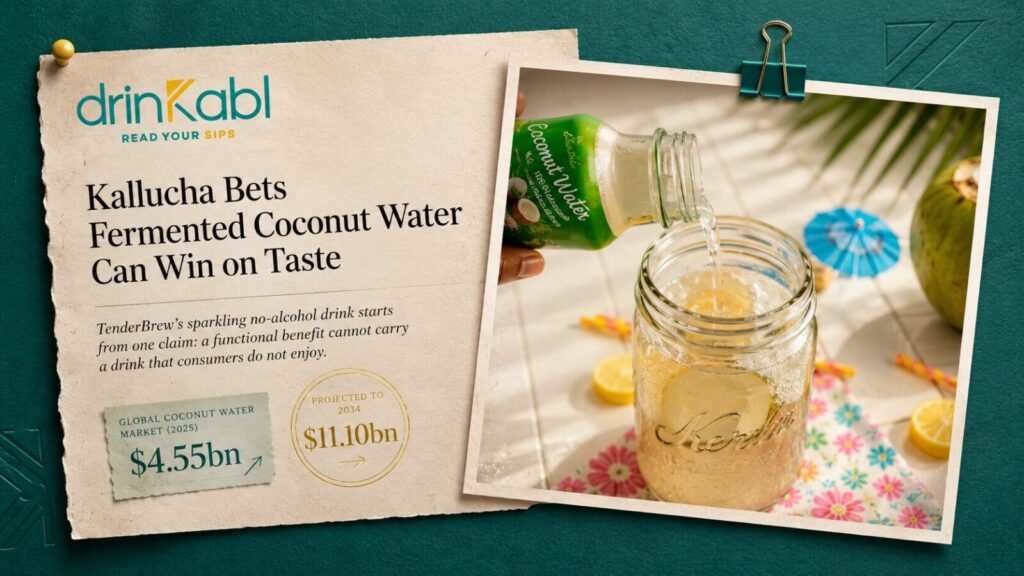
TenderBrew’s sparkling no-alcohol drink starts from one claim: a functional benefit cannot carry a drink that consumers do not enjoy.
TenderBrew, the beverage start-up founded by scientist-entrepreneur Saravanapriah “Priah” Nadarajan, is developing Kallucha, a sparkling fermented coconut water with no alcohol. In a LinkedIn post, Nadarajan described it as a bridge between two camps. Conventional soft drinks deliver taste and familiarity but can carry high sugar. Functional drinks offer attractive benefits without always becoming everyday choices. Her argument is that functionality cannot compensate for poor drinkability.
Taste is now the test
The point lands as functional beverages move beyond specialist wellness buyers. FoodNavigator’s 2026 category coverage quotes executives saying shoppers will not give up taste for function. An Olipop executive told the outlet that, given two equally functional products, consumers will pick the one that tastes better.
From toddy to coconut water
According to TenderBrew, Nadarajan started from kallu, the traditional fermented palm drink. She began experimenting with coconut water after moving to the United States, where fresh toddy was hard to find. The company describes a proprietary, patent-pending process. Kallucha is the no-alcohol version, and a separate low-alcohol product is called Kallū.
The pairing of coconut water and fermentation has a research base. A 2025 study in Processes fermented coconut water with four Bifidobacterium strains. It assessed consumer perception alongside microbiology.
Two markets converge
Coconut water is a growing category, though estimates vary widely. Fortune Business Insights values the global market at US$4.55 billion in 2025 and projects US$11.10 billion by 2034. Other research firms publish higher and lower figures.
Fortune places coconut water between bottled water and functional drinks, a space where brands are already rethinking water branding in Nigeria. Fermented non-alcoholic drinks add a gut-health angle, though forecasts for that segment depend heavily on how categories are defined.
Habit is the business
For manufacturers, the question is repeat purchase. A drink bought once for its label claim is a trial. A drink bought weekly because it tastes good, suits an occasion and adds a benefit is a business.
The functional aisle is already crowded with energy drinks, electrolyte waters, protein drinks, kombucha and prebiotic sodas. Another ingredient on the label rarely creates a lasting position.
Translating tradition
TenderBrew does not present fermentation as new technology. Its story runs from family tradition into laboratory work and commercial production: cans instead of clay pots, controlled fermentation instead of spontaneous, consistent shelf life instead of same-day drinking. African brands face the same task when they turn local heritage into a story consumers buy.
The company says its work has included pilot-scale fermentation, analytical testing, process validation, shelf-life studies and regulatory work. Nadarajan has also posted about a recent pilot run on commercial equipment.
The execution risk
Fermentation has to be controlled, flavour consistent and shelf life stable at scale. Functional claims must be substantiated and compliant. A fermented drink sold as no-alcohol must also stay within the limits for that label, so process control matters. Above all, consumers have to accept the taste.
Kallucha has only reached pilot production, so it is too early to treat it as proof that the model works.
The next contest
The industry has learned to sell why people should drink something. The harder task is making the benefit almost secondary to the drinking experience. The next functional contest may go to the brand whose benefits disappear into a drink people simply want again.
Source: This report draws on a LinkedIn post by Priah Nadarajan, founder of TenderBrew, and TenderBrew’s website.
Read more