
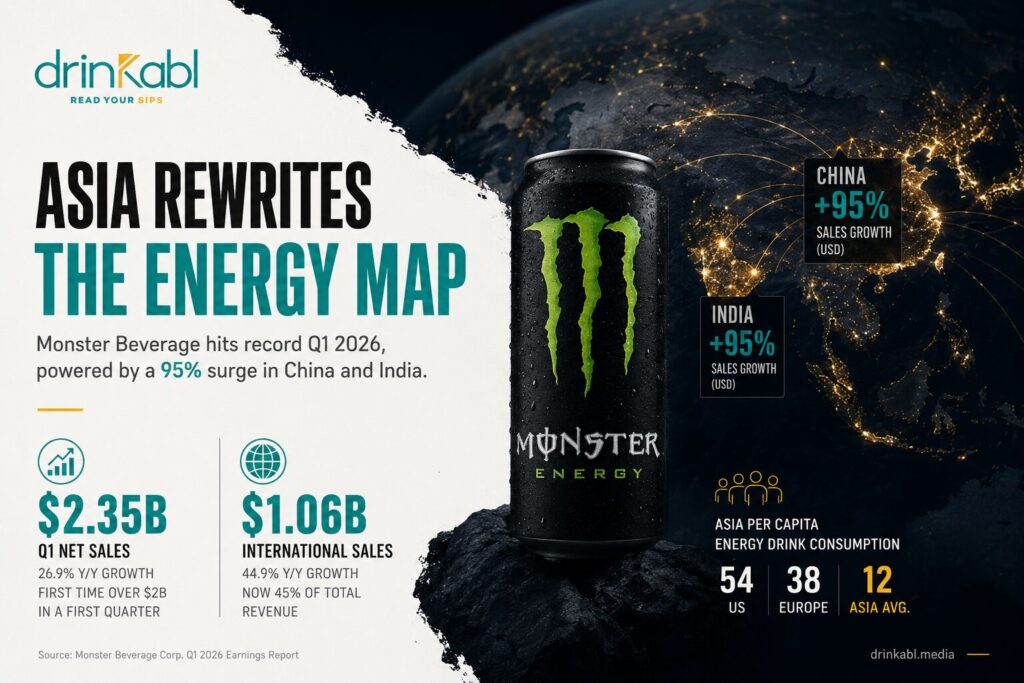
Monster Beverage Corp. posted its strongest first quarter on record in 2026, with net sales crossing $2.35 billion for the period ended March 31, a 26.9% year-over-year increase and the first time the company has cleared $2 billion in a fiscal first quarter. The headline number matters less than what is driving it: China and India each delivered approximately 95% dollar-denominated sales growth compared to the same quarter last year.
Speaking at the Deutsche Bank dbAccess Global Consumer Conference in Paris last week, Philippe Wothke, Monster’s chief commercial officer for Asia, explained the growth through a single data point. Annual per capita energy drink consumption in the US runs at 54 servings. In Europe it is 38. Across Asia the average is 12. In India five years ago it was below one. It is now five. The category is not saturated in these markets; it is barely started.
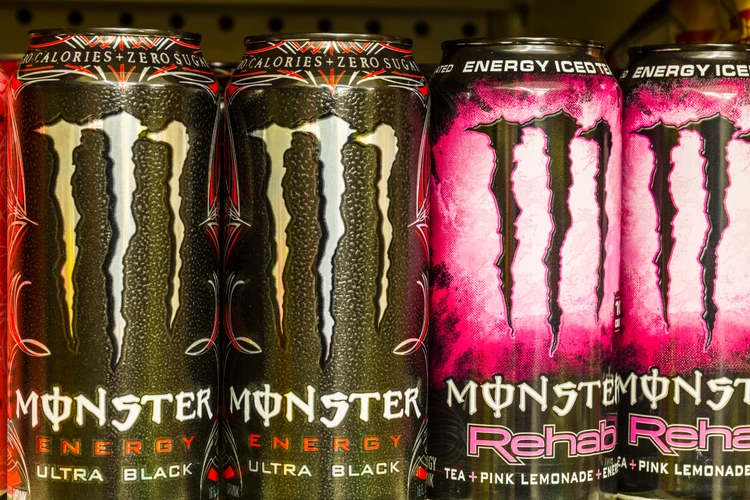
Monster’s approach in both countries turns on a two-tier price pack architecture. The flagship Monster brand targets higher-income urban consumers: university students and tech park workers in India, city-based consumers in China. The lower-priced Predator brand handles a second, larger segment. In India, Predator retails at roughly three times the price of a carbonated soft drink, while Monster sits at six times. In China, Predator reaches factory workers in company towns where the traditional energy category is non-carbonated, vitamin-fortified drinks with no caffeine carbonation to speak of. Wothke described visiting a Foxconn plant village housing 120,000 people. That is the market Predator is being built for.
The Coca-Cola distribution network is what makes the segmentation viable. Monster does not build its own logistics infrastructure; it inherits Coca-Cola’s reach across thousands of university campuses in China and deepening on-trade coverage in India. International sales overall climbed 44.9% to $1.06 billion in Q1, now representing 45% of total company revenue, up from roughly 40% a year earlier.
For distributors and brand operators across Africa, where Drinkabl.media has tracked the energy category’s contested terrain, the Monster Asia playbook raises a direct question. Per capita energy drink consumption across most of sub-Saharan Africa sits closer to the Asian average than the American one, and in several markets it barely registers. Red Bull’s recent SKU expansion into Nigeria and the entry of Predator-tier products into West African informal trade indicate that the price pack logic Monster has proved in India is not far from replication here. The question is who moves first with distribution infrastructure sophisticated enough to reach the factory-town-equivalent consumer: the mobile data reseller, the sachet economy buyer, the blue-collar shift worker who currently has no energy drink in his channel.
Gross margins at Monster compressed slightly, to 55% from 56.5% a year earlier, partly due to the geographic mix shifting toward markets where aluminium can costs weigh heavier against local pricing. That compression will intensify as emerging market growth becomes a larger share of the revenue base. Drinkabl.media’s reporting on Nigeria’s functional beverage sector has already traced how import cost embedded in premium can pricing creates a structural ceiling for brands operating without local manufacturing. Monster has not announced any African production plans. Until it does, or until a local African manufacturer licenses the Predator-tier concept, the margin math will favour whoever gets to local cans first.
READ MORE