
The social media activist’s video has reopened questions about counterfeit drinks in Nigeria. But the two cans he presents as evidence raise a different problem: how consumers can distinguish a genuinely dangerous product from a familiar brand in unfamiliar packaging.
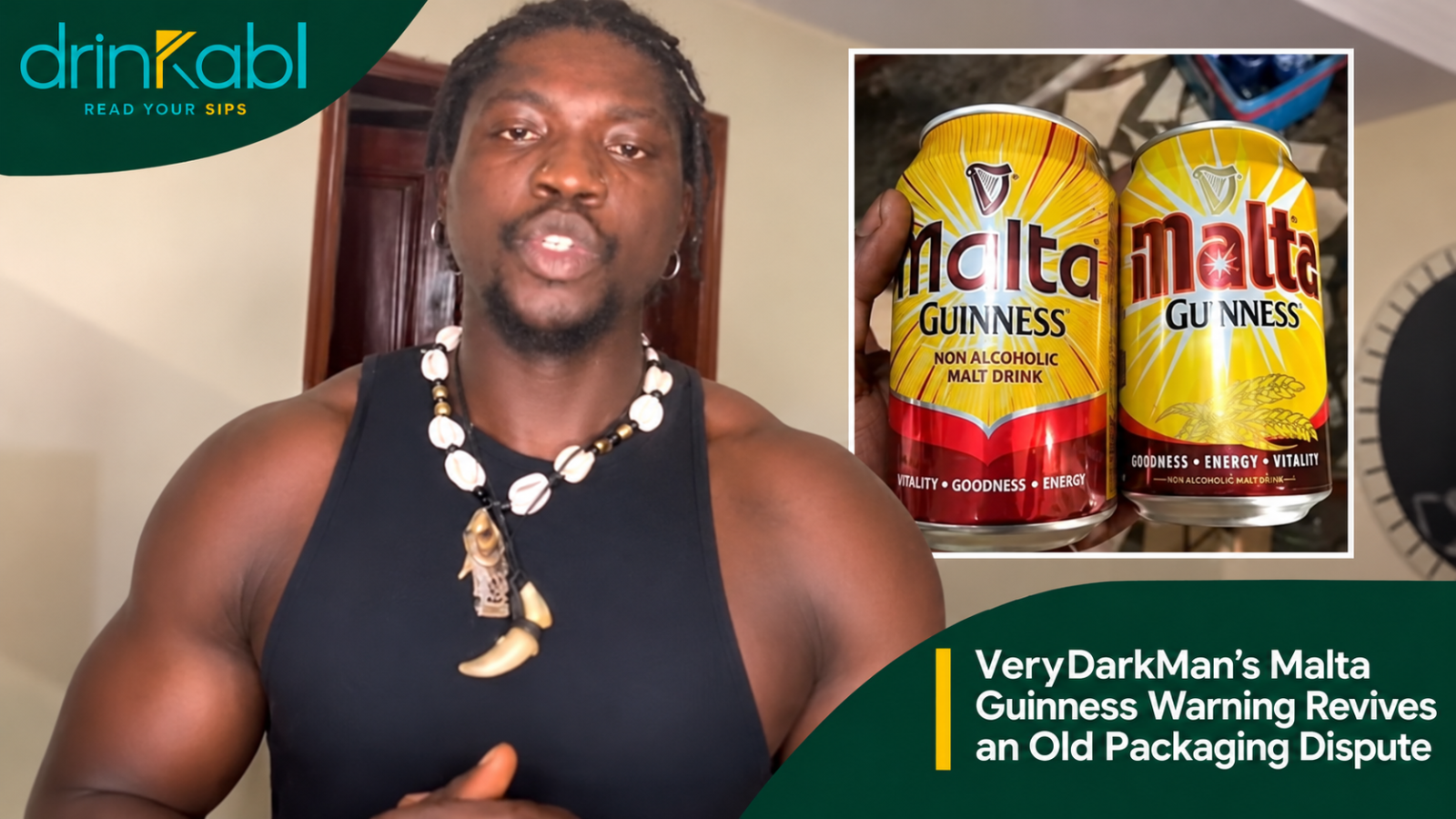
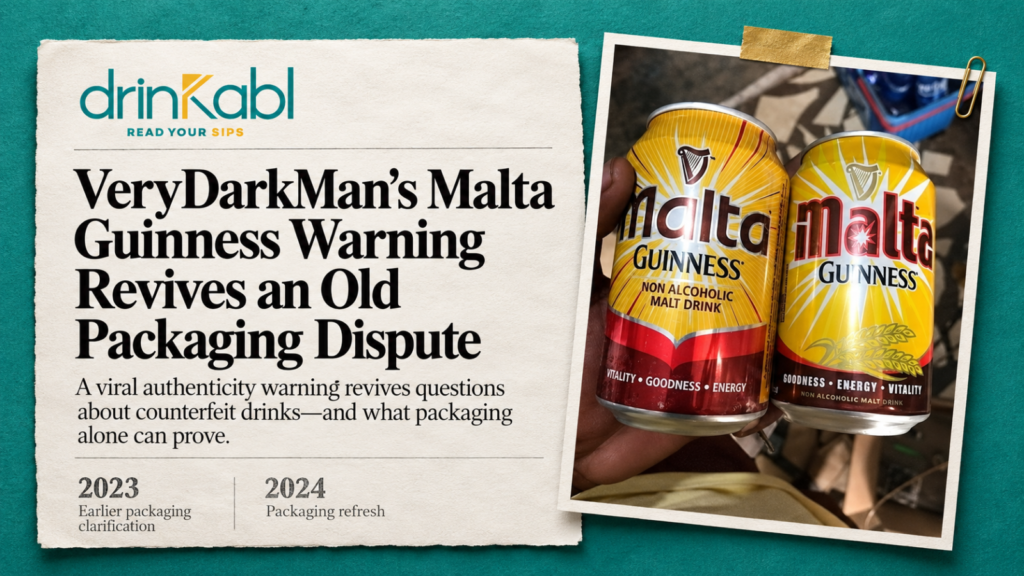
Two yellow cans of Malta Guinness sit side by side in a video shared by social media activist Martins Vincent Otse, popularly known as VeryDarkMan. Their designs look similar, but the words beneath the brand name differ. One reads “Vitality • Goodness • Energy”, while the other reads “Goodness • Energy • Vitality”. For VeryDarkMan, the difference is enough to warn viewers that one is original and the other is fake.
He says he checked the brand’s Instagram page to establish which can was genuine, then extended his warning to drinks sold through online marketplaces, singling out Konga. His message is direct: consumers could be paying for counterfeit products without knowing it. He also suggests that the problem extends beyond malt drinks to other packaged consumer goods.
The video touches a real vulnerability in Nigeria’s beverage trade, where counterfeit production, the reuse of branded packaging and the illegal resale of expired products have all attracted regulatory attention. But there is a significant complication. The particular Malta Guinness packaging comparison at the centre of his warning had already been publicly addressed by Guinness Nigeria, which said the two designs were old packs rather than evidence of counterfeit products.
The distinction matters. Nigeria has documented counterfeit beverage operations, but a warning about a specific product still needs evidence about that product. VeryDarkMan’s intervention shows how quickly the two issues can become entangled, especially when a recognisable face offers consumers a simple visual test for a much more complicated problem.
The packaging claim has a history
Guinness Nigeria addressed similar viral allegations in December 2023, warning that old Malta Guinness packaging was being placed side by side on social media to support claims that one version was fake. The company said both designs circulating in those posts were old packaging no longer in circulation. Its clarification remains available in a public statement, which directly challenges the idea that differences between the two designs establish counterfeiting.
The brand subsequently introduced refreshed packaging in November 2024, featuring a larger harp logo, prominent sunburst graphics and revised typography. The change was presented as a redesign of the existing product, with the company maintaining that its taste and quality remained unchanged. The packaging announcement helps explain why consumers might encounter visibly different cans without either necessarily being counterfeit.
This history does not prove that counterfeit Malta Guinness cannot exist. Nor does the company’s statement establish the authenticity of every can currently being sold. It does, however, mean that the particular slogan-order test in VeryDarkMan’s video cannot responsibly be treated as a verified way to identify fake products. No laboratory result, regulatory finding or independently documented examination of the two cans accompanies the material provided for this story.
The claim about Konga also requires separate verification. The video does not identify specific sellers, provide purchase records or show that products bought through the platform were tested and confirmed counterfeit. It therefore cannot establish that Malta Guinness sold on the marketplace is fake, much less support the sweeping conclusion that everything in its drinks category is counterfeit. That is a serious allegation against sellers and a marketplace, and the visual comparison alone does not substantiate it.
The counterfeit trade is real, but the evidence must be specific
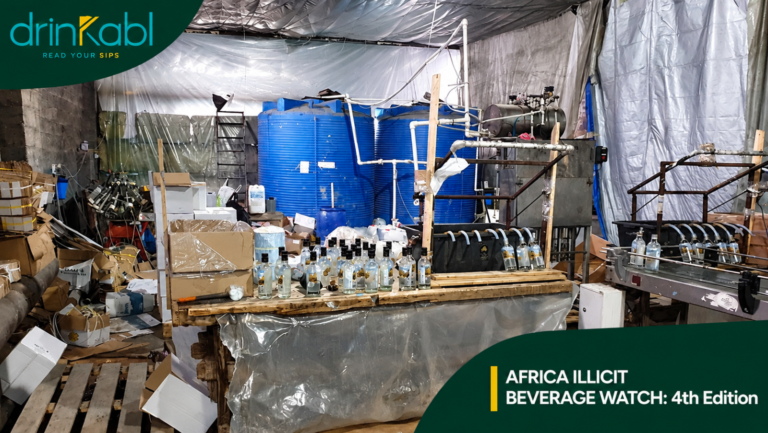
There is no shortage of documented reasons for consumers to take counterfeit beverages seriously. In December 2023, Nigeria’s National Agency for Food and Drug Administration and Control (NAFDAC) announced an operation against counterfeiters at Eziukwu Market, also known as Cemetery Market, in Aba, Abia State. The agency reported finding operations involving wines, spirits, soft drinks and other consumer products, with branded packaging used in activities involving unauthorised production and adulteration.
The mechanism is straightforward. Counterfeiters can use labels, caps, bottles and other packaging that imitate legitimate brands, making products manufactured outside authorised facilities appear genuine. In other cases, expired drinks can be relabelled for resale. The resulting risks depend on what is in the container, how it was produced or handled, and whether its original safety and quality controls have been bypassed. A familiar label cannot answer those questions.
More recent enforcement activity reinforces the distinction between genuine evidence and suspicion. In October 2026, NAFDAC reported seizures of counterfeit packaging materials valued at more than ₦200 million from shops in Aba, with materials bearing the names of several beverage brands. The agency said the materials were suspected of being intended for counterfeit production. The operation provided evidence of the availability of materials that could facilitate counterfeiting, but the presence of a brand name on seized packaging does not establish that the brand owner manufactured or distributed the resulting products.
In another October operation, NAFDAC reported seizing products valued at more than ₦2 billion from suspected illegal beverage outlets at Zamfara Plaza in Lagos’s BBA Trade Fair Complex. The agency said its findings included expired drinks being relabelled for resale and activities involving suspected counterfeit products. As Drinkabl has detailed in its report on the Lagos drinks raid, the central questions include where the products came from, whether laboratory testing confirms the suspected offences and how far the distribution network extends.
These cases make the broader concern credible, but they do not establish that the Malta Guinness cans in VeryDarkMan’s video came from an illegal production line. The evidence for one suspected counterfeit operation cannot be transferred automatically to another product, seller or marketplace. Each allegation needs its own chain of evidence.
Why consumers turn to social media detectives
VeryDarkMan’s intervention reflects a gap between the information consumers need and the information readily available when they are shopping. A buyer standing in a shop or browsing an online listing is unlikely to have access to manufacturing records, batch verification systems or laboratory testing. Packaging becomes the first line of inspection, and any visible difference can appear significant when a trusted brand is involved.
Social media personalities can make such questions visible much faster than formal enforcement processes. Their videos are immediate, understandable and easy to circulate among family groups and online communities. In a market where consumers already worry about fake products, a demonstration involving two cans can feel more useful than a general warning to exercise caution. The problem begins when a useful instinct to scrutinise products becomes an unsupported conclusion about authenticity.
The risk runs in both directions. A false positive can damage a legitimate brand, frighten consumers away from genuine products and unfairly implicate retailers. A false negative can give buyers misplaced confidence in a counterfeit product that looks convincing. Counterfeit packaging can be sophisticated, while legitimate packaging can change across production periods and markets. Visual inspection is useful, but it is not a substitute for verification.
The history of this particular claim makes the issue sharper. Guinness Nigeria had already publicly disputed the same kind of old-packaging comparison. The renewed circulation of such allegations suggests that an earlier clarification has not permanently settled the matter for consumers encountering the images again. A correction can be accurate and still fail to reach the next audience that sees the original claim.
What a credible warning should establish
For consumers, the safer response is to treat an unfamiliar pack as a reason to investigate rather than proof of fraud. Buying from reputable retailers, checking the packaging for obvious tampering, examining batch and expiry information, and contacting the manufacturer through its verified channels can help identify concerns. Where a product appears suspicious, consumers can report it to NAFDAC and preserve the packaging, purchase details and seller information so that the complaint can be investigated.
For manufacturers, packaging changes create a communication responsibility. When old and new designs coexist in circulation, a simple public guide showing authorised versions, production details and reliable verification methods can help reduce confusion. The aim should be to give consumers a dependable way to check a product, rather than leave them to infer authenticity from the position of a slogan or the shape of a logo.
Marketplaces also have a role in responding to specific complaints about potentially counterfeit goods. That requires identifying the seller and listing in question, checking the product’s provenance and cooperating with regulatory investigations where necessary. A broad allegation about an entire platform is less useful than evidence that can identify a particular seller, consignment or supply route.
VeryDarkMan’s warning has drawn attention to an issue that deserves scrutiny. But the available evidence supports a narrower conclusion than the one offered in his video: counterfeit beverages are a documented problem in Nigeria, while the two Malta Guinness cans he compares have not been independently established as one genuine product and one counterfeit. Until that product-specific evidence emerges, the slogan difference should not be presented as a reliable authenticity test.
The two cans may look like a simple consumer puzzle, with one phrase in a different order offering an apparent answer. The more important question is what evidence can establish where each can came from, who produced it and what it contains. That is the work required to separate a genuine counterfeit warning from a claim that only looks convincing.