
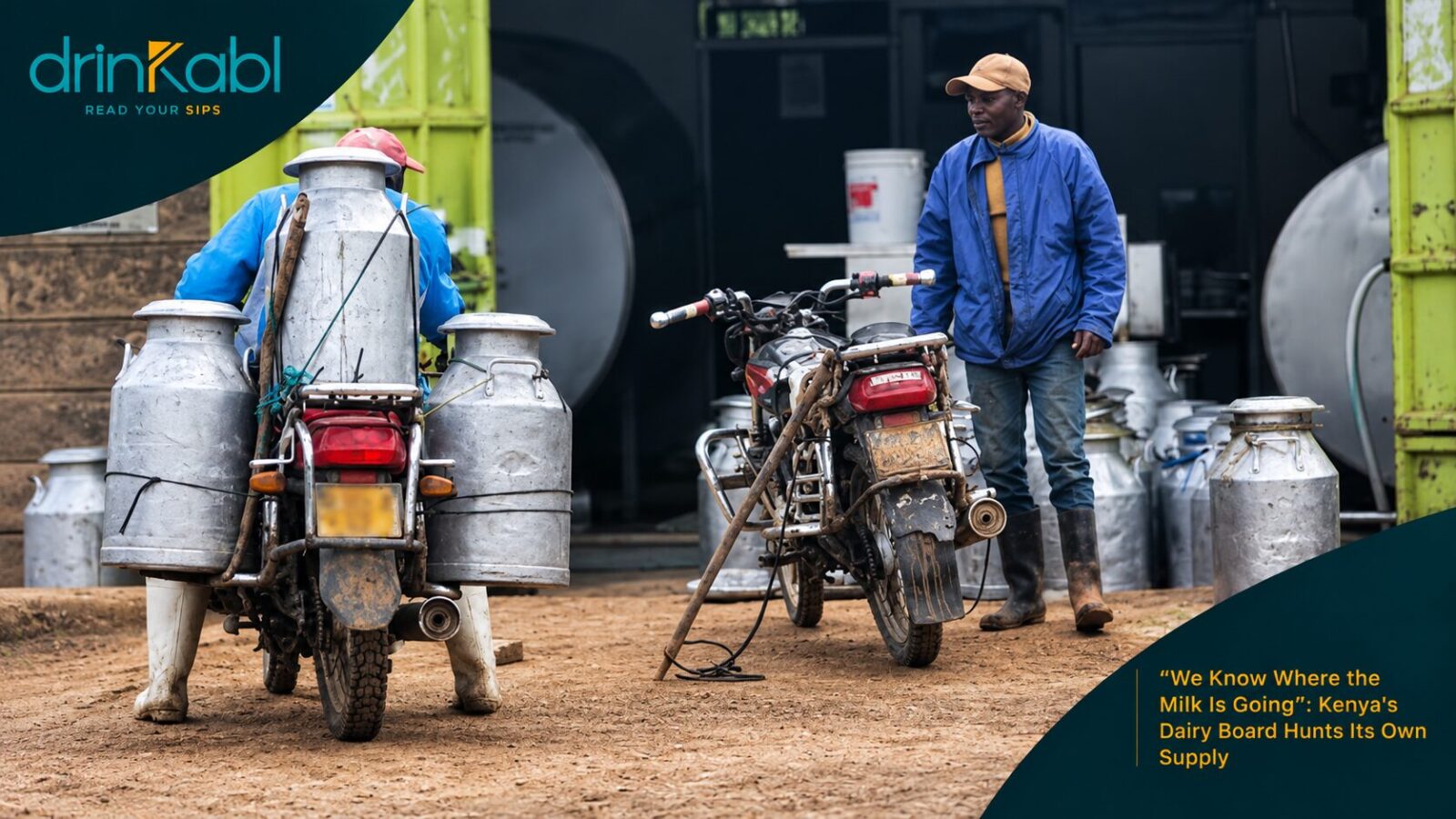

Three months into Kenya’s milk shortage, the government’s own account of the crisis has quietly changed. It is no longer only about drought. It is about knowing where the milk actually goes.
“The Kenya Dairy Board will take the lead to ensure that we know where the milk is going and put it on the shelves,” Principal Secretary for Livestock Development Jonathan Mueke said at a Nairobi briefing. That is an unusual admission three months into a supply crisis. It suggests the milk has not simply stopped flowing. It suggests the state has partly lost sight of it. That framing matters more than the weather does.
A shortage that keeps changing its explanation
Kenya Dairy Board chairperson Genesio Mugo told reporters in early September that the shortfall was minor, calling it “not big at all” and urging shoppers to avoid panic buying. Weeks later, Agriculture and Livestock Development Cabinet Secretary Mutahi Kagwe was warning that urban consumers face a deeper shortage if the drought persists. Both statements can be accurate. The volume of milk missing from supermarket shelves is real, and it is also not the whole picture.
What the numbers show, and what they don’t
Formal milk deliveries to processors fell 3.7 percent between June and July, from 84.4 million litres to 81.3 million litres, and preliminary data pointed to a further decline in August. That is a measurable drop, driven by prolonged dry, cold conditions that have thinned pasture and pushed up feed costs.
But Mueke’s own comments point to something the delivery numbers cannot show: milk that farmers are choosing not to send through the formal system at all. He warned that poor pricing could push producers toward informal buyers, telling reporters, “We will ensure the farmers get the right pricing for their milk so that they do not send it informally.”
Brokers are winning on price, not on trust
Kagwe has been blunter about where that milk is headed. He said milk that would normally reach processing plants is increasingly going to brokers instead, because brokers pay more than cooperatives do. “A lot of milk that normally goes to processing plants is now being given to brokers because brokers are offering a higher price than the milk processing companies through the cooperatives,” he said.
That is not a farmer behaving irrationally. It is a farmer responding to whoever pays faster and more. In Nandi County, Lelcheggo Cooperative Dairies chairman Stanley Ngombe described deliveries to the cooperative’s cooling plant falling from about 10,000 litres a day to under 2,000, a collapse that squeezes the cooperative’s own finances even as it keeps paying for electricity and staff.
The shelf is where shoppers feel it
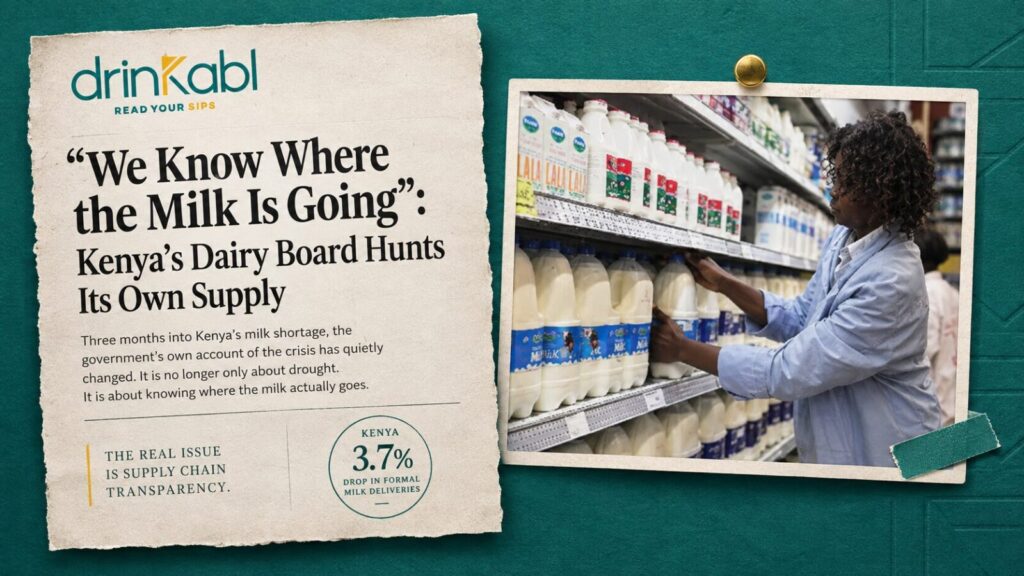
At the retail end, the effect is visible and uneven. Nairobi retailers have begun rationing purchases, with some outlets limiting shoppers to as few as two boxes, and fresh milk prices climbing from roughly Ksh70 to Ksh80 a litre. Pasteurised fresh milk has been hit hardest, since it cannot sit in inventory the way UHT and other long-life products can.
Feed, not persuasion, is the government’s actual lever
Kenya’s official response has focused on the input side rather than on chasing brokers. The State Department for Livestock Development is working with feed manufacturers to move surplus fodder to affected regions, and the government has approved duty-free imports of 500,000 tonnes of yellow maize for animal feed.
That is a bet that cheaper feed, not appeals to loyalty, is what keeps milk inside the formal system. It will take time. A cow’s output cannot respond to a policy announcement the way a factory line responds to a new order, and the Kenya Dairy Board is banking on the October–December rains to ease the immediate pressure. Rain restores what a cow can produce. It does not automatically restore a farmer’s preference for a cooperative over a broker who pays faster.
The safety risk sitting underneath the price gap
As the formal system tightens, regulators have separately warned consumers against unpasteurised milk from hawkers and unauthorised sellers, citing concerns about adulteration. That warning exists precisely because the informal market grows most attractive exactly when the formal one is least competitive on price or availability, which is the same dynamic Mueke and Kagwe are both describing from the supply side.
Why Mueke’s line is the real headline
Kenya’s dairy sector is not confronting a simple absence of milk. It is confronting whether the formal chain, farmer to cooperative to processor to shelf, can outbid the buyers who have sprung up around it.
Better rains will help production. They will not by themselves rebuild a farmer’s confidence in cooperative payment terms or a processor’s collection network. Those relationships take longer to repair than a season.
Mugo’s reassurance that “there will be milk tomorrow” may hold up. Mueke’s quieter admission is the one worth remembering: the government is not simply waiting for more milk. It is trying to find out where the milk it already has has gone.
Read more: