
For years, experiential marketing has been one of the beverage industry’s most effective tools for building consumer connection. From football screenings and music festivals to nightlife partnerships and cultural activations, brands have relied on experiences to create visibility, drive engagement and strengthen loyalty.
However, as consumer expectations continue to evolve across East Africa, the role of experiential marketing is also changing. Visibility alone is no longer enough. Increasingly, consumers are evaluating brands based on the quality of the experiences they create.
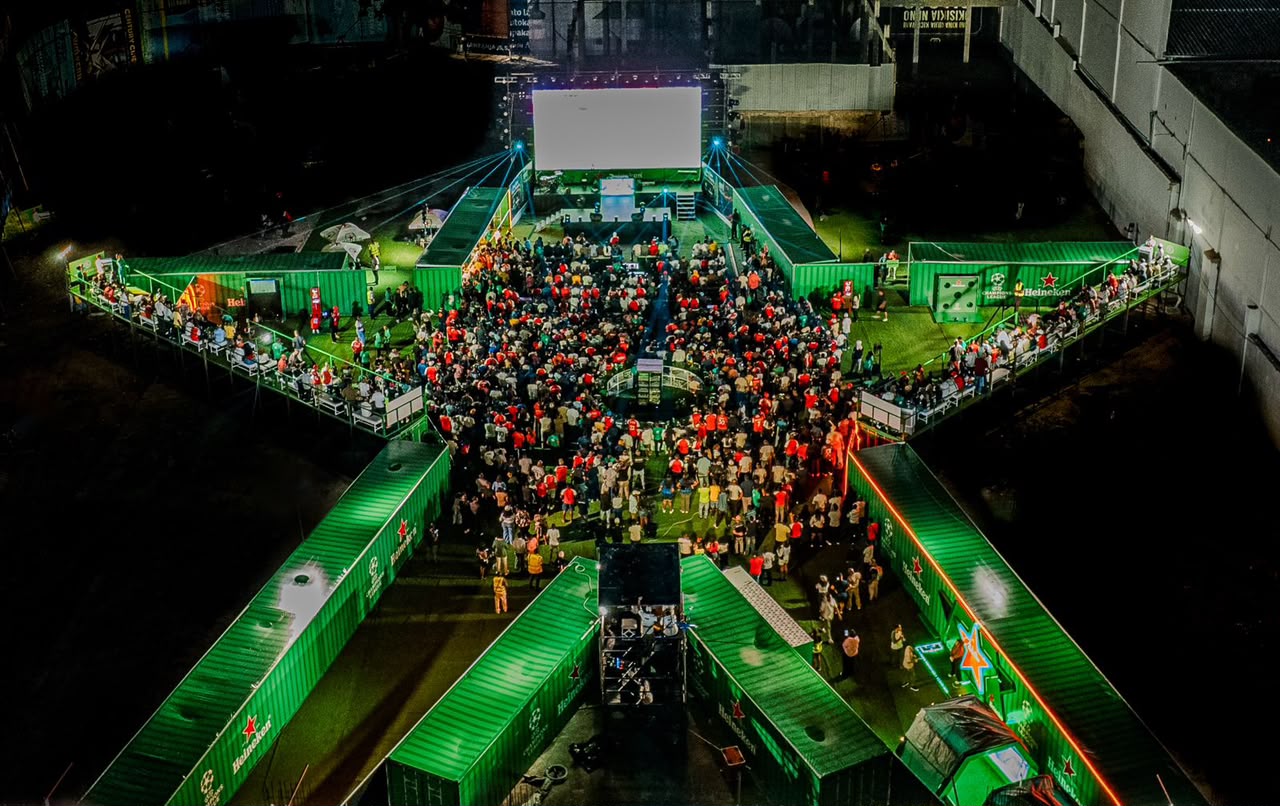
This shift was evident in the response to Heineken’s recent Ultimate Viewing Experience in Tanzania. Built around one of football’s biggest occasions, the activation attracted attention not simply because of the match itself, but because of how the experience was designed.
Massive green shipping containers were transformed into premium viewing decks. Elevated walkways overlooked thousands of attendees while a giant screen anchored the venue. The environment felt more like a purpose-built entertainment destination than a traditional football viewing event.
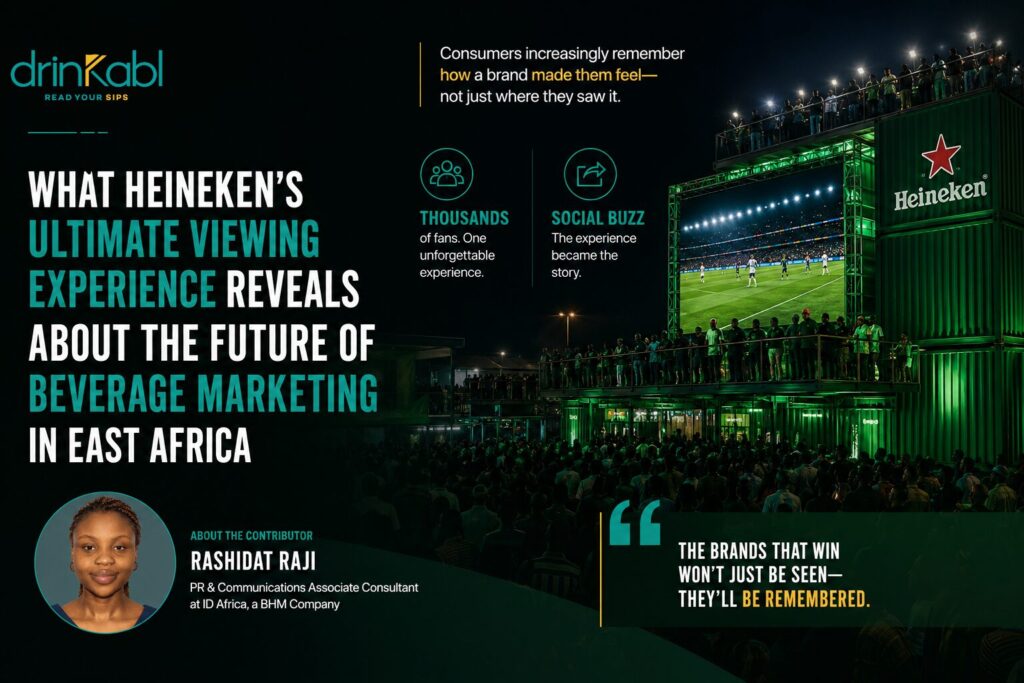
What followed was particularly significant for beverage marketers. Social media conversations quickly expanded beyond football. Attendees shared drone footage, crowd reactions and videos highlighting the atmosphere, design and scale of the activation. The experience itself became the story.
For an industry that has historically measured success through attendance figures, impressions and product visibility, this represents an important shift. Consumers increasingly remember how a brand made them feel rather than simply where they encountered it.
This is especially true among younger urban consumers across East Africa. Through social media, they are constantly exposed to global festivals, sporting spectacles, nightlife experiences and hospitality concepts. Their expectations are shaped not only by local experiences but by international standards.
As a result, beverage brands are operating in a marketplace where consumers compare experiences across borders. A football activation in Dar es Salaam is no longer evaluated solely against other events in Tanzania. It is competing for attention against content and experiences consumers encounter from Lagos, London, Amsterdam and beyond.
This presents both a challenge and an opportunity for the industry.
For years, many activations across emerging markets have focused primarily on visibility. Secure a venue, create branding opportunities, attract a crowd and generate social media content. While these objectives remain important, they are becoming less effective as standalone measures of success.
Consumers increasingly expect experiences that are immersive, shareable and culturally relevant. They want environments that feel intentional rather than functional and memorable rather than transactional.
The response to Heineken’s Ultimate Viewing Experience suggests that East African consumers are ready for that evolution. More importantly, it demonstrates that when brands invest in creating ambitious experiences, consumers respond.
For beverage companies operating across Africa, the implications are significant. As competition intensifies across beer, spirits and ready-to-drink categories, experiences are becoming an increasingly important differentiator. Product quality remains essential, but the experiences surrounding a brand often shape how consumers perceive it.
This is particularly relevant for premium and international brands seeking long-term relevance in African markets. Consumers are no longer looking simply for products to purchase. They are looking for communities to join, experiences to participate in and brands that align with their aspirations.
The success of Heineken’s activation offers a useful case study of how experiential marketing is evolving across East Africa. It demonstrates that consumers are rewarding brands that move beyond visibility and invest in creating meaningful moments.
The broader lesson for the beverage industry is clear. The future of marketing may belong less to the brands with the biggest sponsorship budgets and more to those capable of creating experiences consumers genuinely want to be part of.
As consumer expectations continue to rise, the question facing beverage marketers is no longer whether experiential marketing matters. It is whether the experiences being created are memorable enough to matter.
About the contributor
Rashidat Raji is a PR and Communications Associate Consultant at ID Africa, a BHM Company, specialising in strategic communications, media relations and brand strategy. She has a keen interest in consumer behaviour, brand storytelling and emerging market trends across Africa.
READ MORE