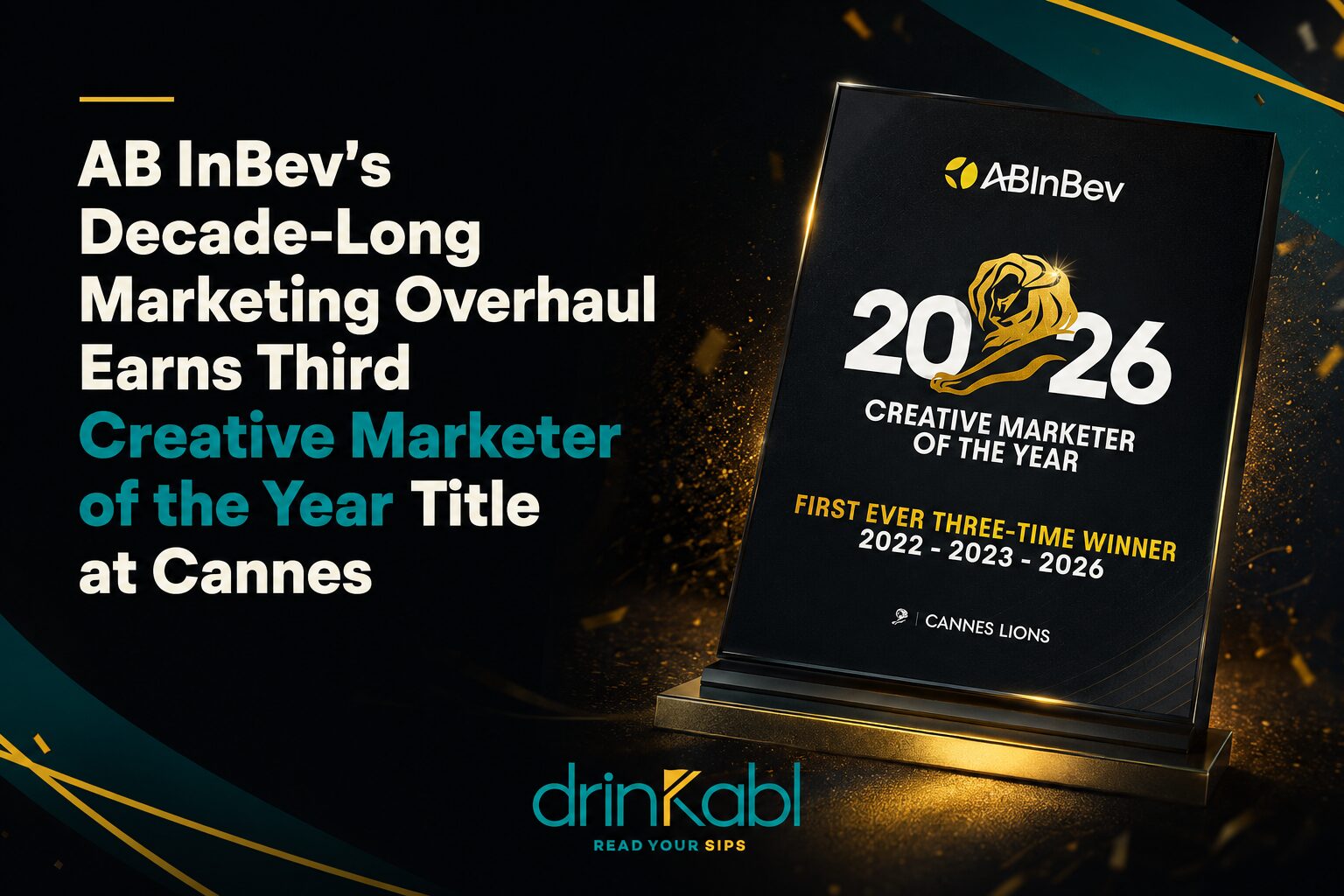

AB InBev has been named Cannes Lions’ Creative Marketer of the Year for a record third time, capping a ten-year effort to rebuild its marketing organisation after concluding that acquisitions alone were not creating stronger brands.
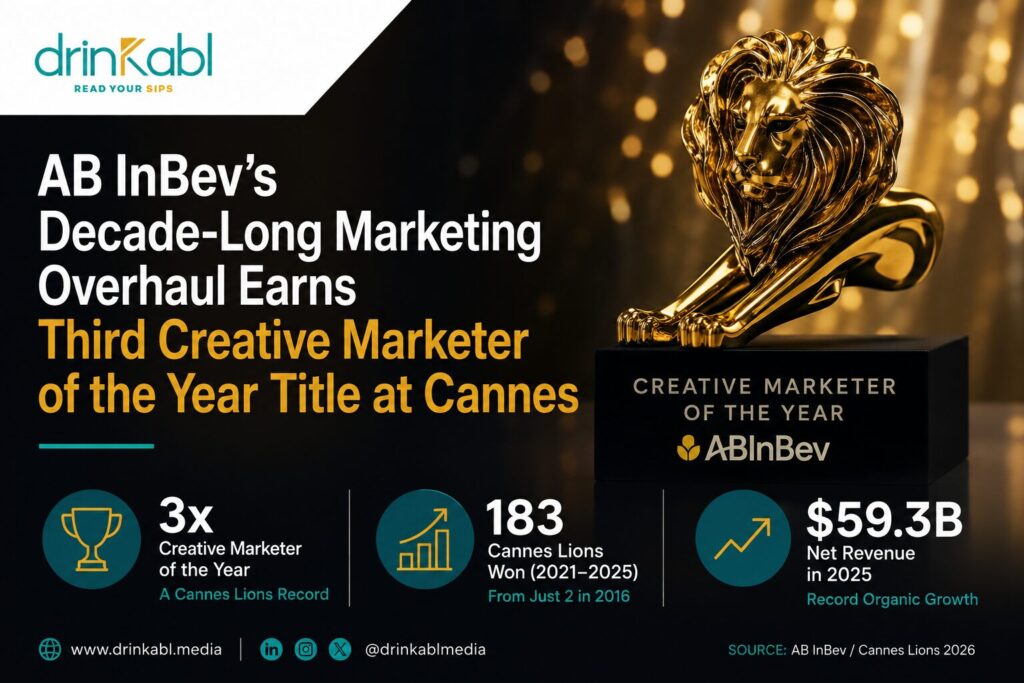
Opening the 2026 Cannes Lions International Festival of Creativity, Global Chief Marketing Officer Marcel Marcondes said the brewer’s transformation began in 2016, when the company won just two Lions despite years of aggressive expansion through acquisitions.
“We were really focused on financial discipline and inorganic growth. But we were not really good at building the brands we were acquiring,” Marcondes told delegates during his keynote.
Five years later, the picture had changed dramatically. Between 2021 and 2025, AB InBev collected 183 Cannes Lions, while the company reported record organic revenue growth in 2025 and generated net revenue of $59.3 billion. Marcondes argued that the awards were a consequence of building stronger commercial brands rather than the objective itself.
The turnaround started in 2018 with the creation of a global marketing culture and capabilities function led by the late Jodi Harris. The initiative introduced Creative X, a company-wide framework designed to standardise creative development, campaign evaluation and marketing decision-making across international markets.
More than 2,400 marketers have since been trained using the framework, giving teams a shared process for briefing agencies and assessing creative work. AB InBev also established an independent external creative council that reviews campaigns every quarter, alongside internal awards programmes that reward commercial effectiveness instead of creative output alone.
The system was tested when senior management questioned whether creative recognition was translating into business performance. Marcondes recalled a pivotal conversation with the company’s chief executive after marketing began winning industry awards. The response was direct: “And so fu****g what?”
That challenge shifted the organisation away from pursuing creative recognition for its own sake. Campaigns were increasingly built around identifiable commercial opportunities, including Michelob Ultra’s positioning with health-conscious consumers and Corona’s long-running “golden moments” platform.
The company has also narrowed its investment behind a smaller group of global brands. Since becoming global CMO in 2022, Marcondes has increased spending on Budweiser, Corona, Stella Artois and Michelob Ultra, which together account for approximately 57% of AB InBev’s revenue. To support those brands, AB InBev assembled what Marcondes describes as a “Justice League” of agency partners, bringing together senior leaders from creative, media, experiential and digital agencies to collaborate on global campaigns rather than operate independently.
The brewer has expanded that model beyond traditional advertising. A multi-year partnership with Netflix integrates brands including Bud Light and Stella Artois into entertainment content, while an extended FIFA World Cup sponsorship secures one of the company’s largest global marketing platforms through 2030.
Artificial intelligence has also become part of AB InBev’s production workflow through its in-house agency DraftLine. Marcondes said the company follows a “sandwich approach,” using AI to accelerate execution while ensuring people remain responsible for strategy, creative judgement and final approval.
The strategy continues to produce results outside Cannes. AB InBev topped the Global Effie Index as the world’s most effective marketer for a fourth consecutive year, while Kantar BrandZ’s 2026 rankings placed eight of the world’s ten most valuable beer brands under the company’s portfolio, with Corona retaining the top position. For the wider beverage industry, AB InBev’s experience offers a broader lesson. The company’s competitive advantage did not come from producing individual award-winning campaigns. It came from building a repeatable marketing operating system that linked creativity, organisational capability and commercial performance.
Read More