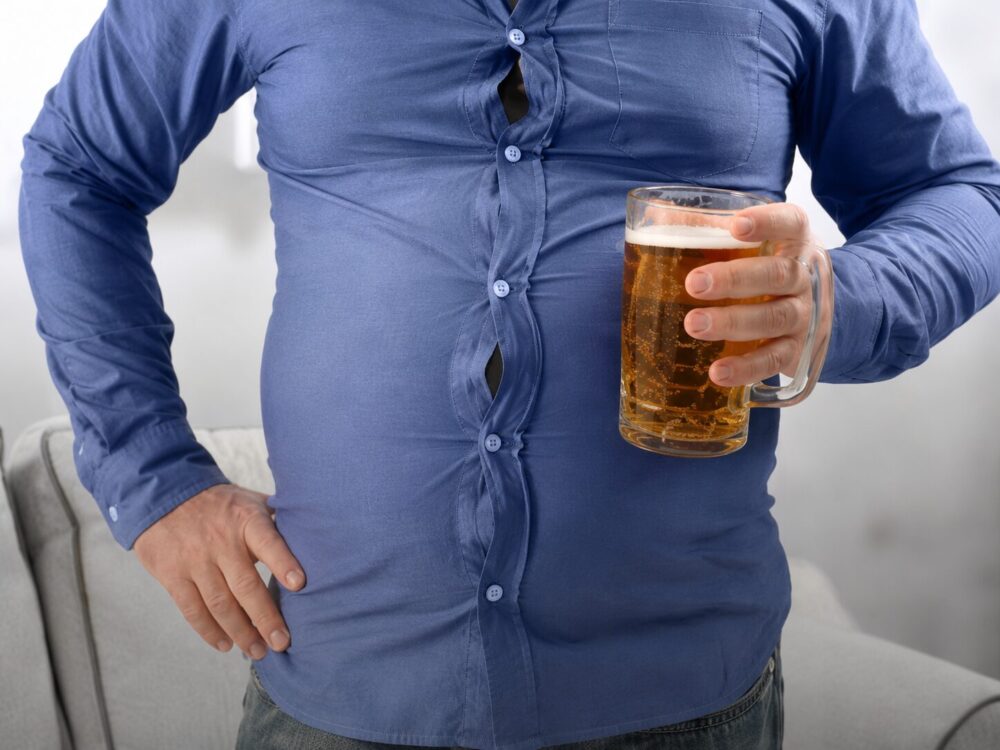

Every Nigerian man who has ever nursed a cold bottle of Star at a beer parlour has probably heard the joke. “Na beer give you that belle.” His friends laugh. He laughs. Then he orders another round. But is the joke actually true? And if it is not, what is really going on inside that pot belly?
The short answer is: beer is not the sole villain here. The longer answer is a lot more commercially relevant for anyone in this industry.
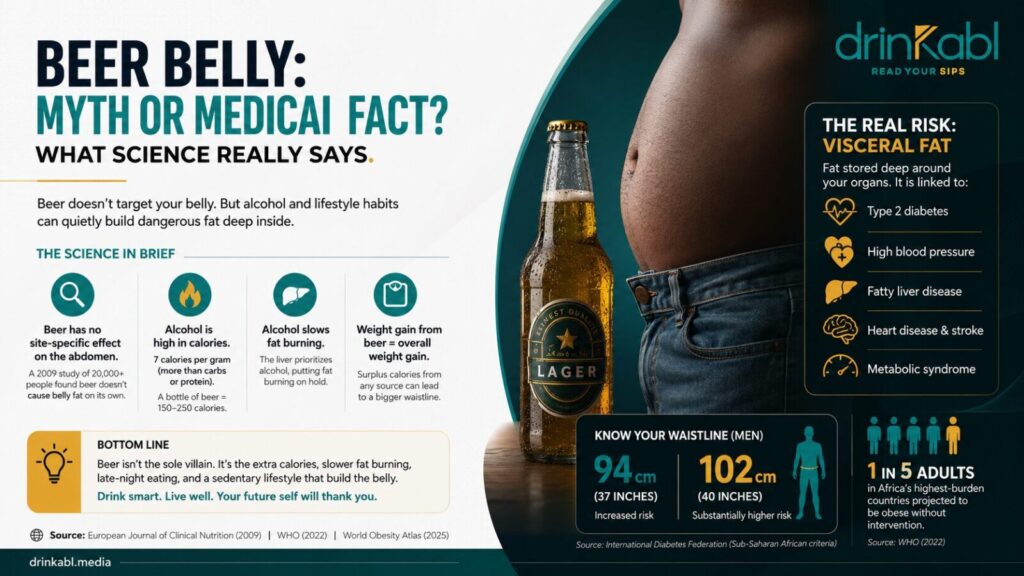
A 2009 study published in the European Journal of Clinical Nutrition, which tracked more than 20,000 participants in the EPIC-Potsdam cohort, found no site-specific effect of beer on the abdomen. Beer does not go directly to your belly. Waistline gain from beer consumption tracks with overall weight gain across the body, not some unique stomach-targeting mechanism. So the idea that beer specifically builds a pot belly is, largely, a myth.
That said, alcohol is far from innocent.
At 7 calories per gram, alcohol is far more energy-dense than carbohydrate or protein, both of which deliver 4 calories per gram, and it sits close behind fat at 9 calories per gram. A standard bottle of beer can carry anywhere between 150 and 250 calories, depending on strength and volume. Drink several bottles most evenings, and you are adding a serious calorie surplus to your week before you even think about the pepper soup, the suya, the nkwobi, or the isi ewu that typically arrives alongside.
There is also the liver problem. When alcohol enters the body, the liver drops everything else to process it first. Fat burning slows down, sometimes stops. The body is effectively in storage mode while it clears the alcohol. Do that regularly and those surplus calories go somewhere, and for most men, especially as they get older, that somewhere is the abdomen.
Heavy drinking also disrupts testosterone and cortisol levels, both of which influence where the body stores fat. Men are already biologically more prone to accumulating visceral fat around the abdomen. Add hormonal disruption from chronic alcohol use on top, and the belly grows.
What doctors are actually concerned about is visceral fat: fat stored deep inside the abdominal cavity, packed around the liver, pancreas, and intestines. This is not the soft fat you can pinch. Visceral fat is dense, it creates the hard, round protrusion people know as pot belly, and it is clinically dangerous in ways that the casual “beer belly” joke completely obscures.
Visceral fat is strongly linked to type 2 diabetes, high blood pressure, fatty liver disease, heart disease, stroke, and metabolic syndrome. A man with a large, firm belly is not just carrying extra weight. He is carrying elevated risk for conditions that kill. Nigerian doctors increasingly flag waist circumference as a more reliable predictor of that risk than BMI alone.
The thresholds to know, per International Diabetes Federation criteria for Sub-Saharan African populations, are 94 cm, which is approximately 37 inches, for men at increased risk, with substantially higher risk above 102 cm, or 40 inches. For women, increased risk begins at 80 cm, or approximately 31 inches, with higher risk above 88 cm. Research specific to sub-Saharan African populations suggests the actual danger point may sit even lower than these global benchmarks.
The broader picture is hard to ignore. The WHO’s 2022 regional analysis projected that one in five adults across Africa’s highest-burden countries would be obese without meaningful intervention. The World Obesity Atlas 2025 went further, warning that middle-income African countries now face rapid obesity growth driven directly by urbanisation and the dietary changes that come with it: less physical activity, more processed food, more alcohol, more late-night eating. Lagos, Accra, Nairobi, Johannesburg are all running this experiment in real time.
For the beverage industry, this creates a question that is no longer purely academic. This publication’s coverage of Africa’s alcoholic beverages sector has tracked growing consumer awareness around health and calorie consciousness in urban markets. The no-and-low category, barely a rounding error on African shelves five years ago, is beginning to attract serious attention from distributors and brand managers watching where the next generation of urban drinkers is heading.

The pot belly is not caused by beer alone. It is caused by a lifestyle that alcohol happens to make considerably easier to stumble into: excess calories, suppressed fat burning, appetite spikes, late-night food, reduced activity, and chronic stress. Beer is the social glue for much of that pattern across African cities. The industry that profits from that pattern has a growing commercial incentive to offer alternatives for the consumer who is starting to read the label.
How quickly African beverage markets pivot to meet that consumer is the question worth watching over the next five years.
Read More:
Africa’s Drinks Industry Has a Sober Problem, and a Bigger Opportunity