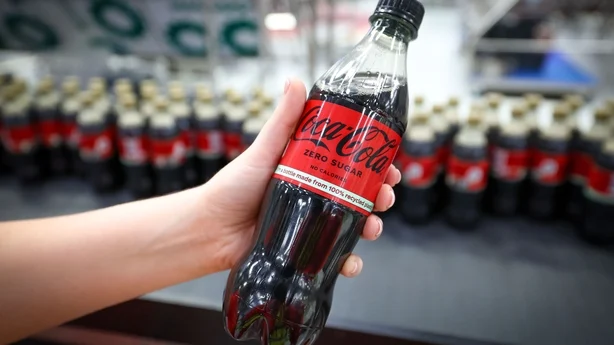

Consumer demand for Coca-Cola’s portfolio proved stronger than the market anticipated in the first quarter, with the company reporting adjusted earnings of 86 cents per share against analyst expectations of 81 cents, and revenue of $12.47 billion against a projected $12.24 billion.
The results arrived as the broader non-alcoholic beverages sector faces sustained scrutiny over pricing limits and volume ceilings. For Coca-Cola, the quarter showed that volume growth, not just price recovery, was doing meaningful work. Global unit case volume rose 3 per cent, offering evidence that consumers are returning to the shelf in greater numbers rather than simply paying more for what they already buy. That distinction matters for how investors read the company’s full-year guidance, which now calls for comparable earnings per share growth of 8 to 9 per cent, an upward revision from its earlier range. Organic revenue growth guidance was held at 4 to 5 per cent.
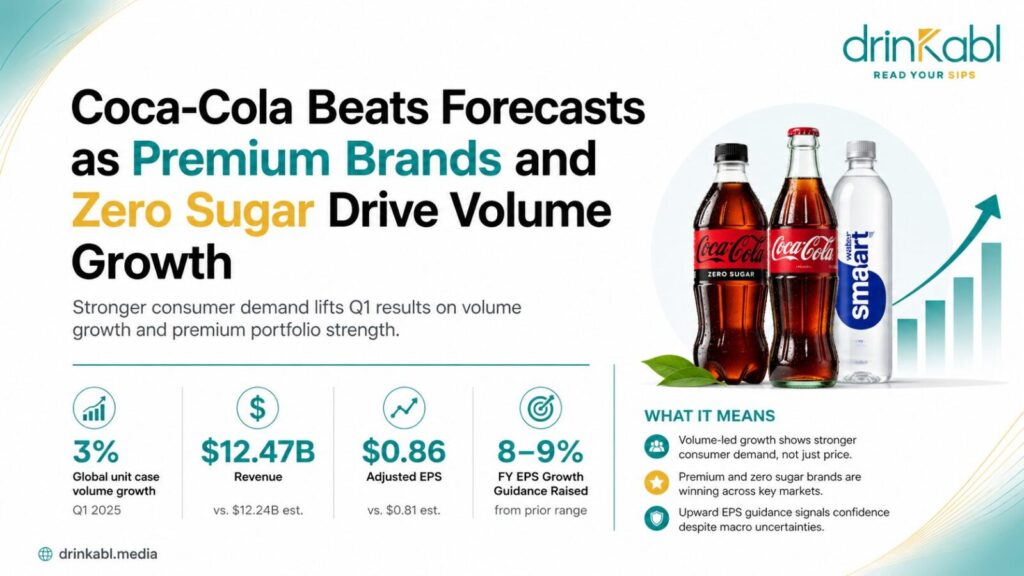
Shares gained in premarket trading after the announcement. Net income attributable to shareholders climbed to $3.92 billion, equivalent to 91 cents per share, compared to $3.33 billion, or 77 cents per share, in the same period a year earlier. Organic sales expanded by 10 per cent, excluding the effects of currency movements and structural changes.
The results reflect a portfolio that is pulling in different directions simultaneously, and managing it well. Coca-Cola Zero Sugar posted double-digit growth within the sparkling beverages segment, which grew 2 per cent overall, reinforcing the commercial value of sugar-free reformulations that have attracted younger and health-conscious consumers across mature markets. Fairlife and Smartwater, both positioned at the premium end, continued to gain ground, particularly among higher-income consumers who have proven less sensitive to cost pressures. That pattern echoes what the broader non-alcoholic category has reported across recent quarters, where the middle of the market has softened while the top and the value tiers have held up better. Drinkabl’s coverage of how health orientation and youthful consumption habits are reshaping the continent’s category preferences, visible in the site’s research section, points to the same bifurcation playing out in African markets.
The water, sports drinks, coffee and tea segment led all divisions with a 5 per cent volume increase, driven by bottled water and tea. North America delivered a 4 per cent volume rise. The juice, dairy and plant-based category contracted slightly, with gains in some brands offset by the divestment of certain operations, a structural adjustment that removed volume rather than reflecting any collapse in underlying demand.
Coca-Cola’s ability to grow volume while simultaneously upgrading its portfolio mix puts the company in a defensible competitive position relative to peers still relying more heavily on price. Its strategy of maintaining broad market access through core sparkling brands, while investing in premium water and dairy-adjacent products, gives it exposure to multiple consumer income tiers. The Goldberg campaign across Nigerian bars, covered recently on Drinkabl, is a reminder that on-trade activation and consumer engagement remain critical levers for major beverage brands in price-sensitive markets, a dynamic that Coca-Cola’s African bottling partners will recognise. The company has not yet issued specific regional guidance for Africa, but broad-based growth across its international divisions suggests the continent’s trajectory is unlikely to drag on performance.
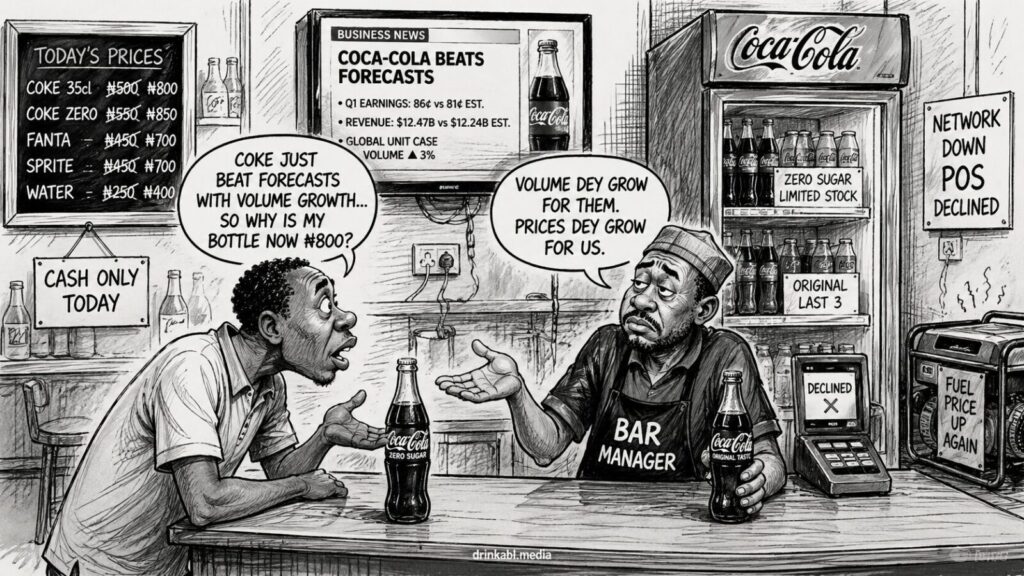
The full year will test whether the volume recovery holds as currency volatility and commodity input costs continue to create uncertainty for global consumer goods companies. Coca-Cola’s revised earnings guidance signals internal confidence, though the organic revenue range being held rather than raised suggests caution around currency translation. Coverage by Reuters of the quarterly announcement noted broader investor interest in whether the company’s premium mix shift can be sustained if economic pressures broaden further into middle-income consumer segments. For now, the first quarter sets a solid baseline.
Read More
Starbucks Integrates AI Into Drink Discovery
Nestlé, ILO Tackle Coffee Labour Crisis
Beta Glass Changes Hands as Helios Bets Big on Nigeria’s Booming Beverage Sector
Japan’s Vending Machine Drink Sector Contracts as Inflation Reshapes Consumer Spending