
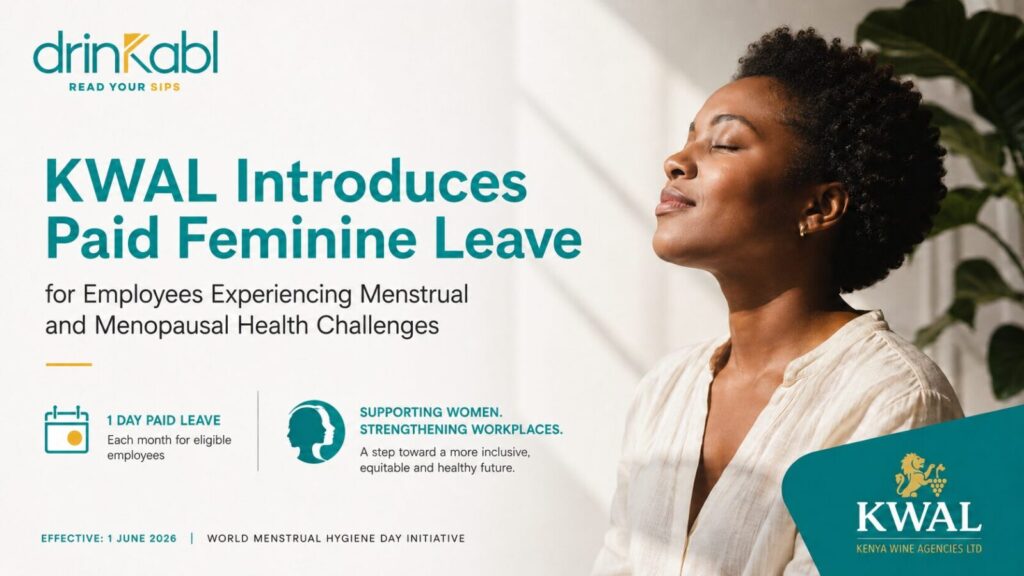
Kenya Wine Agencies Limited (KWAL) has introduced a Feminine Leave Policy that grants eligible employees one day of paid leave each month for health challenges linked to menstruation, perimenopause and menopause.
The policy took effect on 1 June 2026 following its announcement during World Menstrual Hygiene Day activities held under the theme, “Together for a period-friendly world.”
The move places KWAL among a relatively small group of employers in Africa formally recognising menstrual and menopausal health within workplace leave structures. While employee wellness programmes have become increasingly common across the FMCG sector, few companies have embedded reproductive health considerations directly into paid leave policies.
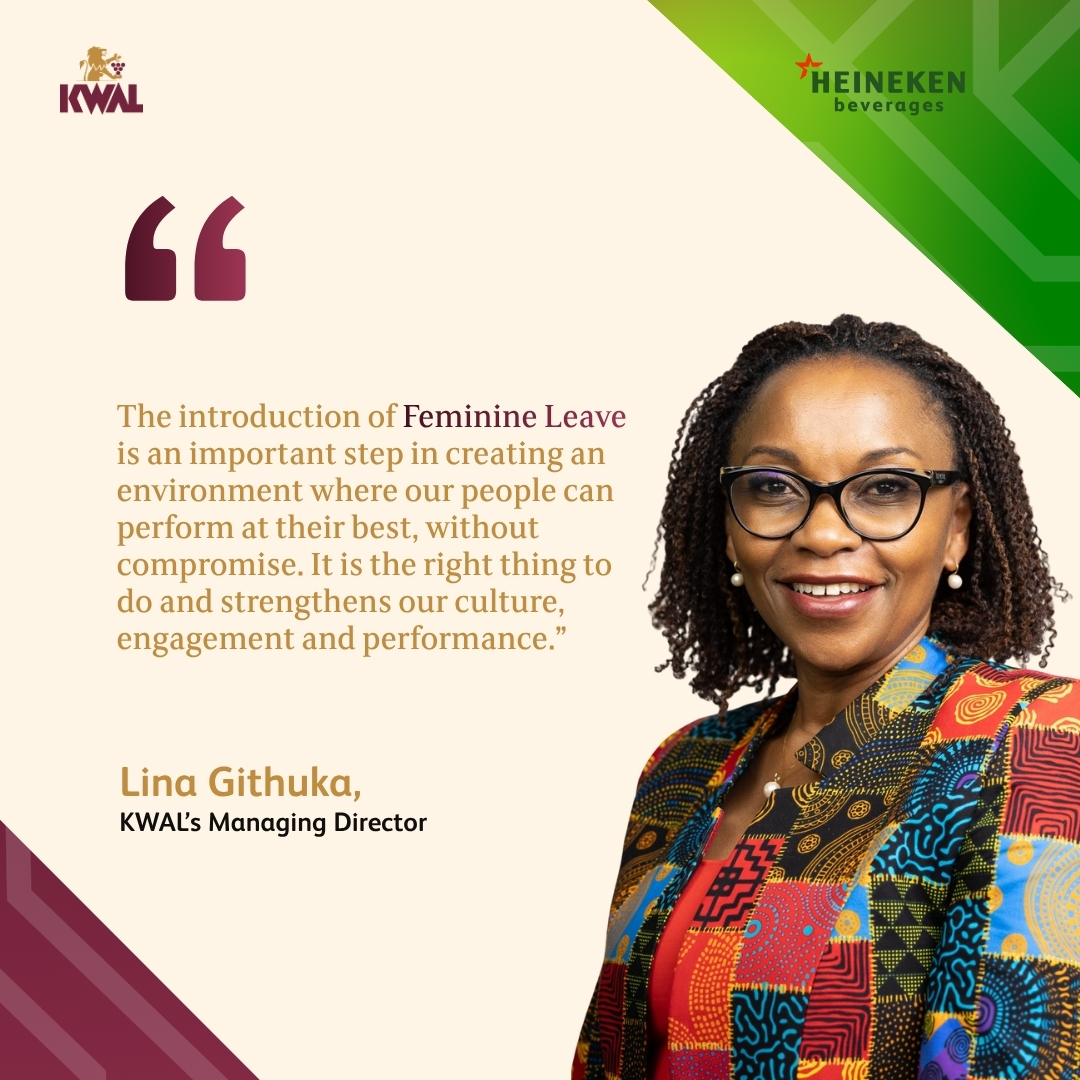
KWAL Managing Director Lina Githuka said the company introduced the policy as part of its broader diversity, equity, inclusion and belonging agenda.
“Advancing gender equity means recognizing and responding to the realities that impact women’s wellbeing at work,” Githuka said. “The introduction of Feminine Leave is an important step in creating an environment where our people can perform at their best, without compromise.”
For employers, the discussion extends beyond workplace culture. Menstrual health continues to influence attendance, productivity and employee retention in many markets, despite receiving limited attention in formal workforce policies.
The World Health Organization estimates that menstrual pain affects between 50% and 90% of menstruating women globally. Research published in BMJ Open has also found that menstrual symptoms contribute to both absenteeism and presenteeism, where employees remain at work despite discomfort that affects concentration and performance.
By creating a dedicated leave provision, KWAL is addressing a challenge that is often managed informally by employees through annual leave, sick leave or reduced productivity. The policy also creates a formal framework for conversations around women’s health that many workplaces have historically avoided.
The initiative aligns with HEINEKEN’s Brew a Better World sustainability programme and forms part of KWAL’s wider effort to strengthen employee wellbeing and workforce inclusion.
The practical test will come in implementation. As more companies compete for skilled talent across East Africa’s consumer goods sector, workplace policies that address employee wellbeing in measurable ways are increasingly becoming part of the recruitment and retention conversation rather than a standalone human resources initiative.
READ MORE